What Brand Naming Is: The Process, the Cost, and the Legal Reality
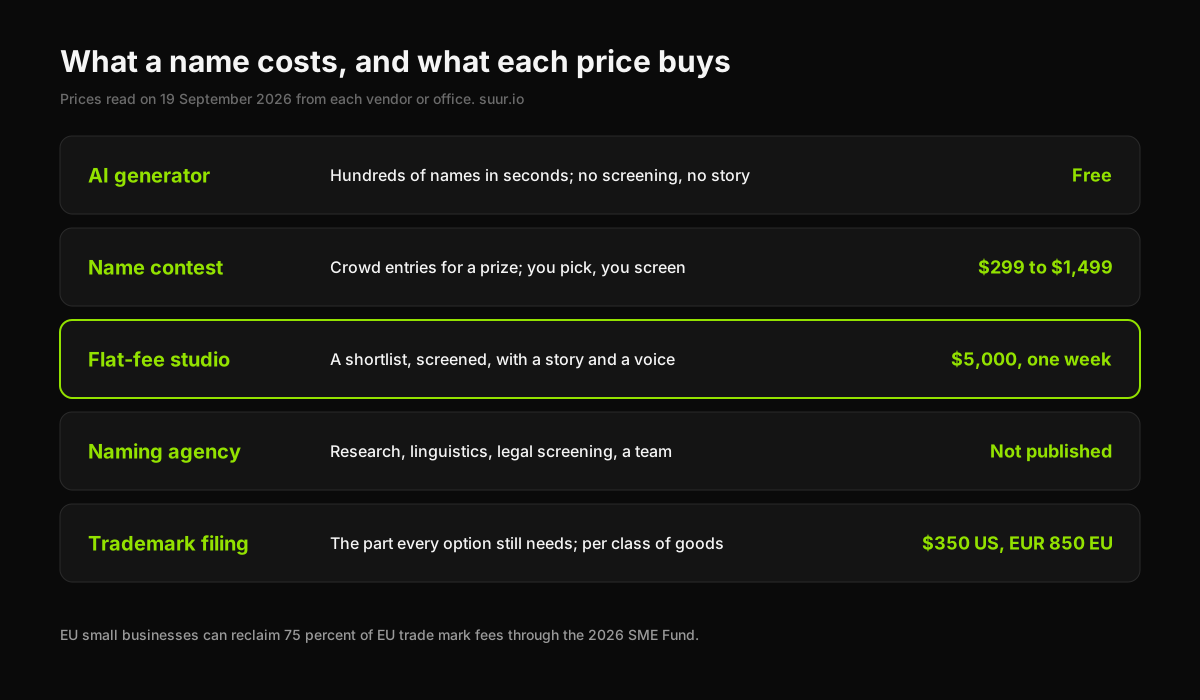
Brand naming is choosing a name a company can own, not just one it likes: a strategic decision first, a creative one second, and a legal one before anything is printed. The process runs in four stages: decide what the name has to stand for, generate candidates against that, screen them for domains and trademark conflicts, and choose one with a story and a voice attached. The price range is wide because the work behind it is. An AI generator produces hundreds of names for free. A crowdsourced contest on Atom costs $299 to $1,499 with a prize paid to the winner. Our flat-fee naming is $5,000 for one week. The established naming agencies publish no prices at all. And every option still ends in the same legal step: a US trademark application is $350 per class of goods, an EU one €850 for the first class, both read from the offices themselves on 19 September 2026. Below: each stage, and where names fail.
What a brand name has to do
A name is the one piece of a brand that cannot be redesigned later without cost. Colors change, logos get refreshed, websites get rebuilt every three years; the name is on the contracts, the domain, the trademark, and in customers' memories. So it has four jobs, and a name that does three of them well and fails the fourth is a problem you will pay for later.
It has to be ownable. Legally, as a trademark in the classes you sell in, and practically, as a domain and a set of social handles you can actually get.
It has to say something, or be able to. Descriptive names ("Best Plumbing") are easy to understand and nearly impossible to own. Invented names ("Kodak") are easy to own and mean nothing until you spend years filling them. Most good names sit between: a real word used out of context, a compound, or a phrase compressed into something short.
It has to survive being said aloud. Spelled from hearing, pronounced from reading, and unembarrassing in the languages of the markets you might enter.
It has to have somewhere to go. A name that works only for today's product becomes a problem the day the company adds a second one.
The four stages of naming
1. Strategy before words. What is being named, who has to remember it, what it must stand for, and what it must not sound like. The output is not a name, it is three or four territories: directions a name could come from, agreed before anyone suggests a single word. Skipping this stage is why naming projects turn into rounds of "I don't love any of these," because there is no standard to judge them against.
2. Generation. Hundreds of candidates across the territories, from real words, compounds, coinages, metaphors, and foreign roots. This is the stage AI tools have genuinely changed: a generator will produce a few hundred plausible candidates in seconds, and a human with a territory map can mine them for the few worth keeping.
3. Screening. Every serious candidate checked for the exact domain and workable alternatives, the obvious trademark conflicts in the relevant classes, pronunciation and meaning in the target languages, and the social handles. Most candidates die here, which is why a shortlist that has not been screened is not a shortlist.
4. Choosing, with a story. The final candidates are presented with the reasoning behind each, the domain situation, and a recommendation, then the chosen name gets its voice: how it is used in a sentence, the tagline, the first homepage line. A name without a story is a word; a name with one is a brand.
What naming costs, option by option
An AI generator: free, and unscreened
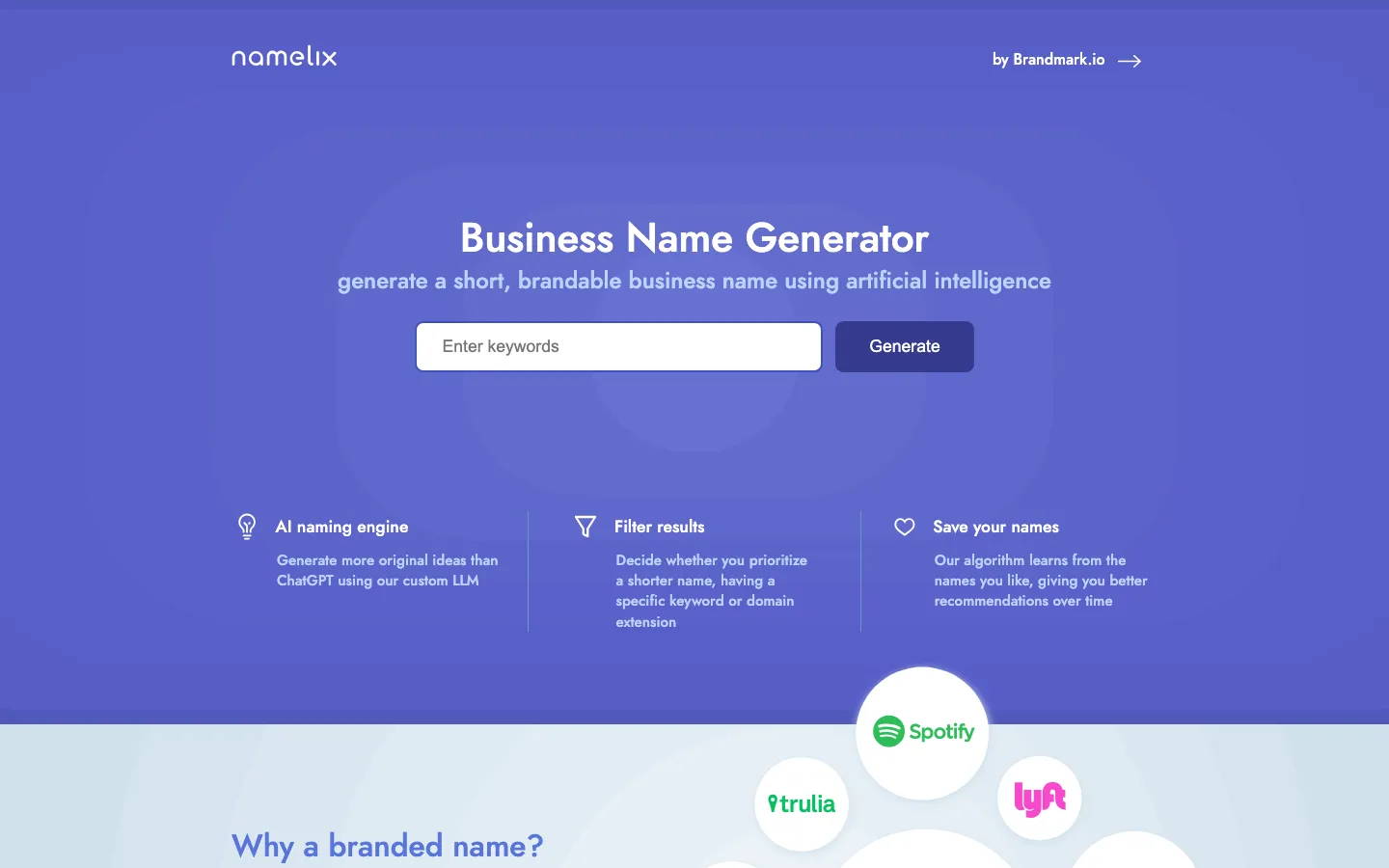
Free AI generators such as Namelix, from Brandmark.io, produce short brandable names from a few keywords in seconds and learn from the ones you save. They are excellent for stage two and useless for stages one, three, and four: they do not know your strategy, they do not screen trademarks, and they will suggest a name that is already a registered mark in your category without comment. Use them to generate; never use them to decide.
A name contest: $299 to $1,499, and you do the screening
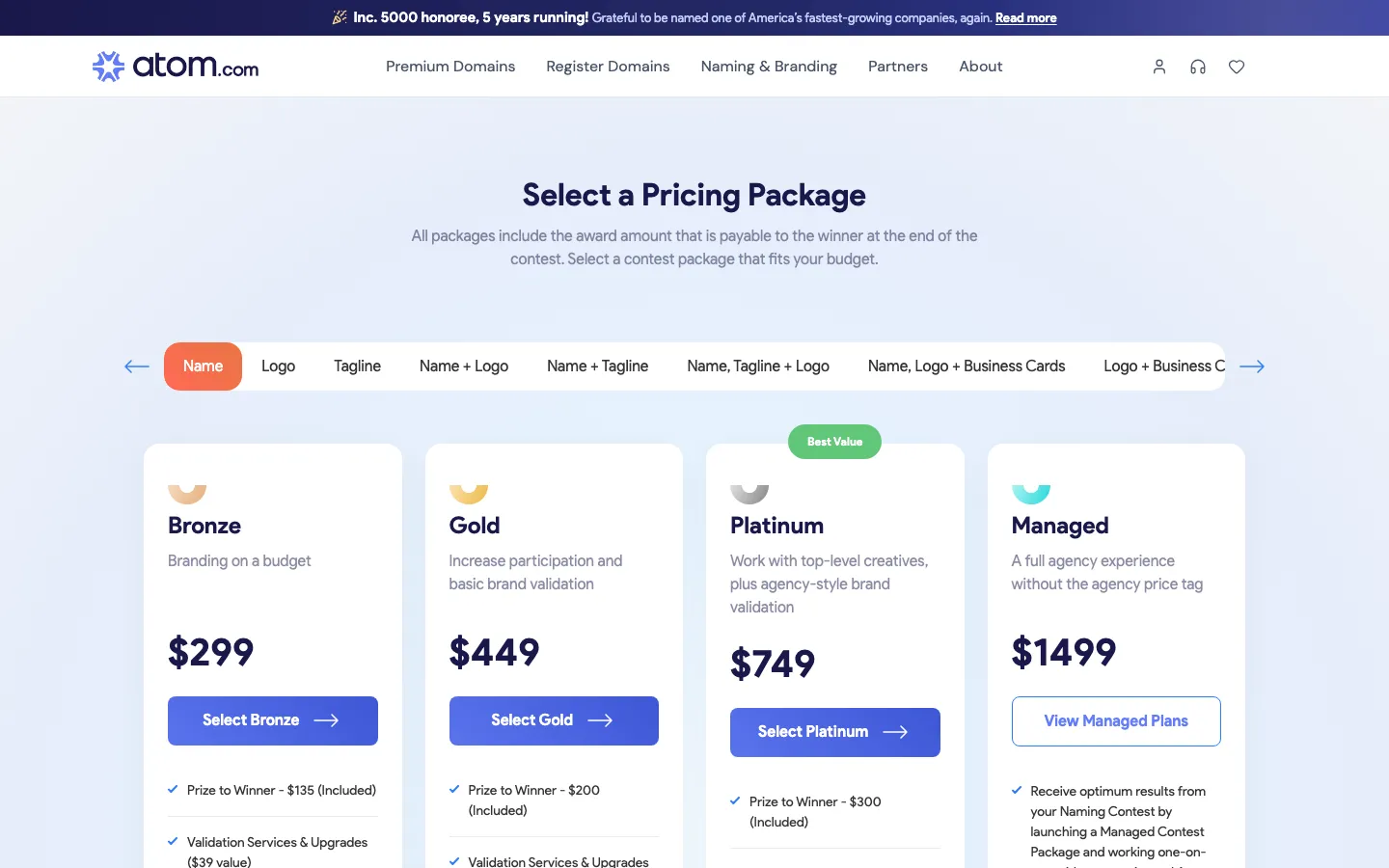
Atom, the company formerly known as Squadhelp, whose old pricing address now serves Atom's page, runs crowdsourced naming contests. On 19 September 2026 it listed Bronze at $299 with a $135 prize to the winner, Gold at $449 with a $200 prize, Platinum at $749 with a $300 prize, and a Managed contest at $1,499 with a branding consultant running it. The packages include validation services of varying depth, and Atom also sells premium domains, which is where its business model points.
A contest is volume at a low price. You get hundreds of entries from people who have read your brief for a few minutes; the strategy, the screening, and the decision are still yours. For a small business that knows exactly what it wants, that can be enough.
A flat-fee naming studio: $5,000, one week
This is what we sell, so weigh it accordingly. Naming and Verbal Identity is $5,000 flat for one week: territories agreed on day one, a shortlist of six to ten screened candidates with a recommendation on days two and three, the voice, messaging pillars, and hero lines on day four, and a messaging guide on day five. The screening is a domain check and a trademark sanity check on every candidate, which is enough to stop you falling in love with a name you cannot own. It is not a legal clearance, and we say so; the last step of the week is handing your attorney a name worth filing.
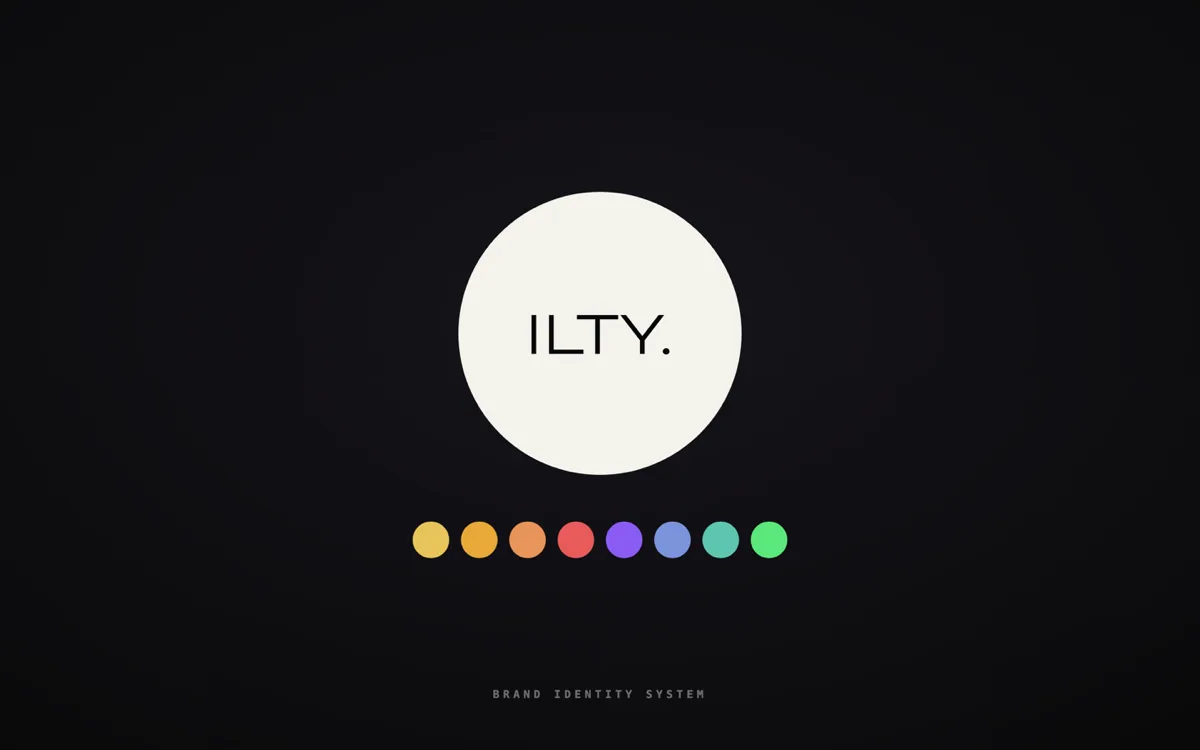
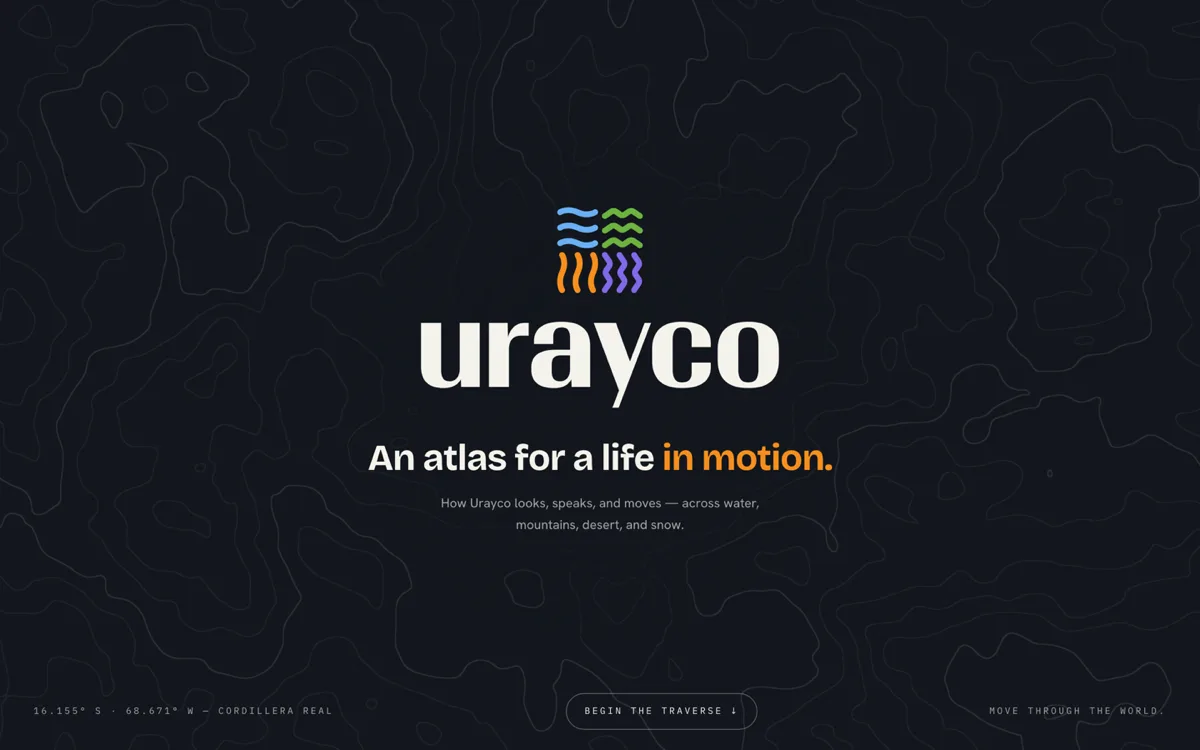
Three names we have made, all public. ILTY is a sentence compressed into four letters, I Listen To You, for an AI companion app whose five companions each have their own name and voice, a voice that had to survive seven languages. Urayco is an invented word for an active-travel brand, built with a story and three type voices around it. LOVU is a travel marketplace whose mark carries four meanings at once.
A naming agency: not published
The established naming agencies, the firms behind household brand names, run long projects with linguistic analysis in many languages, consumer testing, and legal screening done alongside trademark counsel, by a team rather than a person. Neither of the two we checked on 19 September 2026 publishes a price, which is normal for the category. That depth is the right answer for a global consumer brand where a name will be spoken in forty markets; for a startup's first name it is usually more process than the decision needs.
The legal reality: what filing actually costs
Every option above ends in the same place, and the costs here are set by governments, not vendors.
United States. The USPTO base application fee is $350 per class of goods or services, under the fee schedule in effect since 18 January 2025. It rises if the application is incomplete, by $100 per class for insufficient information, and if you write your own description of goods instead of choosing one from the USPTO's manual, by $200 per class, plus $200 for each additional 1,000 characters. Keeping the registration alive costs $325 for the declaration of use and $325 for the renewal, $650 per class every ten years.
European Union. An EU trade mark filed online with the EUIPO costs €850 for the first class, €1,000 on paper, then €50 for the second class and €150 for each class from the third, per the EUIPO's own fee table. One application covers every EU member state. Renewal, every ten years, is €850 online for the first class on the same scale.
The detail most founders miss. The EU's SME Fund for 2026 reimburses 75 percent of EU trade mark application fees, additional class fees included, for eligible small businesses, 75 percent of national and regional fees as well, and 50 percent of fees for international filings through WIPO outside the EU, according to the EUIPO's voucher page read on 19 September 2026. For an EU startup, the first class costs about €213 after the voucher.
What the filing fee does not cover. A clearance search and opinion from a trademark attorney, which is the step that tells you whether the application will survive, costs extra and varies by firm and country. We will not print a number we could not verify. What we can say is that the order matters: screen the shortlist, then pay an attorney to clear the one you chose, then file. Filing first and discovering a conflict later is the most expensive way to learn a name was taken.
Where names actually fail
The domain is gone. The exact .com is owned, often by someone who wants a five-figure price. The workable fixes, a prefix, a different extension, a longer form, belong in the screening stage, not the week after launch.
Someone else registered it in your class. A name can be free as a domain and taken as a trademark for exactly what you sell. That is the conflict that forces a rebrand after the logo is printed.
It means something unfortunate somewhere. In a language you did not check, or as slang you did not know. Screening in the target languages exists for this.
It only fits today. A name built around the first product becomes wrong on the day the second one ships.
Nobody can spell it. If a customer who hears the name cannot type it into a browser, every word-of-mouth referral leaks.
Which route you need
- A side project, a small shop, or a placeholder: an AI generator and an afternoon of screening yourself.
- A small business that knows what it wants and has time to screen: a name contest, from $299.
- A startup whose name has to carry a story and a voice, decided this week: a flat-fee studio, and our Naming and Verbal Identity is $5,000. If the logo and system are next, Startup Branding picks up from the name, and our brand identity design services post prices that step.
- A global consumer brand in many languages: a naming agency, with legal counsel alongside from day one.
- All of the above: budget the filing, $350 per class in the US or €850 in the EU, and a clearance opinion before it. The name is only yours once the office says so.
Have a product idea?
Designed, built, and shipped in about 5 days.