Custom Illustration vs Stock: Cost and Outcome
Stock illustration costs between under a dollar and about ten dollars an image; custom illustration costs roughly thirty to a hundred times more, starting near $90 for a simple spot drawing from a freelancer. On 3 October 2026 we read the plans: Adobe Stock sells 10 credits a month for US$29.99 on an annual plan, iStock sells 10 basic images for $29 a month ($2.90 each), and Freepik Premium, with 250 million stock assets, is $14.50 a month billed yearly. Upwork's published median for illustrators is $15 to $30 an hour. The price gap is real, but it is the wrong thing to compare. A stock license is non-exclusive: iStock's own agreement says it "can license the same content to other customers," and bars the image from any logo or trademark. Custom work is the only option that can contain your product, your mark and your story, and the only one a competitor cannot also buy.
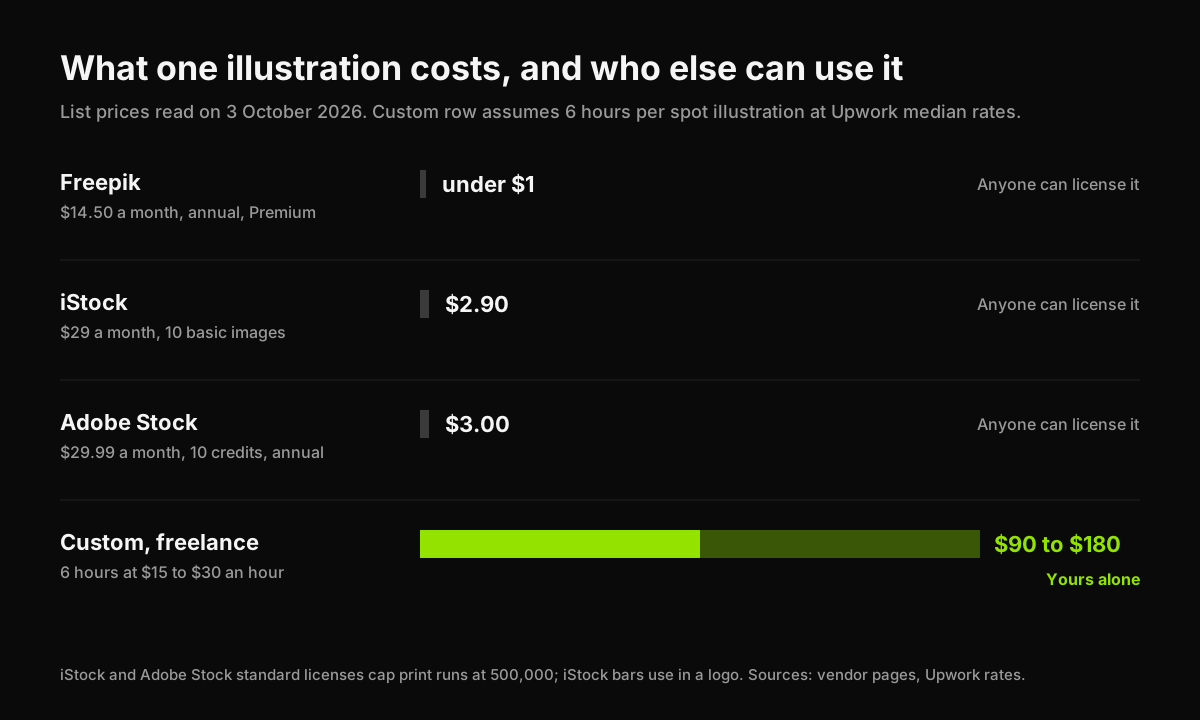
What stock illustration costs in 2026
We read each vendor's pricing page on 3 October 2026, in US dollars. Prices localize by country, so you may see a different currency.
| Library | Plan | What you get | Price per image |
|---|---|---|---|
| Freepik | $14.50 a month, billed yearly (listed down from $20) | 250M+ premium stock assets, with a daily download limit | Under $1 at any real volume |
| iStock | $29 a month | 10 basic images, unused downloads roll over | $2.90 |
| iStock | $70 a month | 10 images including premium | $7.00 |
| Adobe Stock | US$29.99 a month, annual, billed monthly | 10 credits; a standard image or vector is 1 credit | $3.00 |
| Adobe Stock | US$129.99 a month | Unlimited standard images, vectors and video | Effectively zero past a few dozen |
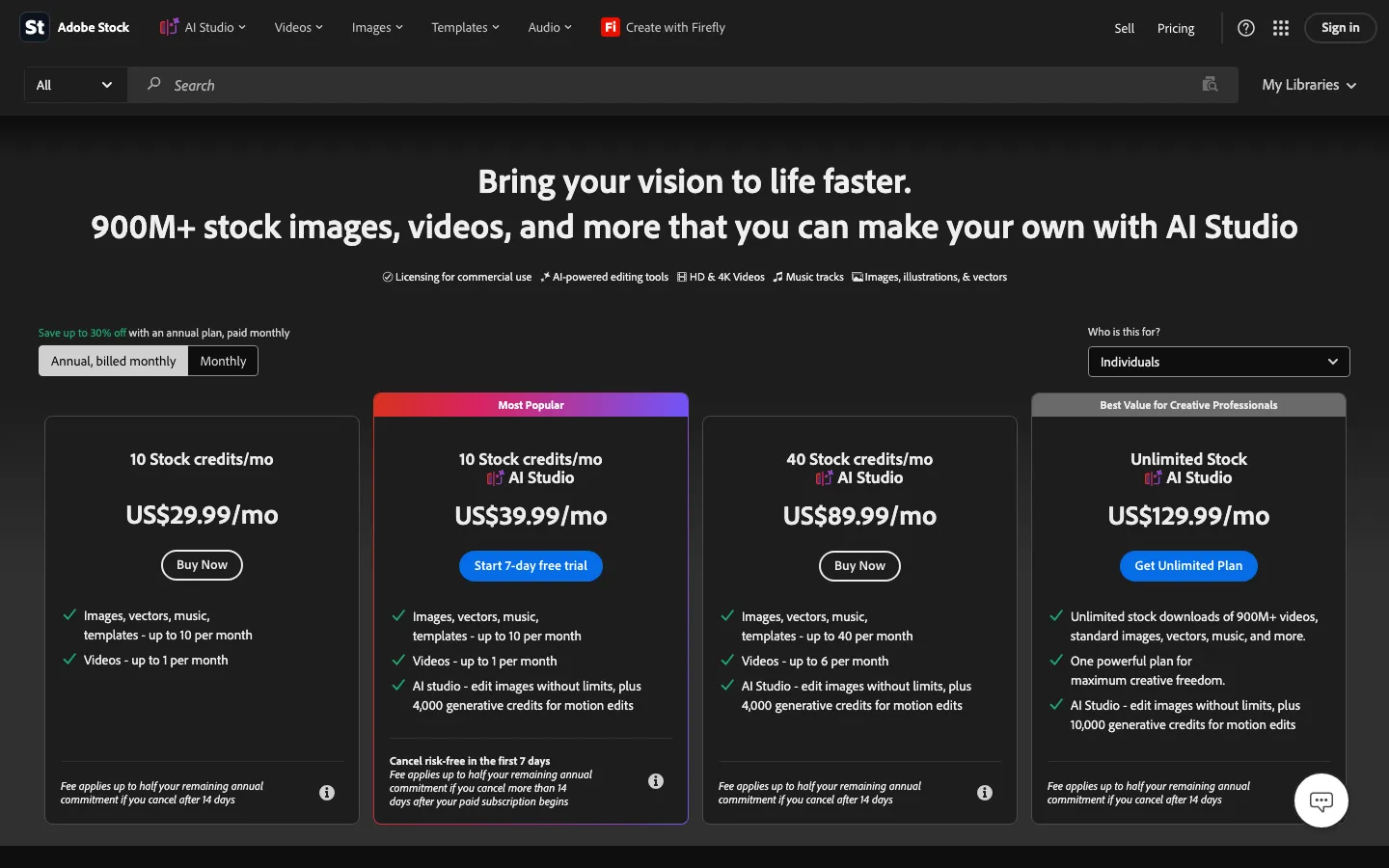
Two details on that page change the math. Adobe's annual plans charge a cancellation fee of up to half the remaining commitment after the first 14 days, so the US$29.99 plan is closer to a US$360 yearly purchase than a monthly one. And both Adobe and iStock now bundle legal protection, up to $10,000 per asset, which tells you how often stock licensing goes wrong for buyers.
Shutterstock is the other large library. Its pricing page would not load for us without a login wall, so it is not in the table rather than quoted from memory.
What custom illustration costs
There is no list price for custom work, which is why most articles on this skip the number. The closest thing to a public benchmark is Upwork's published illustrator rates: a $15 median hourly rate for beginners, $23 for intermediate and $30 for experts, drawn from historical contracts worldwide.
What you pay depends on the size of the drawing far more than the rate. As a planning range, not a quote:
- A spot illustration (an icon-scale scene for a feature row or an empty state) is half a day to a day of work. At Upwork medians that is roughly $90 to $180, and more from a senior illustrator in the US or Europe.
- A hero scene (the one large image above the fold) is several days, because it carries the art direction every other piece copies.
- A system (a style guide plus 10 to 20 pieces that look like one hand drew them) is a project measured in weeks. The style is the expensive part; once it exists, each extra piece costs less than the first.
That last point is the one buyers miss. Custom illustration is not 12 one-off drawings. It is one decision about how your company looks, followed by cheap repetitions of that decision.
What a stock license does not let you do
Price per image is the visible cost. The license is where the real difference sits. From iStock's license agreement, read the same day:
- Not exclusive. "iStock can license the same content to other customers." The image on your homepage can sit on a competitor's pitch deck tomorrow, and you have no claim on it.
- Not a logo. Content may not be used "as the distinctive or distinguishing feature of a trademark, design mark, tradename, business name, service mark or logo," and you cannot register it as a trademark.
- Capped in print. The standard license allows 500,000 physical print copies. Adobe Stock's standard license sets the same 500,000 ceiling on copies or views of the asset. Both sell an extended license above that.
- Revocable. iStock "may discontinue licensing any item of content at any time," and if a claim arises it can require you to stop using the image, delete it, and make your clients do the same.
None of this matters for a blog header or an internal deck. All of it matters for the image that is supposed to be your brand.
What custom gets you that stock cannot
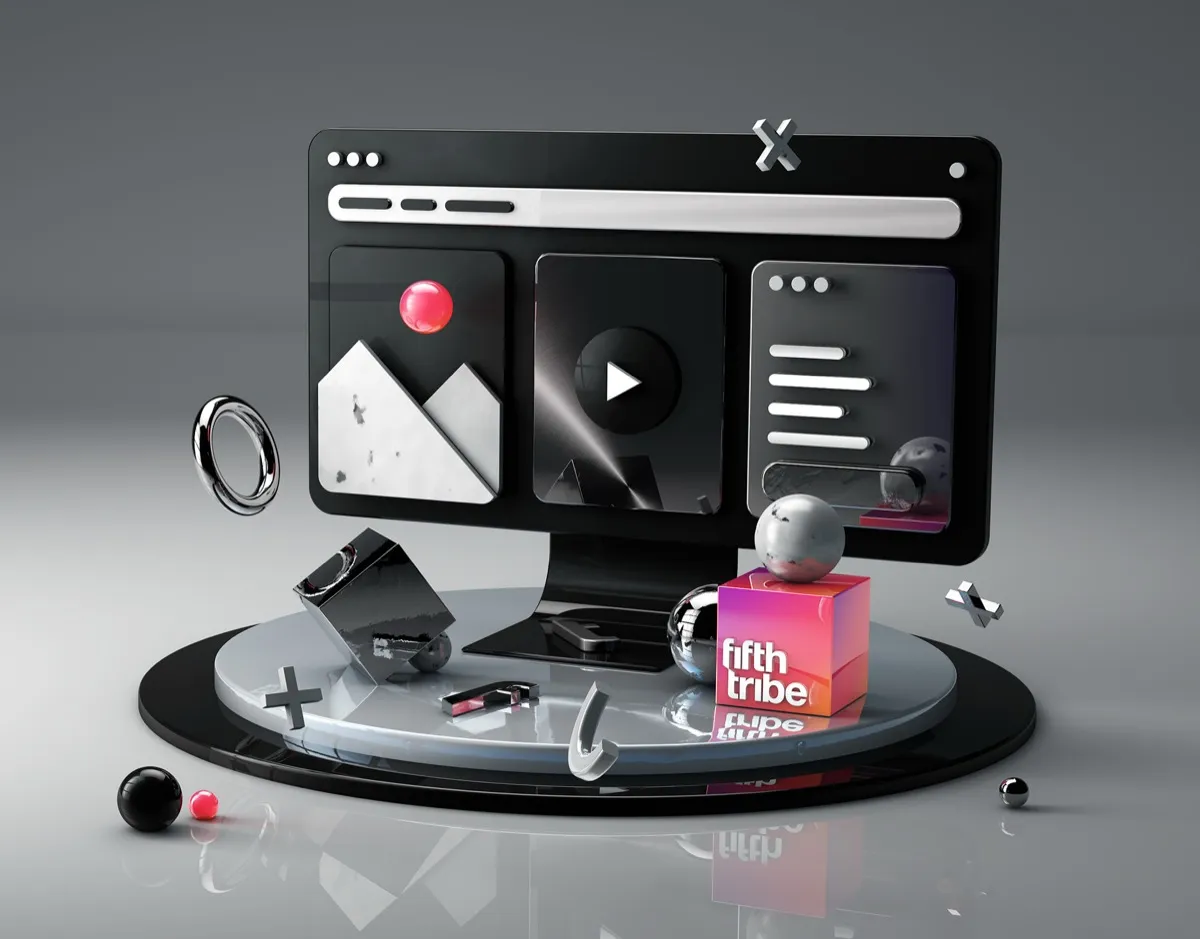
The scene above is from our redesign for Fifth Tribe, a D.C. digital agency. The whole site, custom 3D illustrations included, took four weeks. Look at the pink cube: the client's wordmark is built into the scene, lit and reflected like every other object. No stock library sells that, because no stock library has your name. The same is true of your product UI, your mascot, your city, your actual customers.
The second difference is consistency. Stock forces you to shop across artists, and a site assembled from five artists looks like it. A single hand across every page is what makes a company recognizable before anyone reads the logo. Clay is the clearest current example: its Rube Goldberg machines in orange, blue and pink are a style no competitor can borrow without looking like a copy, which we picked apart in our teardown of the best SaaS website designs.
The third is speed of everything that comes after. Once the style exists, the next landing page, the launch post and the onboarding screens all have a source to draw from, instead of another hour in a stock library looking for something that almost fits.
When stock is the right call
Stock is the better buy more often than illustrators admit:
- The image is supporting, not identifying. Blog headers, slide backgrounds, a one-off ad. Nobody will remember it, so nobody needs to own it.
- You are testing the message, not the brand. A landing page you might throw away in two weeks should not carry a week of illustration. Ship it with stock, keep what works.
- You have no style yet. Commissioning drawings before you have decided how the company looks gets you expensive drawings in a style you will change. Decide the identity first; what a design system is covers where illustration rules sit in it.
When custom pays for itself
Three cases, in order of how often we see them:
- The illustration is the brand. If the visual style is how people will recognize you (a product with no photography, a category full of identical screenshots), it has to be ownable. That means custom, decided alongside the identity. Our Startup Branding work is where that style gets set.
- The image has to show your actual thing. Your product, your logo, your process. Stock can show "a team at a laptop"; it cannot show your dashboard.
- You are raising, selling or launching on the strength of the site. Biteful, a restaurant-supply startup, got brand, UX, custom illustration and a live build in three weeks, and the founders raised $125K within six weeks of launch. The site had to make an early startup look like a company; borrowed art would have made it look like a template.
If the page is a launch moment, the illustration does not have to be flat either. A 3D or WebGL hero is the same decision one step further: an image that moves, built for the one page that matters.
The short answer
Use stock for anything forgettable, and pay for custom where the image has to be yours: the hero, the identity, anything with your product in it. Budget the custom work as a system, not as a pile of drawings, so the cost falls with every piece after the first. If you are not sure which of your pages deserve it, a free page roast will tell you which images are carrying weight and which are filler, and a Landing Page Sprint is where we usually make the first custom hero.
Prices verified on 3 October 2026 against stock.adobe.com/plans, istockphoto.com/plans-and-pricing, freepik.com/pricing, Upwork's illustrator rate page, and the Adobe Stock and iStock license terms.
Have a product idea?
Designed, built, and shipped in about 5 days.