The London West Hollywood: What Eight Years Kept
A luxury hotel's website has to sell one property to several kinds of guest without looking like it is trying, and at The London West Hollywood there were four. The London is the all-suite hotel on San Vicente Boulevard where West Hollywood meets Beverly Hills: 226 suites by David Collins Studio, a rooftop pool reserved for guests, and a 110-seat screening room. Its guests are entertainment people booking junkets, couples, business travelers, and families. In 2018 we designed a site that leads with the rooftop, keeps the booking button in the same corner of every page, and gives each audience its own route under one design language. We read the live site on 9 October 2026. The header, the menu, the offer cards and the neighborhood map are all still there. The industry audience we argued for now has its own page with a published rate card. Below: the decisions, and what eight years kept.
The property, in one sentence
The London West Hollywood is an all-suite luxury hotel at 1020 North San Vicente Boulevard, part of The London Hotels, where the British half of the brand is in the manners and the California half is on the roof. Its own homepage carries the Travel + Leisure World's Best line, "The Top 15 Hotels in Los Angeles," six years running.
The brief
The previous site was a generic luxury template: rooms, dining, contact, the same as every hotel on the Strip. It said nothing about why a guest would choose this one over The Beverly Hills Hotel, the Pendry or the Edition, and it treated a publicist booking a junket floor the same way it treated a couple booking a weekend. Our role was research, information architecture, and UX and UI design.
The decisions
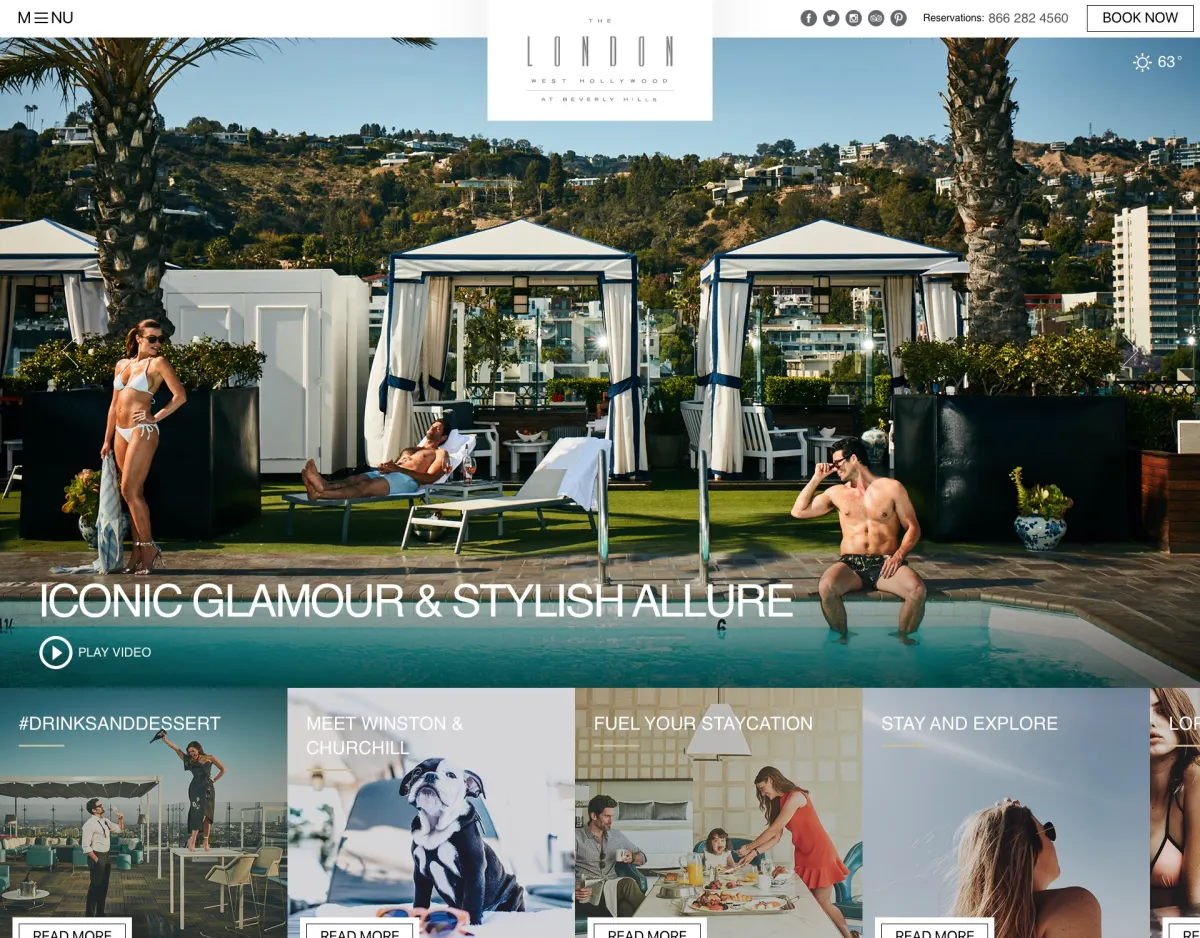
Lead with the roof. The rooftop pool is the one view no competitor on the Strip has in the same frame: cabanas, palms, and the Hollywood Hills behind. The homepage opens on it, full width, with one line, "Iconic Glamour & Stylish Allure," and a play button for the video. No copy argues for the suites before the photograph has.
Put the logo in a tab, and the booking button in a corner. The London's wordmark is tall, thin and quiet, so it sits in a white tab hanging from the top centre rather than shrinking into a bar. Reservations phone number and Book Now sit top right, on every template. A guest never has to look for the way in.
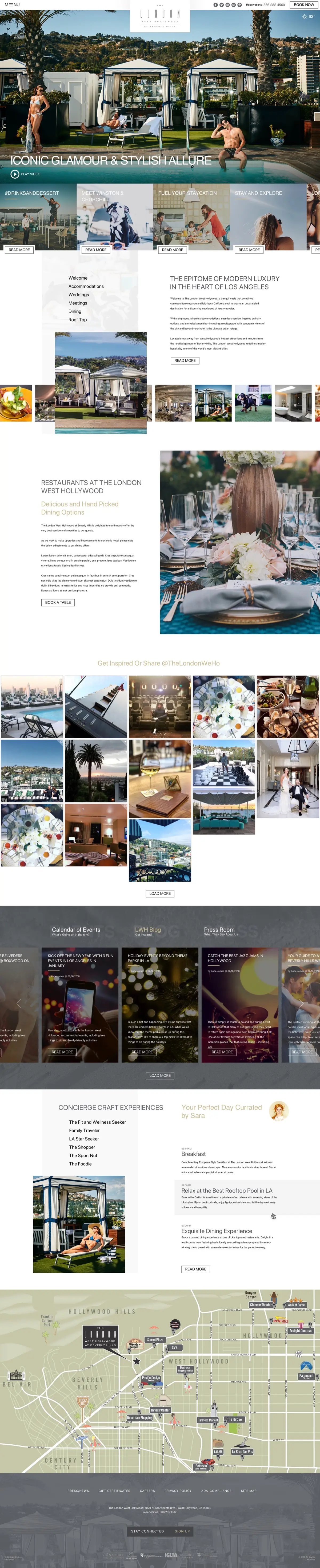
Give every audience a door in the menu. The full-screen menu lists Our Hotel, Suites, Premier Suite Collection, Dining, Weddings, Meetings and Events, and Gallery, with Specials, Location, London Loyalty and Blog as a quieter second tier. Couples go to the suites and the roof. Planners go to weddings and meetings. The industry crowd, who book the screening room and whole floors for press days, needed a page of their own, and the research said so.
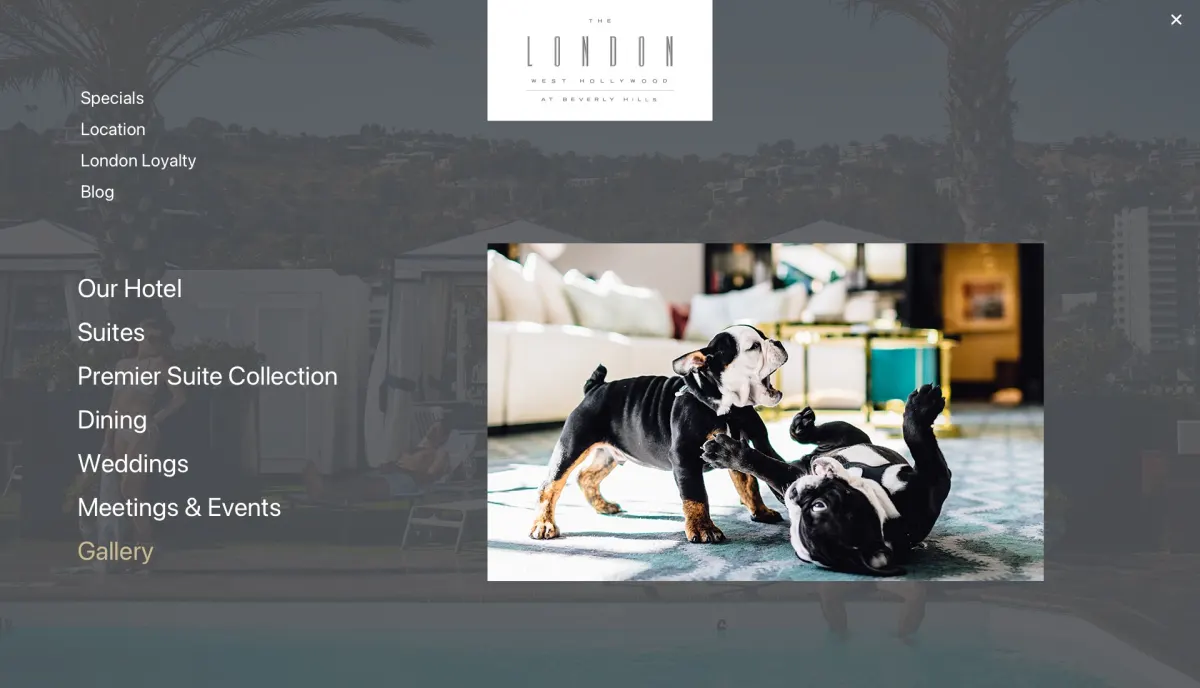
Let the British half be the dogs. The hotel had two bulldog puppies as official mascots, Winston and Churchill, named for the Prime Minister. They got a homepage card and a page of their own: where to meet them, a pet menu, the pet policy, and an offer to bring them to an event for an hour against a $250 donation to a local animal shelter. A crest says British. Two bulldogs on a rooftop in West Hollywood say British with a sense of humour, which is the brand.
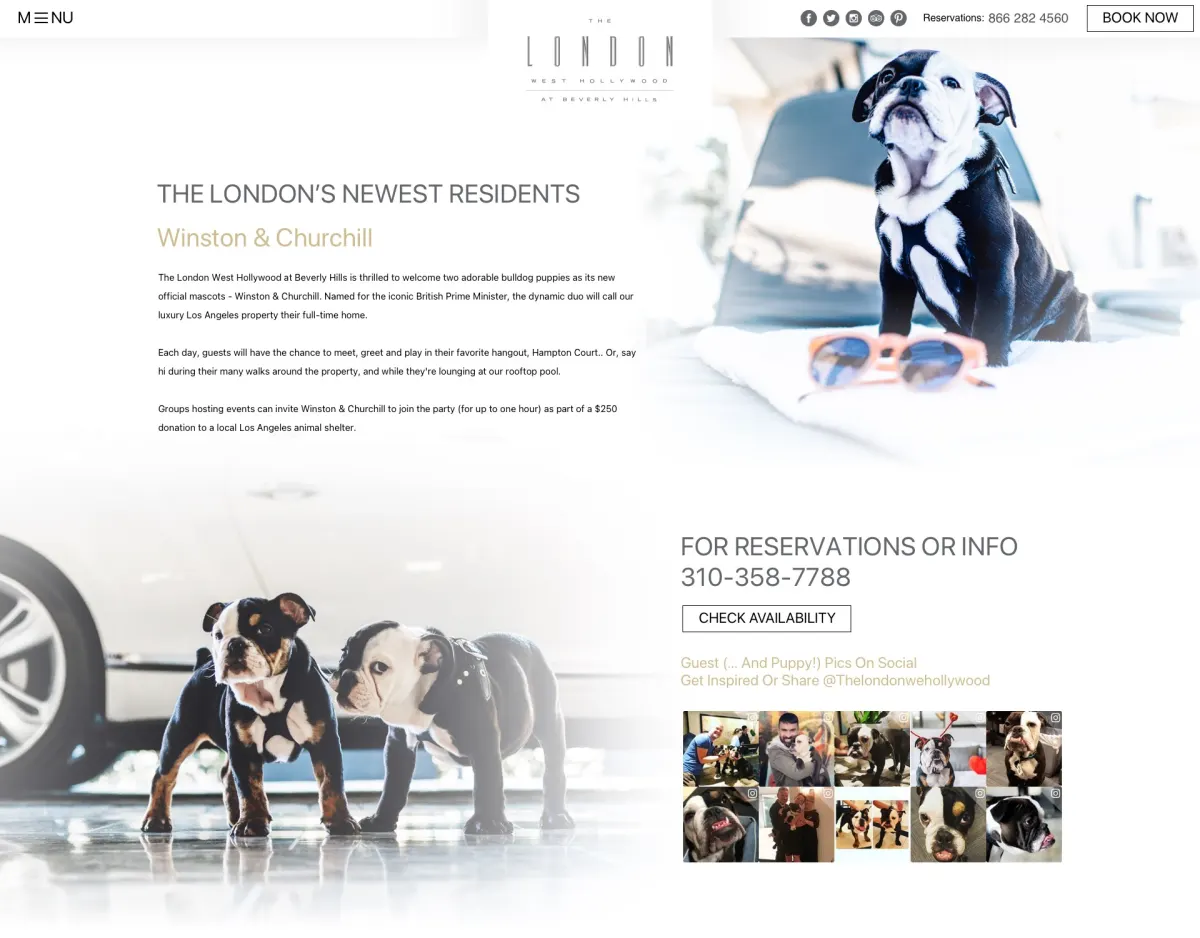
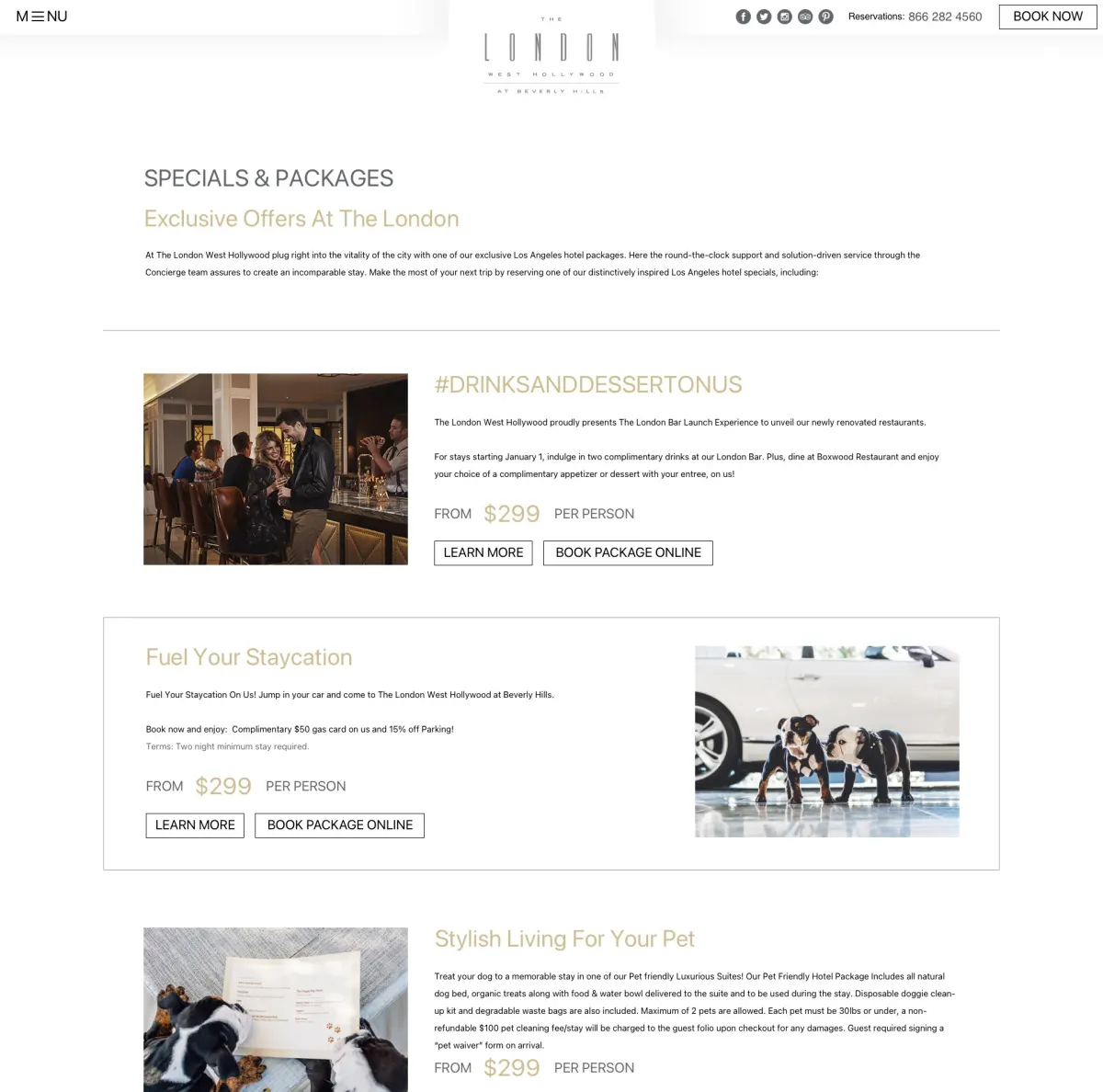
Offers as cards, each with a reason. The specials page sets each package as a card with a photograph, a title, a short gold rule, the price, and two buttons: learn more, or book the package. The same card, in a horizontal row, runs across the homepage.
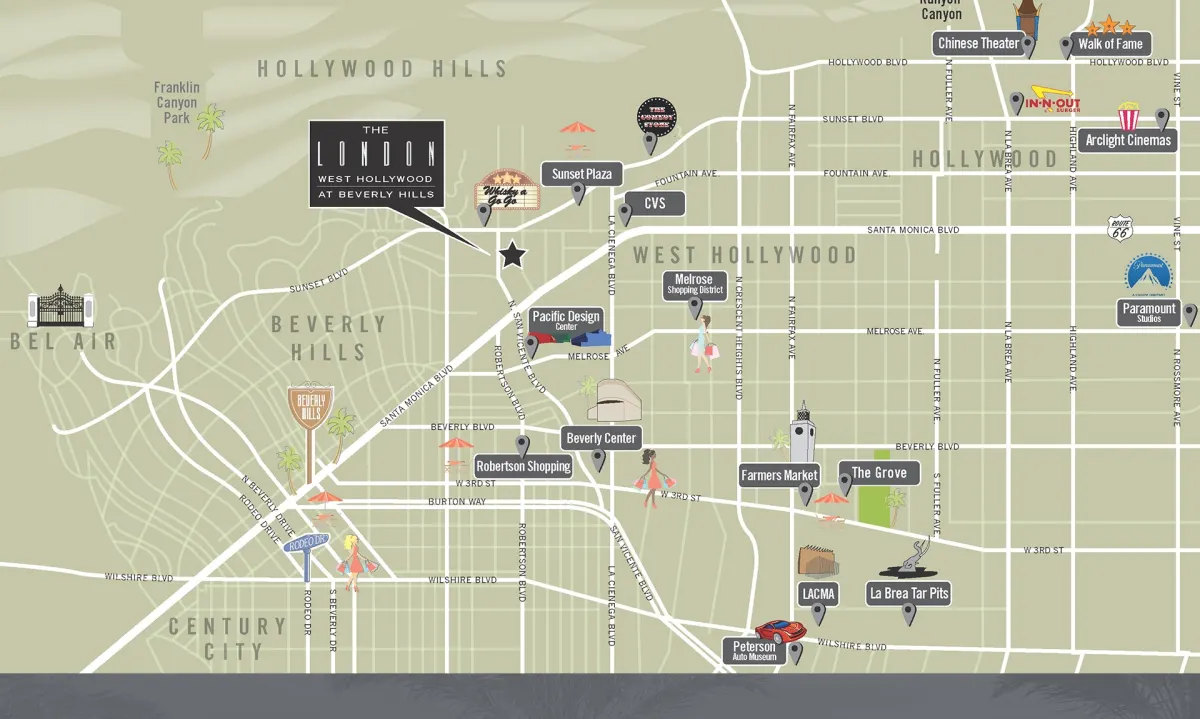
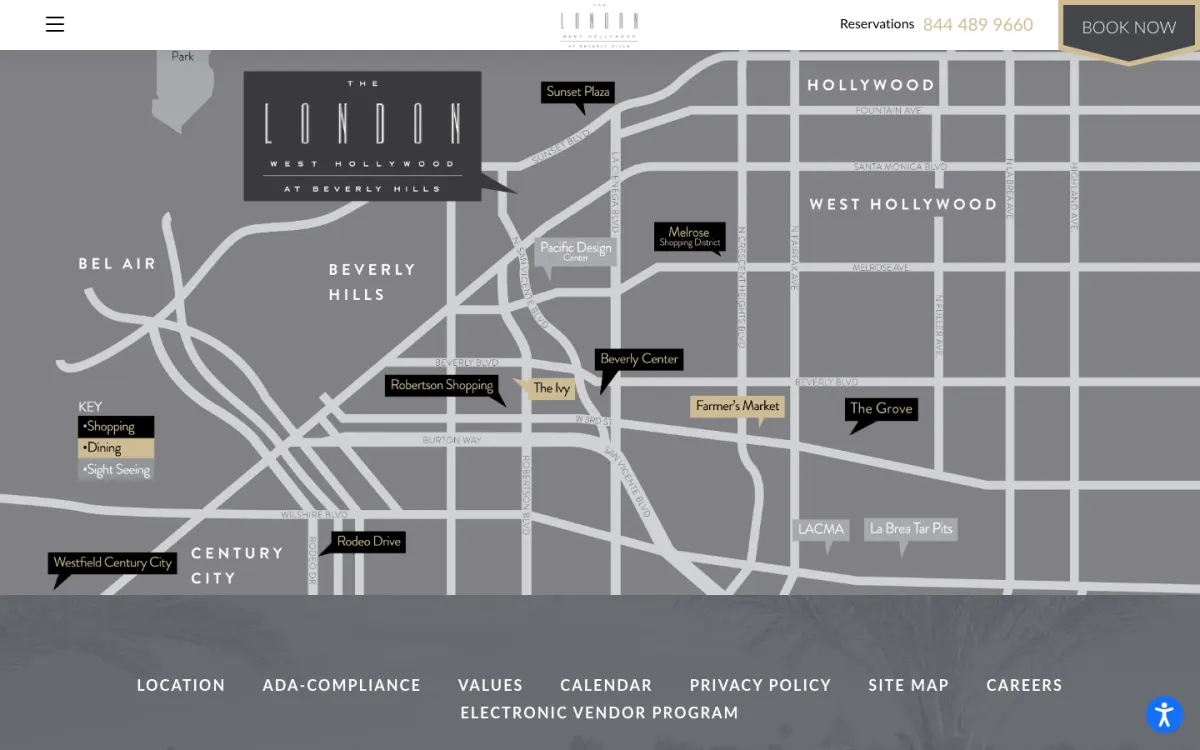
Draw the neighborhood. Location is the reason half the guests are here, so the homepage closes on an illustrated map rather than an embedded one: Sunset Plaza, the Pacific Design Center, Robertson, Rodeo Drive, the Grove, LACMA, with the hotel's logo in a callout and a star on San Vicente. A Google map gives directions. A drawn map gives a reason to stay here rather than a mile away.
What this is, and is not
These are the screens as designed in 2018, produced with a hospitality agency team at the time; the blog cards in the comps are dated February 2018. The restaurant copy is placeholder text and the package prices repeat the same "from $299" across every card; both were filled in by the hotel. Performance figures were the hotel's and were never shared with us for publication, so there is no conversion claim here.
What the live site looks like today
We read thelondonwesthollywood.com on 9 October 2026. The newsletter form posts to Cendyn, the hotel's marketing platform, so the site has been maintained by another team since. What follows is what is visible, not a claim about whose code it is.
The header is the same header. Hamburger on the left, the wordmark in its white tab at the top centre, "Reservations 844 489 9660" and a Book Now button top right, now with a pennant shape. The hero is a video of a guest in a robe in a suite rather than the roof.
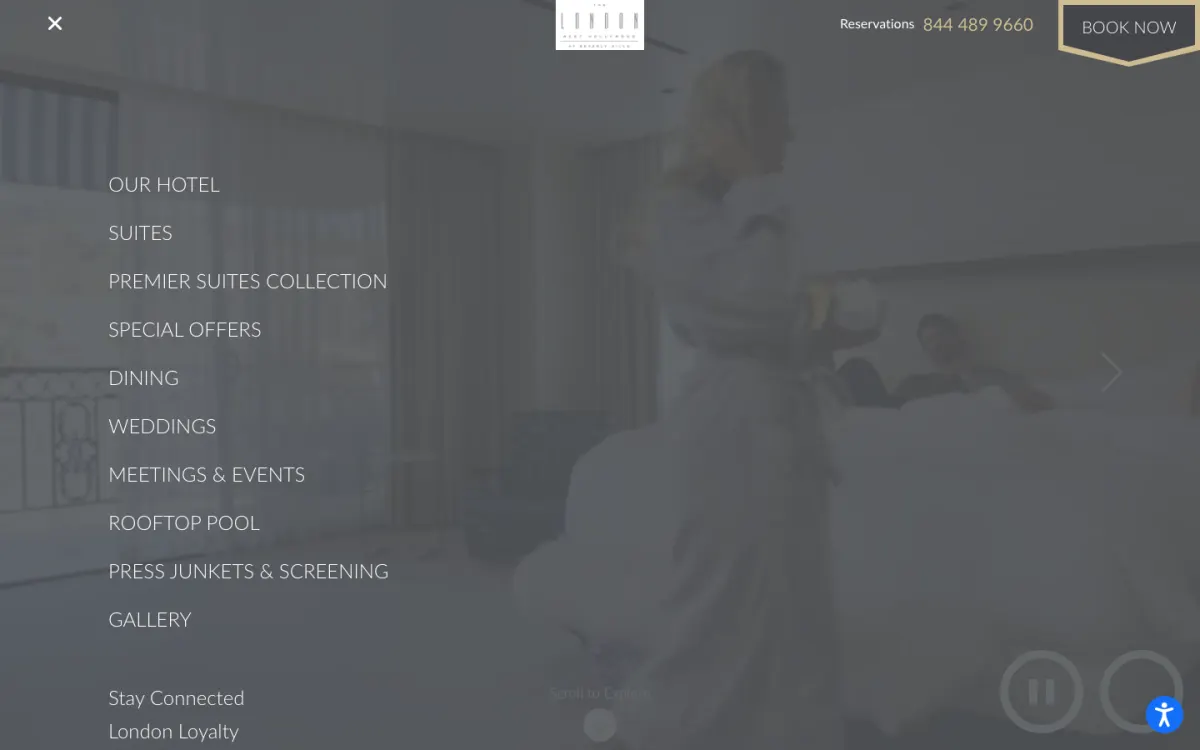
The menu kept the order and added the doors we argued for. Our Hotel, Suites, Premier Suites Collection, then Special Offers moved up into the main list, Dining, Weddings, Meetings and Events, and two new top-level items: Rooftop Pool, and Press Junkets and Screening. Gallery still closes it.
The industry page has a price. The Press Junkets and Screening page describes "an entire floor dedicated to the art of promotion," the 110-seat screening room with Dolby surround, a private talent entrance, and a named head of talent and media events. Its pricing page publishes the rate: $500 an hour before 6pm with a three-hour minimum, a $425 room engineer fee, valet at $15 a car. That is the segment route taken to its end. A publicist can price the room without a call.
The offer cards are the same cards. Title, short gold rule, one button, in a sliding row: Plan Your Next Event, Advance Purchase, California Resident Rate, Complimentary Breakfast. The homepage copy puts numbers on two of them: "Save up to 25% off when you book more than a week prior," and "California residents get up to 20% off!"
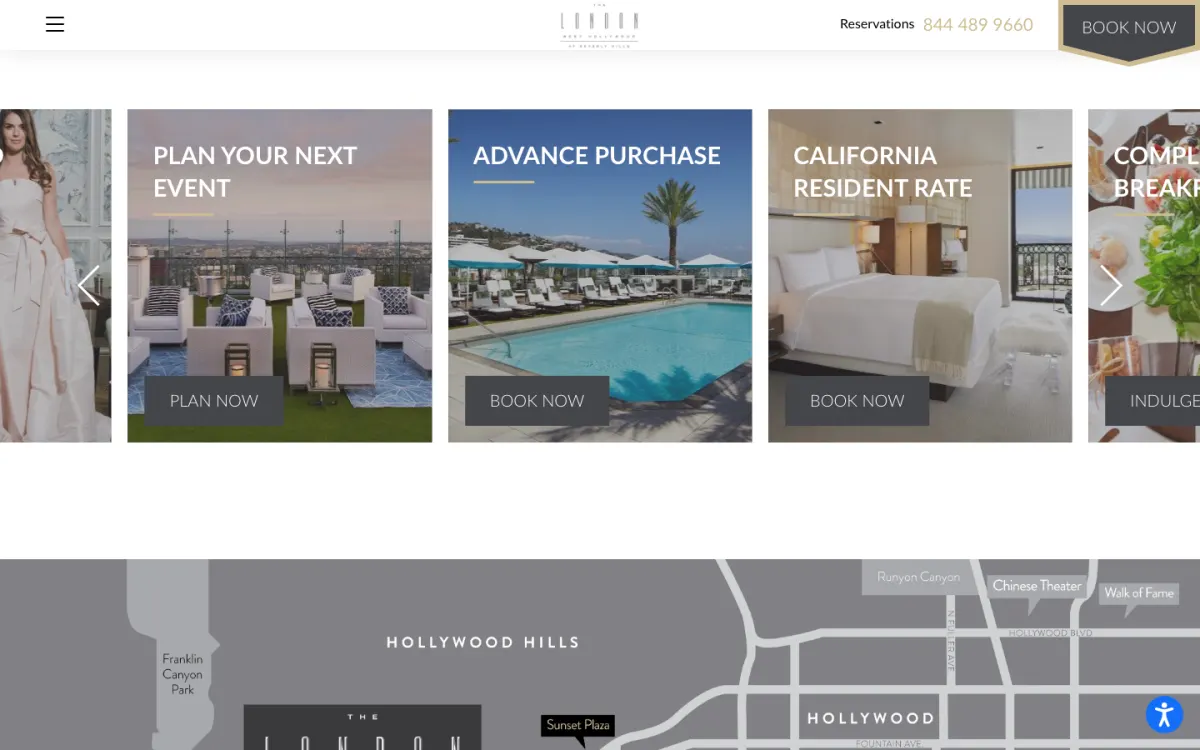
The map survived, simplified. Same streets, same logo callout, same landmarks, recoloured in greys with a key for shopping, dining and sightseeing. The palms and the In-N-Out sign are gone.
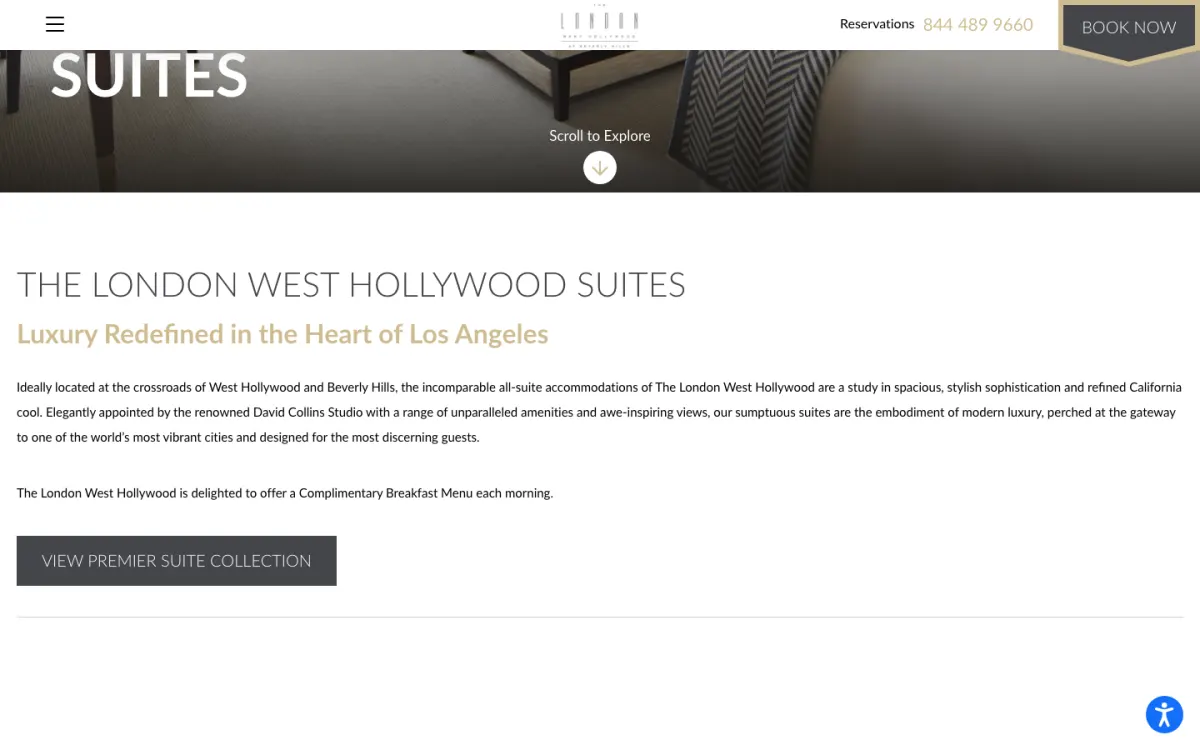
The headings still speak in two voices. An uppercase line in grey, then a line in gold underneath: "The London West Hollywood Suites," then "Luxury Redefined in the Heart of Los Angeles." The 2018 pages did the same with "The London's Newest Residents" over "Winston & Churchill."
The dogs have gone; dogs have not. Winston and Churchill no longer appear. The family travel page says "We are also dog-friendly!" and the policy page allows one dog under 30 pounds per suite with a one-time $200 cleaning fee. The policies page also lists a $45 nightly amenity fee, which includes the house car within two miles.
What carries to any luxury independent
- Design the routes, not just the pages. The London's site works because a publicist, a bride and a couple each find their door in the first menu. Eight years later the hotel added two more doors to that same menu, which is what a sound structure allows.
- Publish the price for the buyer who hates calling. The screening room rate card is the most useful page on the site for the most valuable non-room customer. Our own hotel website grader checks for a visible price for the same reason.
- Keep the booking button where it was. Same corner, every template, since 2018. Of everything on a hotel site, that is the part that should outlast every redesign; what an OTA booking costs a hotel is the reason.
- Let a mascot carry a brand, and expect it to retire. Winston and Churchill did in one card what a paragraph about British heritage could not. Mascots age; the voice they set does not have to.
Where we fit
We sell this work on published prices: the hotel website design tiers are $12,000 on our Aurelia template, from $30,000 for a custom design, and from $75,000 for a multi-property platform. A site that needs several audience routes, like this one, is a custom design. For the long version of how a brand voice carries across every page, read storytelling in hospitality website design.
The full case study is at The London West Hollywood. The other properties in this series: The Maven, whose art-first thesis grew its own page, The Resort at Pedregal, Brush Creek Ranch, Hotel El Ganzo and Bisha Toronto.
Have a product idea?
Designed, built, and shipped in about 5 days.