OTA Commissions Explained: The Book-Direct Math
An OTA commission is the share of each booking a hotel pays the online travel agency that sold it, and only two of the big five platforms publish theirs. On 8 October 2026 Airbnb's help centre listed a single host fee of 15.5 percent for most hosts, mandatory for hotels, and Vrbo's listed "a flat, all-in 12% commission fee, which includes payment processing fees." Booking.com's partner help says the rate "depends on your country, property type, and the accommodation agreement you signed," and Expedia publishes none; both state that paying more can move a property up their results. Google's free booking links cost nothing per click. A direct booking on your own site costs the card fee, 2.9 percent plus 30 cents on Stripe's US pricing. On a $500 stay that is $14.80 direct against $60 to $100 through a platform, which means a hotel paying 15 percent can give direct guests about 12 percent off and still net the same. Most give nothing.
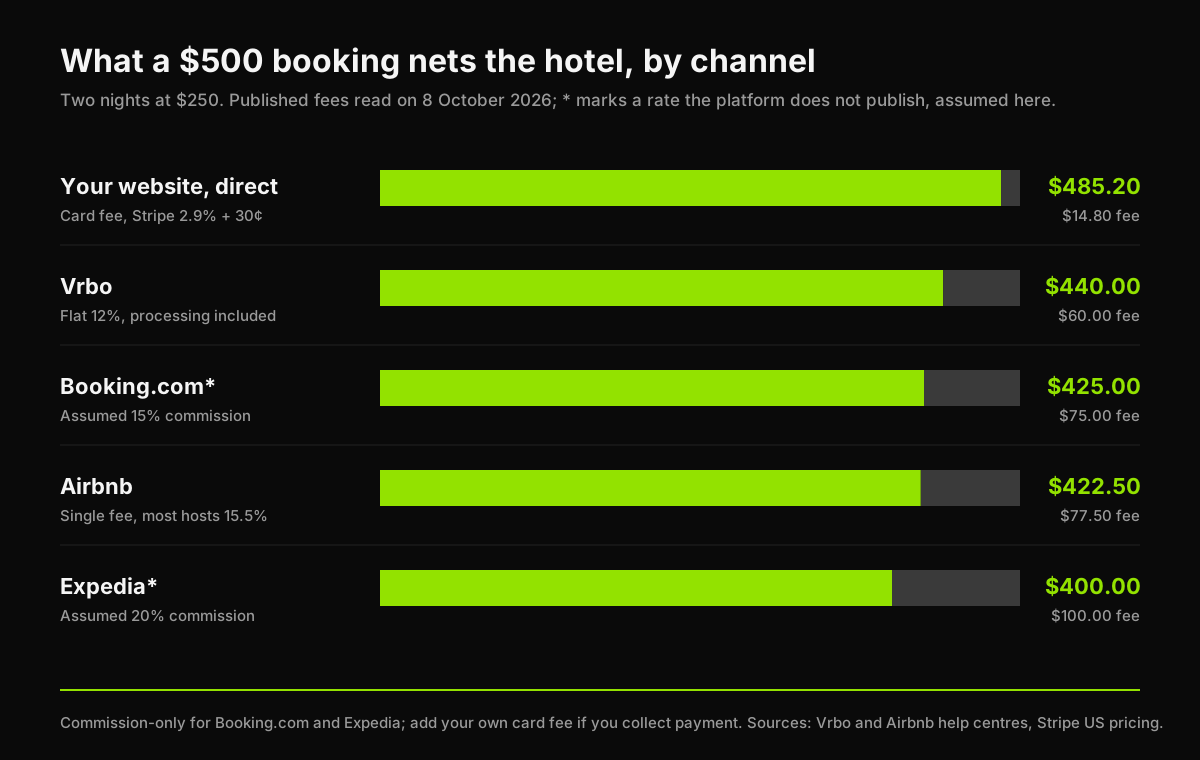
We covered why a platform often looks cheaper than the hotel's own site, and what Booking.com's Genius discounts and the end of EU parity clauses changed, in why Booking.com looks cheaper than the hotel website. This post is the reference underneath it: what each channel charges, what the commission is charged on, and the arithmetic of winning a booking back.
What each platform charges, in its own words
Booking.com: in your contract, plus programmes
Booking.com's partner help defines commission as "a set percentage of the total booking amount," charged on the room rate and on "any additional fees you charge, such as cleaning fees, service fees, and costs for no-shows or cancellations." It is not charged on local taxes such as city tax, but "in most countries, commission is charged on VAT or GST." It is also charged on overbookings, because the room was on sale.
There is no number on the page. The rate is set per property in the agreement, and Booking.com's own explanation for a statement rate higher than the contract is that "you may be participating in one of our marketing programs like Preferred Partner or Visibility Booster." Its Preferred Partner page offers "increased exposure in search results" for "a small increase in commission," and says Preferred partners average 65 percent more search views and 20 percent more bookings. The 15 percent in the chart is the baseline commonly cited for independent hotels, not a Booking.com figure. Read your own agreement; it is the only source that counts.
Expedia: unpublished, and it sorts by what you pay

Expedia publishes no commission rate for hotels. What it does publish is how that rate is used. Its sort order page says that, except on Vrbo and its sister sites, "we also consider how much we're paid when you book and stay at a property," and that among similar offers "we may feature properties that offer more commission or compensation higher in the search results listing." Its Accelerator tool is the dial: a pay-per-stay setting where you pick an extra compensation level, preview "the potential impact on your sort order," and pay it only on stays. Expedia also runs two payment models, Expedia Collect, where it takes the guest's money and pays you, and Hotel Collect, where you charge the guest and it invoices you. Under Hotel Collect, your card fee sits on top of the commission.
Airbnb: 15.5 percent, now the default for hotels
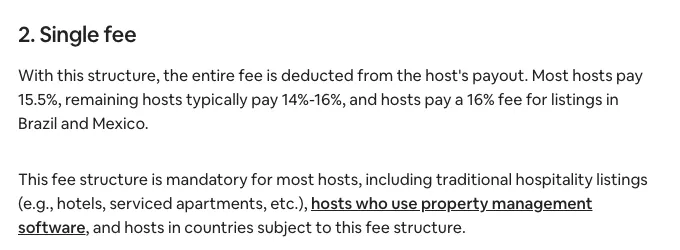
Airbnb is moving every host to a single fee taken from the payout: "Most hosts pay 15.5%, remaining hosts typically pay 14%-16%," and 16 percent in Brazil and Mexico. It is "mandatory for most hosts, including traditional hospitality listings (e.g., hotels, serviced apartments, etc.)" and for anyone on property management software. The old split, about 3 percent from the host and 14.1 to 16.5 percent from the guest, is being phased out.
Vrbo: 12 percent all in, and the subscription is ending
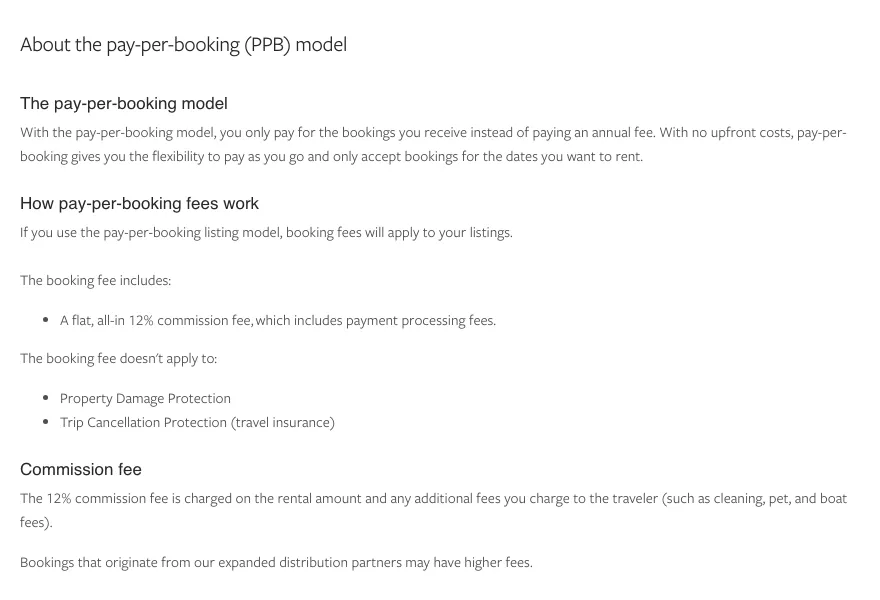
Vrbo's help page lists a flat 12 percent on the rental amount plus cleaning and other fees, processing included. Its payment terms carry a notice of new terms effective 29 October 2026, the date Expedia Group is moving legacy annual-subscription hosts onto the same 12 percent, as Short Term Rentalz reported. In Europe, Australia and New Zealand, hosts on property management software can be charged 12 to 15 percent.
Google: free links, paid ads
Google's Hotel Center help says free booking links show your rate and send the click "directly to the landing page you provide," and "there's no cost for clicks on free booking links." Ranking uses "consumer preference, value offered to the user, landing page experience, and historical accuracy of the prices," and "nor can anyone pay for a higher ranking." Hotel Ads, the paid placement above them, are bid. If your booking engine is connected to Google, the free link is the cheapest booking channel that exists, and it lands on your site.
The math of book-direct
Take the $500 stay from the chart and ask one question: how much can a direct guest be given before the hotel nets less than it would through the platform?
- Against Vrbo at 12 percent, about 9 percent off.
- Against Booking.com at 15 percent, about 12 percent off.
- Against Airbnb at 15.5 percent, about 13 percent off.
- Against Expedia at 20 percent, about 17 percent off.
The working: the direct booking nets the discounted price, less 2.9 percent and 30 cents. Set that equal to the platform's net and solve for the discount. It is conservative, because under Hotel Collect the platform booking also pays a card fee.
Now scale it. A hotel that takes 3,000 room nights a year through platforms at $250, at an average 17 percent, pays $127,500 in commission. Every night moved to the website saves about $35 after the card fee. Move 10 percent of them, 300 nights, and that is about $10,600 a year; move 20 percent and it is about $21,200. Subtract whatever you spend to win those guests (metasearch bids, ads, a booking engine at "from €75 a month" for SiteMinder when we compared booking engines on 15 September) and the rest is margin.
Two cautions keep the math honest. First, not every platform booking is movable: the platforms find guests who would never have heard of you, which is what the commission buys. The target is the guest who already knows your name and books through the platform out of habit, not every guest. Second, a discount nobody can see moves nobody. The direct rate has to be on the page, next to the room, with the difference stated.
Where the website comes in
The commission is set in a contract. Whether a guest who found you on a platform comes back to your own site to book is set by the site: whether it shows a price on the room page, whether the direct benefit is stated in a number, whether the booking engine keeps dates and room through to a total on a phone. Those are the checks the free hotel website grader runs on the booking path in about a minute, and the A/B testing ideas for travel websites are where to take it after. Of twelve admired hotel websites we checked on 10 October 2026, only two put a number on why to book direct.
We design and build hotel sites around that path. On the hotel website design page, a site on our Aurelia template with your brand and your real booking engine wired in is $12,000; at the numbers above that is roughly 340 nights moved off a 17 percent platform. For a group that wants the direct channel improved month after month, the Hospitality Digital Experience Lab runs it as a retainer.
The test for this week: find your commission rate in your Booking.com and Expedia statements, not your contract, since programmes raise it. Then look at your own room page on a phone and see whether a guest could tell, in a number, why booking with you is better. If the answer is no, the 15 percent is a design problem as much as a commercial one.
Sources, read on 8 October 2026: Booking.com partner help (commission; Preferred Partner Program), Expedia's sort order page and Partner Central Accelerator article, Airbnb's service fees article, Vrbo's pay-per-booking help and payment terms, Google Hotel Center help on free booking links, Stripe US pricing, and Short Term Rentalz on the Vrbo 29 October change. Booking.com and Expedia rates in the chart are assumptions, labelled as such.
Have a product idea?
Designed, built, and shipped in about 5 days.