Why Booking.com Looks Cheaper Than the Hotel Website, and How to Fix It
Booking.com usually is not cheaper than the hotel's own website; it is faster to compare, and where it genuinely is cheaper the hotel is paying for the discount out of its own margin. Four mechanisms produce the gap: a loyalty programme whose 10 to 20 percent discounts come off the property's rate, a commission of roughly 10 to 25 percent that the hotel has already priced in, ranking pressure that Booking.com openly says commission affects, and a direct booking path that often will not show a guest a price at all without a form. The legal excuse for the gap is gone: Booking.com was designated a gatekeeper under the EU's Digital Markets Act on 13 May 2024 and no longer applies parity clauses in the European Economic Area, so undercutting the platform is allowed. Most independent hotels still do not. Below is why, with prices and policies read on 17 September 2026.
First, the part everyone gets wrong
The common story is that Booking.com forces hotels to match its price. That was true, and it is not any more.
The European Commission designated Booking as a gatekeeper under the Digital Markets Act on 13 May 2024, for its online intermediation service Booking.com, case DMA.100019. Booking.com's own newsroom now states that it "no longer use[s] parity clauses with our partners in the European Economic Area," describing the removal as part of its Digital Markets Act compliance. In other words, a hotel in the EEA is free to publish a lower rate on its own website than the one on the platform, and has been for well over a year.
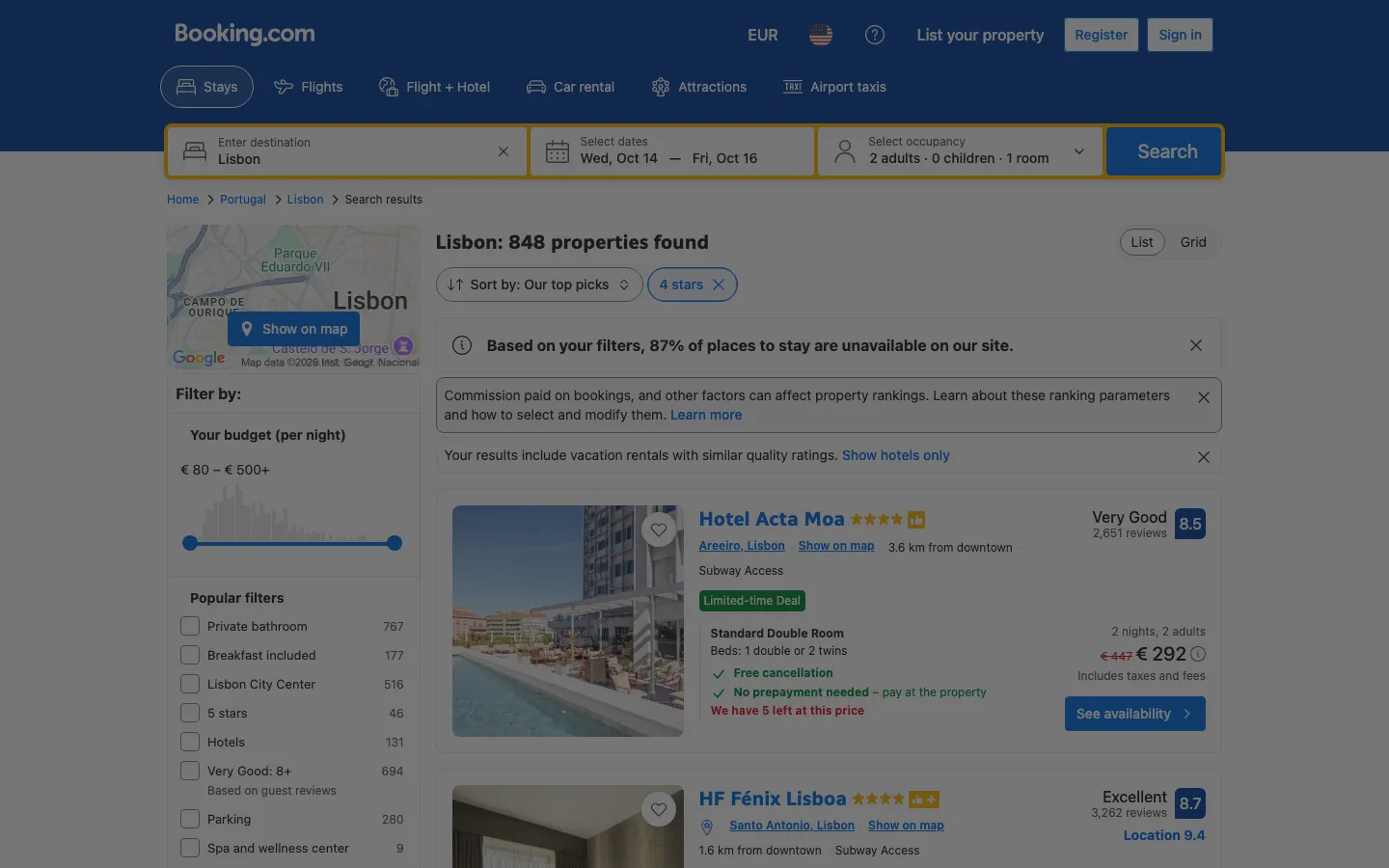
What has not changed is that the platform still decides what a guest sees first. On its own search results page, Booking.com carries this notice: "Commission paid on bookings, and other factors can affect property rankings." That is the platform telling you, in its own words, that paying more moves you up the list. Parity clauses are gone; the incentive they enforced is not.
The four mechanisms
1. Genius discounts, funded by the hotel
Booking.com's loyalty programme is the single biggest reason a platform rate undercuts a direct rate. On 17 September 2026 its Genius page listed Level 1 at 10 percent off stays, Level 2 at 10 to 15 percent, and Level 3 at 10 to 20 percent, with discounts "applied to the price before taxes and fees" and each level kept for life once unlocked.
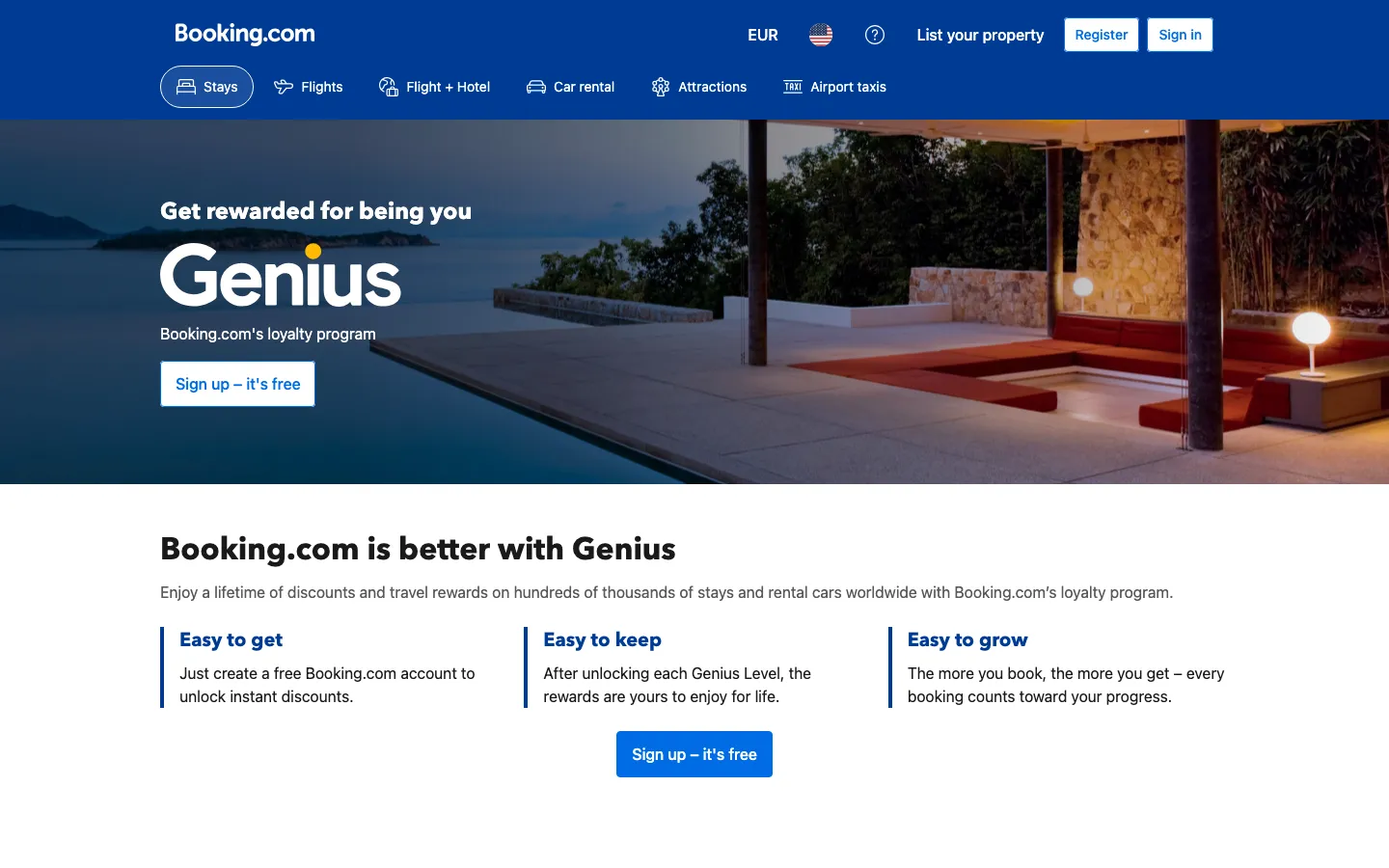
A logged-in guest sees a rate ten to twenty percent below the public one. The hotel opted into that programme, and the hotel funds the discount. So the comparison a guest makes is not "platform price versus hotel price." It is "hotel price minus a discount the hotel is paying for, versus hotel price." The platform looks generous with the property's money.
2. Commission the hotel has already priced in
Commission on Booking.com runs roughly 10 to 25 percent, with about 15 percent the common baseline for independents, set in each property's accommodation agreement and varying by country and property type. Booking.com's partner help explains that commission is "a set percentage of the total booking amount," that it is charged on overbookings as well as stays, that it is not charged on local taxes such as city tax but is charged on VAT or GST in most countries, and that a statement percentage higher than the contracted one means the property has opted into a marketing programme. The Preferred Partner programme adds roughly three points; payment processing adds one to three more.
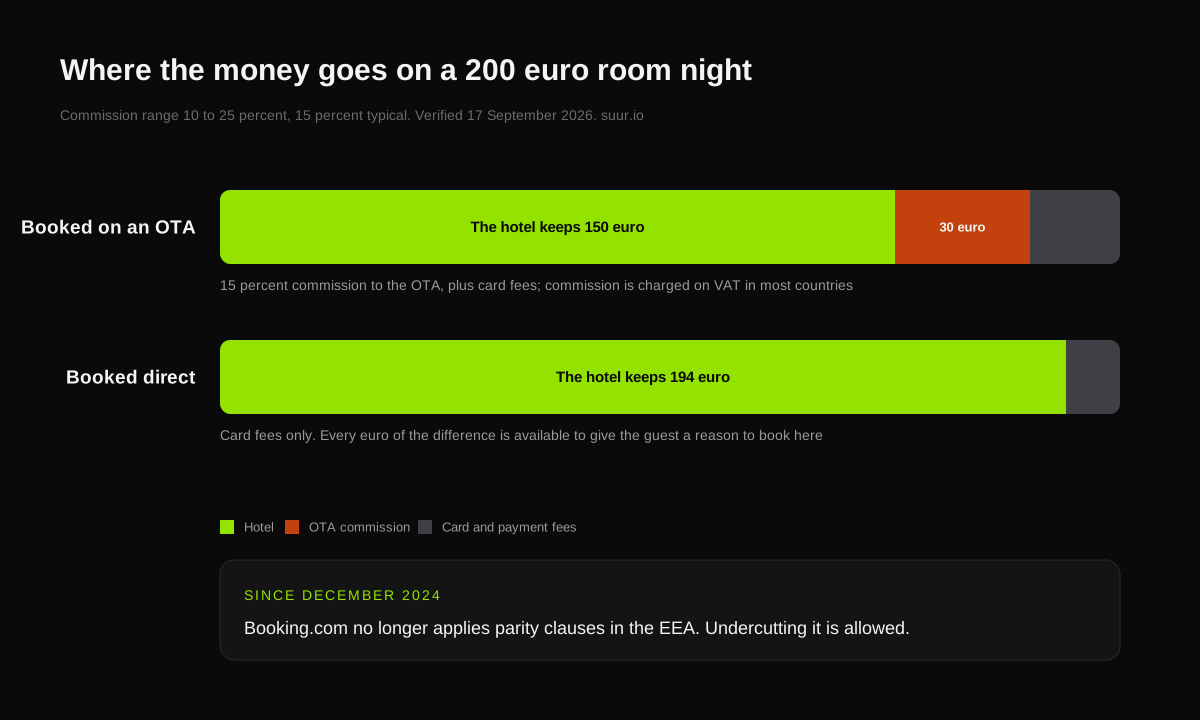
Work it through on a €200 room night. At 15 percent the hotel nets about €170 before card fees and around €150 after the programmes and processing that most properties are in. Booked direct, the same night nets about €194. That difference, forty-plus euro a night, is the budget a hotel has available to beat the platform and usually does not spend.
3. Rate structures the direct site never mirrors
Mobile rates, member rates, last-minute deals, campaign rates: the platform runs dozens of them, and most of them exist on the property's channel manager as a rate plan the direct booking engine was never configured to show. A guest who compares finds a "Limited-time Deal" and a struck-through price on the platform, and a single flat rate on the hotel's own site. Both came from the same inventory. Only one of them was merchandised.
4. The direct site will not show a price
This is the mechanism nobody writes about, and it is the one I could demonstrate today.
Hotel Mundial in Lisbon appeared in that search at €395 for two nights. Its own homepage makes exactly the promise the industry recommends: "Book directly at Hotel Mundial and always guarantee the best online price, with exclusive advantages only available on our official website." I believe it. I could not check it.

The homepage shows a video, a renovation notice, and a RESERVE button. There is no price above the fold. The booking engine is mounted in JavaScript with no linkable rate URL, so there is no way to hand someone a link to a quoted rate for specific dates, and no way to see a number without starting a booking flow. Meanwhile Booking.com answered the same question, for the same dates, in a single request, with taxes and fees included and a cancellation policy on the card.
That is the real answer to the question in the title. For a guest comparing five hotels on a phone, the platform is not cheaper. It is legible. The direct rate might well be lower, and it is behind a form.
What to actually fix, in order
Show a price on the property pages. Not a booking engine, a price: a from-rate per room type, live from the same inventory, with taxes stated. A guest who cannot see a number assumes the number is worse. This is the single highest-value change on most hotel sites and it is a design and integration job, not a commercial one.
Make the direct rate visibly better, and say by how much. Since parity is gone in the EEA, the honest version is a specific number: five percent, or breakfast, or the late checkout, stated on the room card next to the rate rather than in a banner nobody reads. "Best price guaranteed" is not a reason; it is a phrase every hotel uses.
Match the platform's own merchandising. If the channel manager has a mobile rate, a non-refundable rate, and a three-night rate, they exist on the direct engine too. Configure them and surface them. Most of the price gap a guest sees is a rate plan that was never switched on.
Fix the handoff into the engine. Dates and room carry across, the engine is styled to match, the total appears before the last step, and the whole path is tested on a phone. Our comparison of hotel booking engines covers which vendors to use; the handoff is the part no vendor sells.
Then decide what to do about the platform. Not leave it. Booking.com is a marketing channel with a knowable cost, and for filling shoulder season it is a good one. The goal is not zero commission, it is knowing which bookings are worth 15 to 25 percent and which ones you were going to get anyway.
Where design actually moves the number
Direct bookings are won on the property pages, in the photography, in the rate presentation, and in how quickly the site answers a question, and then they are lost or kept at the engine. That is the whole argument of the Brush Creek Ranch redesign, where four separate properties each got their own path, and of The Resort at Pedregal, where the arrival was made the structure of the site.
Our published tiers for that work are on the hotel website design page: $12,000 for a site on the Aurelia template with your brand applied and your real engine wired in, from $30,000 for a custom design, from $75,000 for a multi-property platform. For a group that wants the direct channel run as a product month to month, the Hospitality Digital Experience Lab is $9,000 a month. Before any of that, the free hotel website grader scores the site you have, booking path included, in about a minute, and the ten signs a hotel website needs a refresh is the checklist version.
The test to run this week: open your own site on a phone, in a private window, and try to find the total price of two nights next month. Time it. Then do the same on Booking.com. If the platform wins that race, it is not cheaper, and you already know what to fix.
Have a product idea?
Designed, built, and shipped in about 5 days.