Hotel Booking Engines
Hotel Booking Engines: Compare Scope, Fees and the Guest Journey
Compare nine hotel booking-engine vendors by PMS fit, package scope and fees, with dated screenshots and a practical booking-path acceptance test.
| Vendor | Pricing | Turnaround | Best for |
|---|---|---|---|
| SiteMinder | Current property-specific quote; Plus includes booking engine; additional fees can apply | Confirm integration and onboarding schedule | Comparing distribution plus direct-booking scope with an existing PMS |
| Little Hotelier | September 15 observation: from €119/month; confirm current property quote | Confirm setup and data transfer | Small properties evaluating front desk, distribution and booking together |
| Cloudbeds | Scoped quote; confirm engine, payments and distribution inclusions | Confirm onboarding and dependencies | Properties considering the PMS and booking workflow together |
| Mews | Scoped quote; confirm engine, payment and distribution fees | Confirm onboarding and dependencies | Properties considering an operating-system change |
| Profitroom | Current scoped quote required | Confirm package and integration schedule | Investigating packages, offers and resort booking requirements |
| Bookassist | Current scoped quote required | Confirm engine and marketing scope | Investigating booking and direct-channel marketing together |
| SynXis Booking Engine, Aven Hospitality | Current scoped quote required | Confirm central-reservation integration | Properties whose brand or reservation architecture points to SynXis |
| Amadeus iHotelier | Current scoped quote required | Confirm central-reservation integration | Properties evaluating the Amadeus reservation ecosystem |
| D-EDGE | Current scoped quote required | Confirm selected products and implementation | Investigating booking, distribution and marketing scope |
| SUURThat’s us | Website: $12,000 template; custom from $30,000; multi-property from $75,000 | Scope-dependent; engine contract separate | A disclosed publisher website service, not a booking-engine product |
- Pricing
- Current property-specific quote; Plus includes booking engine; additional fees can apply
- Turnaround
- Confirm integration and onboarding schedule
- Best for
- Comparing distribution plus direct-booking scope with an existing PMS
- Pricing
- September 15 observation: from €119/month; confirm current property quote
- Turnaround
- Confirm setup and data transfer
- Best for
- Small properties evaluating front desk, distribution and booking together
- Pricing
- Scoped quote; confirm engine, payments and distribution inclusions
- Turnaround
- Confirm onboarding and dependencies
- Best for
- Properties considering the PMS and booking workflow together
- Pricing
- Scoped quote; confirm engine, payment and distribution fees
- Turnaround
- Confirm onboarding and dependencies
- Best for
- Properties considering an operating-system change
- Pricing
- Current scoped quote required
- Turnaround
- Confirm package and integration schedule
- Best for
- Investigating packages, offers and resort booking requirements
- Pricing
- Current scoped quote required
- Turnaround
- Confirm engine and marketing scope
- Best for
- Investigating booking and direct-channel marketing together
- Pricing
- Current scoped quote required
- Turnaround
- Confirm central-reservation integration
- Best for
- Properties whose brand or reservation architecture points to SynXis
- Pricing
- Current scoped quote required
- Turnaround
- Confirm central-reservation integration
- Best for
- Properties evaluating the Amadeus reservation ecosystem
- Pricing
- Current scoped quote required
- Turnaround
- Confirm selected products and implementation
- Best for
- Investigating booking, distribution and marketing scope
- Pricing
- Website: $12,000 template; custom from $30,000; multi-property from $75,000
- Turnaround
- Scope-dependent; engine contract separate
- Best for
- A disclosed publisher website service, not a booking-engine product
A hotel booking engine should fit the property's operating systems and the guest's reservation journey. Compare the complete product and contract, then test a real booking. A low subscription price or a polished demo cannot establish integration quality, total fees or conversion performance.
Key Takeaways
- SiteMinder's base distribution package and Plus booking-engine package are different purchases.
- A booking engine, channel manager and PMS can be bundled, but their roles remain distinct.
- “Commission-free” needs a defined scope; payment and other charges may still apply.
- Test the website-to-engine handoff and the engine itself. Both can introduce friction.
Start with the systems you intend to keep
If the PMS works well, first ask which engines support it and which integrations are included in the proposed plan. If the PMS is changing too, compare the front-desk and reporting workflows alongside direct booking. A brand or group may also have central-reservation requirements that narrow the choice.
The hotel technology stack guide explains the layers. For procurement, record which system owns rates, availability, guest records, payments and confirmation messages. A product described as “all-in-one” can still depend on integrations and separately priced services.
SiteMinder: price the package containing the booking engine
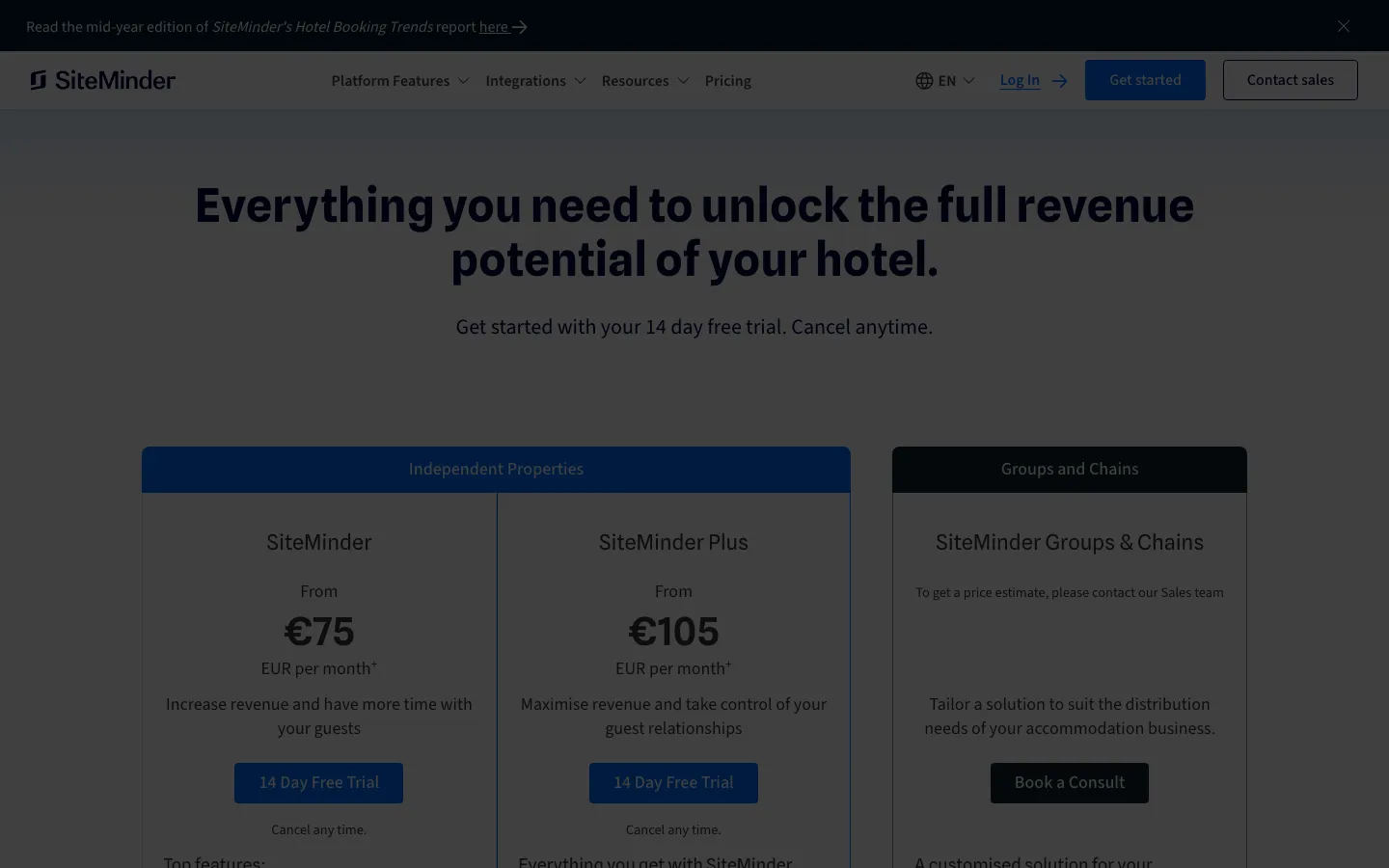
SiteMinder's current pricing page distinguishes distribution from Plus, which adds the booking engine, website and metasearch functions. Pricing depends on the property and products. Payment and some other transaction or commission fees can apply.
The September capture is useful because it shows the package distinction and the selected room count. It is not a universal price for a hotel of any size. Request a current proposal for the actual property, currency, term and integrations.
Little Hotelier: test the small-property operating workflow
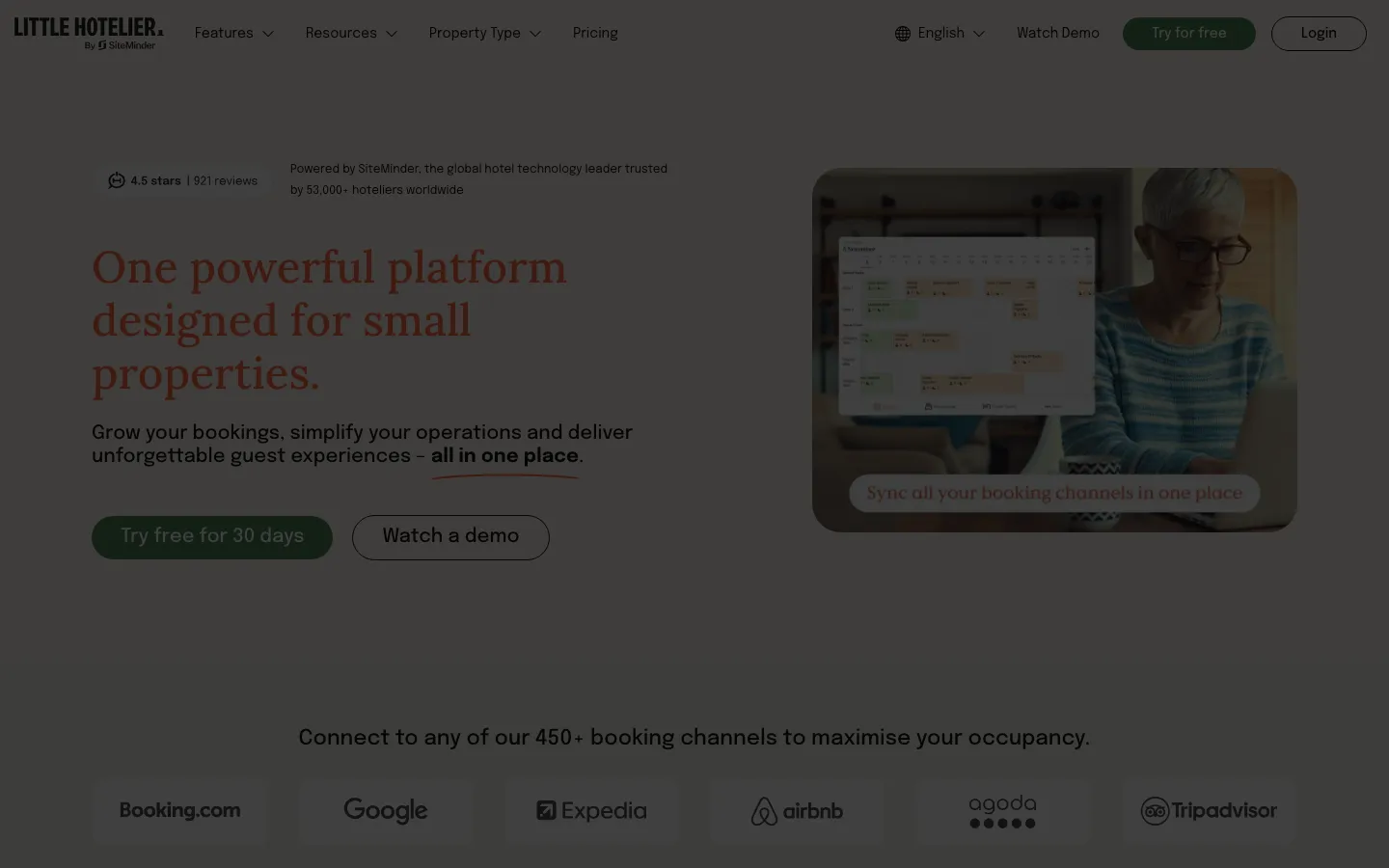
Little Hotelier is a candidate for a small property evaluating front-desk, distribution and booking functions together. The original review recorded €119/month, priced by bookable rooms, with promotional terms. Do not treat that promotion as current.
Have the person who works the front desk test a new reservation, amendment, cancellation and payment. Check how channel changes arrive and what happens when a connection fails. A single supplier does not mean there are no integration or operational dependencies.
Cloudbeds and Mews: compare the operating-system proposal
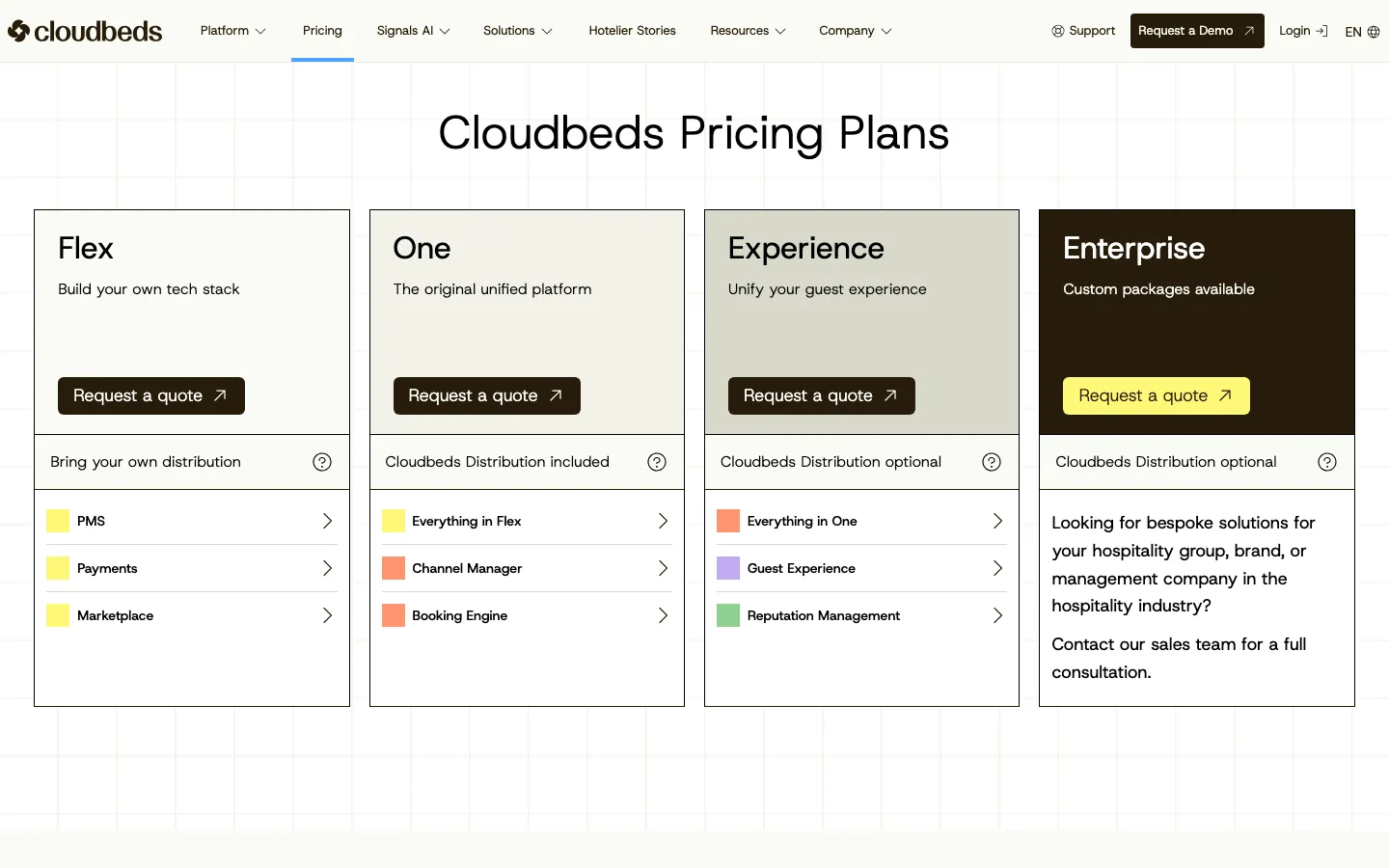
Cloudbeds and Mews belong in the comparison when the property is evaluating more than a booking form. Ask each vendor to show the proposed PMS, distribution, booking and payment scope on one diagram.
The September review recorded package-level booking-engine claims and commission language, but those do not establish a complete current fee schedule. Ask separately about payment processing, metasearch, implementation, support and contract minimums.
Before switching the operating system, test room changes, group bookings, reporting and staff permissions as well as the guest-facing design.
Profitroom and Bookassist: make the commercial scope explicit
Profitroom is a candidate for a brief involving packages, offers and resort booking requirements. Ask for a demonstration using your own package rules, occupancy restrictions and extras rather than assuming a generic demo covers them.
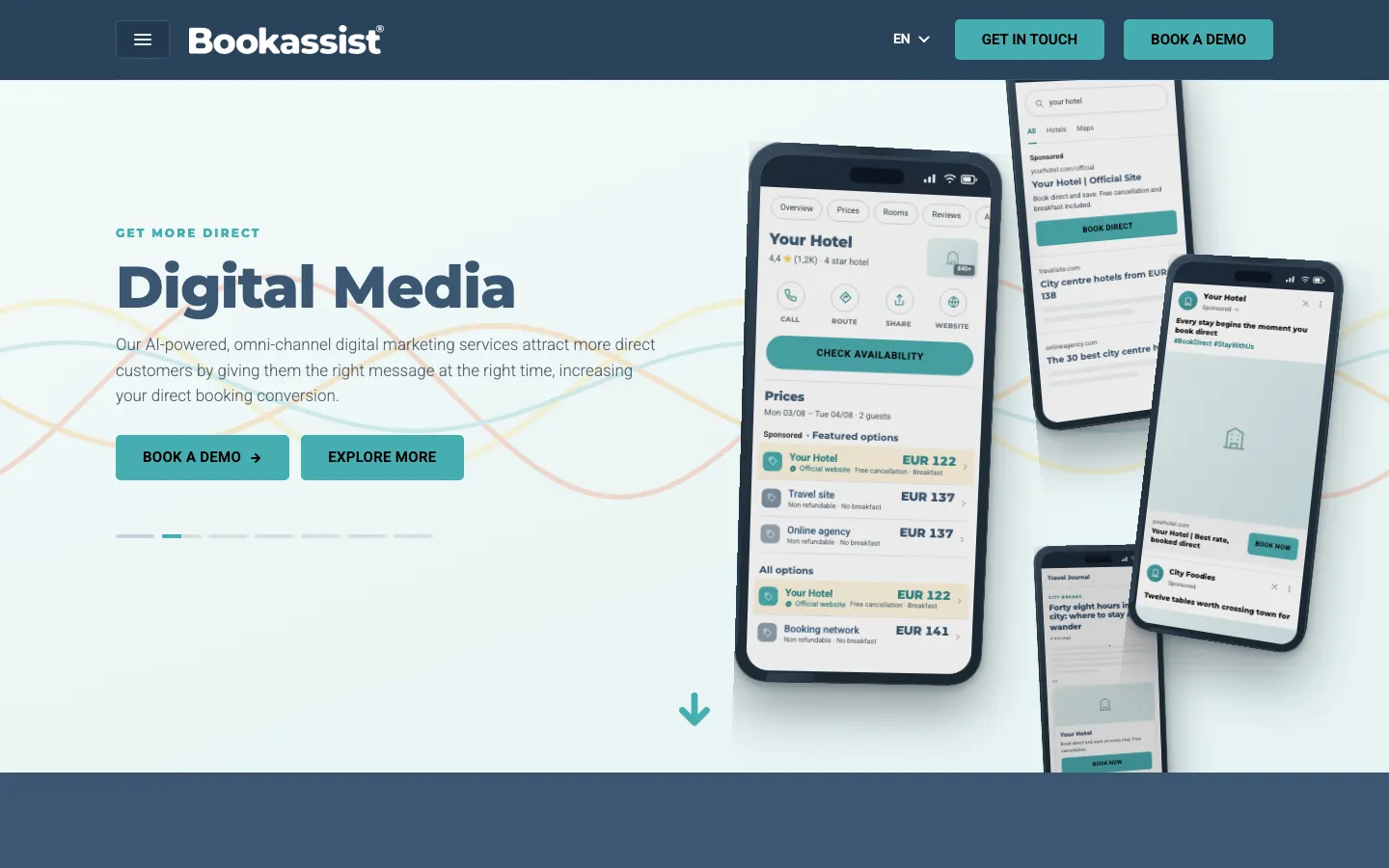
Bookassist is a candidate when the property wants to evaluate booking technology with direct-channel marketing. Separate engine fees from media spend, management and metasearch charges. Specify data access and what remains available if one part of the relationship ends.
Neither vendor is ranked here by conversion rate. A result from another hotel would require its baseline, dates, traffic mix and other changes before it could inform your forecast.
SynXis, iHotelier and D-EDGE: follow the reservation architecture
For SynXis, Amadeus iHotelier and D-EDGE, make the central-reservation, distribution and brand requirements explicit. Do not assume that a familiar name guarantees compatibility with the property's exact configuration.
Ask for an implementation plan showing credentials, data migration, rate mapping, testing, staff training and rollback. The schedule should reflect those dependencies rather than a generic promise of weeks or months.
Compare fees using the same revenue and booking assumptions
For an illustrative flat fee of $200/month versus 2% commission, with every other cost assumed equal, break-even direct-booking revenue is $200 ÷ 0.02 = $10,000/month. Those are invented inputs to explain the calculation.
Actual proposals may also include minimum fees, payment processing, metasearch, setup, support or different cancellation treatment. Ask what the percentage applies to: room revenue, taxes, extras, cancellations or completed stays. Do not substitute a generic OTA commission range for the property's actual contracts.
Test the whole guest journey
Use a phone to start from a room page, select dates and occupancy, enter the engine, compare the complete rate, pay and receive confirmation. Record whether room, dates, language and currency carry through where supported.
Test unavailable dates, an invalid payment and an amended booking too. The website can create expectations the engine does not fulfill, and the engine itself can introduce friction. Neither layer is merely “the last click.”
For design examples, see the hotel website teardown. Its observations are not measured booking outcomes.
The website is a separate purchase
SUUR is the publisher and sells hotel website design: $12,000 on a template, custom work from $30,000 and multi-property work from $75,000. This is not a competing booking engine; its inclusion discloses the commercial interest behind the website advice.
Confirm the exact engine integration and acceptance tests before commissioning a site. Keep the engine subscription, implementation dependencies and ongoing support in the combined budget. Choose the vendor whose tested workflow and complete contract fit the property.
Sources, commercial interests and corrections
Frequently asked questions
The current pricing page distinguishes base distribution from SiteMinder Plus, which adds the booking engine, website and metasearch functions. The September five-room snapshot showed €75 for base and €105 for Plus. Obtain a current property-specific quote and check additional fees.
No. A booking engine takes direct reservations; a channel manager distributes rates and availability and receives reservations from channels; a PMS supports property operations. Vendors may bundle them, but verify each required function and integration.
No. A statement about booking-engine commission does not establish that payment processing, metasearch, distribution, setup or other product fees are absent. Request every fee and the revenue or transaction base to which it applies.
No. Compare expected direct-booking revenue, minimum fees and transaction charges. For an illustrative $200 monthly fee versus 2% commission with otherwise identical costs, the break-even revenue is $10,000/month. Actual proposals rarely have identical inclusions.
Do not assume so. Confirm the supported hosted link, widget or API, credentials, plan eligibility and fields that can pass between systems. Test room, dates, occupancy, currency and language, along with payment and confirmation behavior.
Want to talk to SUUR directly?
We work with founders shipping product, not just decks.