Website Design Cost in 2026: Every Tier Priced
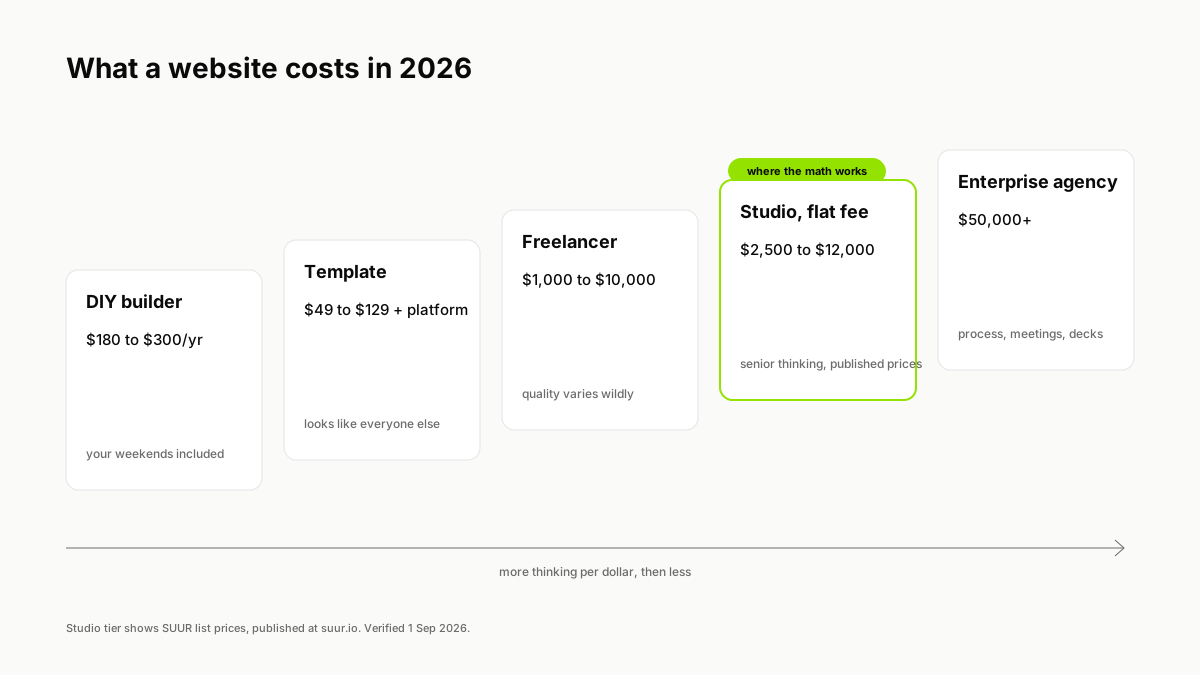
A website in 2026 costs anywhere from $180 a year to $250,000, and the spread is not noise: each tier buys a different thing. DIY builders run $180 to $300 a year in platform fees plus your own weekends. A good template is $49 to $129 one time, plus the platform under it. Freelancers typically land between $1,000 and $10,000 depending on seniority, and the variance in quality is wider than the variance in price. Flat-fee studios sit in the $3,500 to $12,000 range: our own published prices are $3,500 flat for a landing page, $6,000 for a design-only sprint, $9,000 flat for a full product designed, coded and live, and $6,500 a month for ongoing senior design. Traditional agencies start around $50,000 and climb. Those studio numbers are not estimates, they are our list prices, published at suur.io and current as of 5 September 2026. Most cost articles will not print their own number, which tells you something.
Why the range is so wide
Because "website" describes the deliverable, not the work. At the bottom of the ladder you are buying software access and doing the thinking yourself. In the middle you are buying execution. At the top you are buying judgment: positioning, structure, copy direction, and someone senior deciding what NOT to build. The pages are almost the cheapest part at every tier.
Tier 1: DIY on a builder, $180 to $300 a year
Webflow's site plans run $15 to $25 a month billed yearly, and competitors sit in the same band. We priced the whole Webflow ladder yesterday in Webflow pricing explained, including the add-ons that quietly triple the bill.
What it buys: full control, no waiting on anyone, and a real site for the price of two coffees a month. What it costs that the invoice never shows: your evenings, and a design ceiling. If you have taste and time, this tier is legitimate. Most founders have one of the two.
Tier 2: a template, $49 to $129 plus the platform
Templates are the honest shortcut: professional structure, someone else's decisions, your content. The catch is that the decisions were made for a thousand buyers at once, so the result reads as familiar. For a restaurant or a personal site, familiar is fine. For a company whose website is the pitch, familiar is the problem.
We give away a full hotel template ourselves, Aurelia, so this is not a tier we look down on. It is a tier we think you should enter with open eyes.
Tier 3: a freelancer, $1,000 to $10,000
The widest-variance tier on the ladder. A strong senior freelancer at $85 to $150 an hour, which is the real range I billed at for years before moving to flat fees, delivers studio-grade work at 60 cents on the dollar. A cheap one delivers a template with extra steps. Price is a weak signal here; the portfolio and how they talk about your business are the strong ones.
Budget honestly: a real marketing site is 40 to 80 senior hours. At real senior rates that is $4,000 to $10,000, which is why a $1,500 quote for "a full custom site" usually means a template, offshore hours, or a junior learning on your project. Sometimes that trade is fine. It should just be a trade you chose.
Tier 4: a flat-fee studio, $3,500 to $12,000
This is our tier, so here are actual numbers instead of a range: a landing page designed and built for $3,500 flat, a full MVP designed, coded and live in 5 days for $9,000 flat, and ongoing senior design at $6,500 a month. Every price is published on the site, which is rarer in this industry than it should be.
What flat fee changes is incentive. Hourly billing pays the vendor for the project taking longer. A flat fee pays them for finishing, which is why our engagements are scoped in days and weeks, not quarters. Two real examples with real scope: Biteful got brand, UX, custom illustration and a live Webflow build in three weeks, and the founders raised $125K within six weeks of launch. Dune7 went from brand to live site in four weeks. Those are the timelines the tier is built around. The identity that goes on the site has its own ladder, priced tier by tier in what brand identity design services cost.
Tier 5: the agency, $50,000 and up
Sometimes correct. If you need ten stakeholders aligned, three rounds of legal review, a design system handed to an internal team, and a vendor who can absorb blame, an agency is what that money buys. The work itself is often executed by people billed out at five times their salary, which is not a scandal, it is the business model. Just know that above $50,000 you are increasingly paying for process rather than pixels, and decide whether process is what your company is short on.
The costs nobody itemizes
Whatever tier you pick, four lines are usually missing from the quote:
- The platform. $180 to $500 a year, forever. See the Webflow numbers for a concrete example, including add-ons.
- Copy. The words matter more than the layout, and "client provides copy" is the most expensive sentence in web design, paid for in launch delays.
- Photography. Stock reads as stock. Real photography is $500 to $5,000 and often the single highest-leverage line in the budget.
- Maintenance. Someone updates the thing. If that someone bills hourly, small edits become invoices. It is a real argument for CMS-first builds where your team edits content without a developer, the way we set up Biteful and every hotel site we ship.
How to choose, by situation
Not sure whether the site needs replacing at all: an audit first, and what website audits cost explains which of the five tiers to use before spending on any of the ones below. Validating an idea: DIY or a template. Spending $9,000 before you have signal is backwards; here is what an MVP should cost instead.
A real business, budget under $2,000: the best template you can find, plus a paid hour of a designer's time to adapt it. That hour is the best money in this whole article.
A company where the site is the pitch, $3,500 to $12,000: a flat-fee studio or a verified senior freelancer. You are buying judgment now, so pick the vendor who asks about your customers before asking about your color preferences.
An organization with stakeholders and compliance: an agency, budgeted honestly at $50,000 plus, with a named senior lead in the contract.
The one-paragraph answer
Pay $180 a year and your weekends if you are validating. Pay $49 to $129 for a template if familiar is acceptable (restaurants have their own builders, compared with prices here). Pay $4,000 to $10,000 for a real freelancer and check the portfolio twice. Pay $3,500 to $12,000 at a flat-fee studio when the site is the pitch, and expect published prices and week-scale timelines at that tier, because that is what the money is for. Pay $50,000 plus when you need an organization, not a website. And whatever you pay, budget the copy, the photos, and the platform, because those are the lines that actually decide whether the site works.
Studio prices in this article are SUUR's published list prices, current on 1 September 2026. The freelancer rate range reflects two decades of real invoices, not a survey. If a number here and a vendor's live page disagree, trust the live page and tell us.
Have a product idea?
Designed, built, and shipped in about 5 days.