Product Development Agencies: How They Work and Cost
A product development agency designs, builds and ships a digital product for you as a team that owns the outcome, rather than a set of hands you manage. That is the whole distinction, and everything about how these firms work and charge follows from it. Two clarifications before anything else. First, "product development agency" in Google mostly returns firms that develop physical products, injection moulding and all; this is about software. Second, the phrase covers three very different purchases that happen to share a name: a fixed-scope build, a monthly team, and people added to your own team. They are priced nothing alike and the fit depends on which one you actually need. Below: what these agencies say they are, in their own words, how an engagement runs, the five ways to buy one, and every price we could find published on 23 September 2026, which is fewer than you would hope. We sell three of these shapes ourselves, and the interest is disclosed where it matters.
What a product development agency is, and is not
The agencies draw the lines themselves, and their wording is more useful than a definition.
Not a dev shop. thoughtbot, one of the oldest firms in the category, put it in a post this August titled "Don't hire thoughtbot to write code": "If the primary value you get from thoughtbot is the amount of code our developers produce, I don't think we're earning the premium you're paying us." A premium consultancy, it says, "has to earn the premium by getting to useful outcomes faster, finding problems earlier, and making the existing team better." Simform's guide to choosing a partner draws the same line from the other side: "An outsourcing vendor delivers scoped work and leaves. A product engineering partner shares roadmap accountability, owns production outcomes, and expects to be measured on shipped product."
Not a design agency that subcontracts the build. Merge Development, which sells both, says what happens when the two are split: "If the design agency quietly subcontracts development (or the reverse), you're back to a split team with extra markup on the invoice." The product agency's claim is one team, overlapping phases, one backlog.
Not staff augmentation. Netguru defines that one cleanly: "External professionals join your team and integrate into your workflows, working under your management." Simform adds the consequence: "You keep all delivery risk; quality depends entirely on your management." Staff augmentation is a legitimate purchase, and several product agencies sell it alongside the real thing, but it is a different product wearing the same vocabulary. One firm in our set, Ideamotive, has quietly become a body-leasing vendor using the words "dedicated team" with no product claim at all, which is how you know the vocabulary alone tells you nothing.
The shape to look for, then: a cross-functional team, strategy, design, engineering and QA, that takes a product from a question to a release and is measured on what shipped.
How an engagement runs
The process is more standardised across firms than the pricing is. Read from their own pages on 23 September 2026:
Discovery first, and it is priced as its own thing. STX Next runs a discovery of "1 to 2 weeks" that ends in "a fixed-price proposal with success metrics." Uptech says "on average, the discovery phase takes 4 to 6 weeks" and lists the deliverables: personas, hypothesis table, technical design document, wireframes and prototypes, timeline and cost estimates, a roadmap. ustwo packages the same idea as "Discover," "from 8 weeks." Netguru's version is a "Product Design Sprint: A five-day workshop." Nobody reputable quotes the build before the discovery, which is why the price you are looking for is usually two prices.
Then a build with a stated horizon. Netguru: "Launch your MVP within 12 weeks." STX Next: execution "6 to 20 weeks." Vention: an MVP takes "three to six months," and its average engagement runs 36 months. Uptech: "the development timeline for a custom software product typically ranges from 3 to 12 months." Work & Co promises "20 days to market feedback" and starts development at kickoff rather than after design.
A team, not a person. Vention describes its core pod as a tech lead, two or three engineers, QA and a project coordinator, with designers and analysts added as needed. STX Next sells product design as one full-time equivalent that is really "the sum total of 15 professionals collectively using all of their competences to work on a single product." Work & Co: "Our model is based on fully dedicated teams, their time is not split. The same core team that begins an engagement will finish it."
Handover is part of the deal, or should be. STX Next: "maintain it in-house, hire any developer, or retain us for ongoing support. No mandatory contracts." thoughtbot's team augmentation page frames its own exit: "we'll help level up your team so they can continue with best practices long after we're gone." An agency that cannot describe how you leave is describing a dependency.
The five ways to buy one
Simform's partner guide names four commercial structures, and its one-line judgments are worth keeping: time and materials, where "the meter runs either way"; fixed bid, which "incentivizes the partner to resist change"; a dedicated squad, "monthly rate for a stable team," which "optimizes for continuity and compounding knowledge"; and outcome-based, which "only works when outcomes are honestly measurable." Add staff augmentation, which is not an agency engagement at all, and you have the full menu.
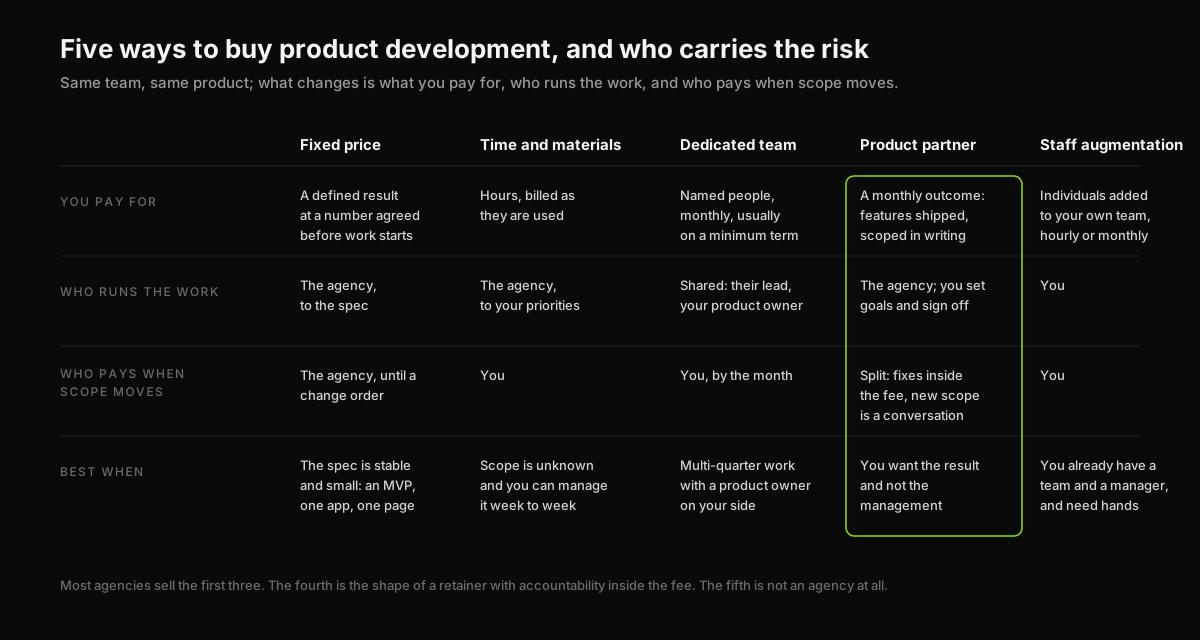
The question that sorts them is who pays when the scope moves, because it always moves. Fixed price puts that on the agency until the change order. Time and materials and dedicated teams put it on you, by the hour or by the month. The fourth column, a product partner retainer, is the newer shape: a monthly outcome scoped in writing, where fixes to what was shipped are inside the fee and genuinely new scope is a conversation. Few agencies sell it that plainly, and it is the shape we have argued for in buy the result, not the agent.
What it costs, read on 23 September 2026
We read 33 agencies and marketplaces on their own websites. Eleven publish any number for their own service. Twenty publish nothing. Netguru, Thoughtbot, Simform, Rootstrap, STX Next, Vention, Intellectsoft, Turing and Andela all quote only. What the eleven publish is below, and it is the only pricing in this category you can check.
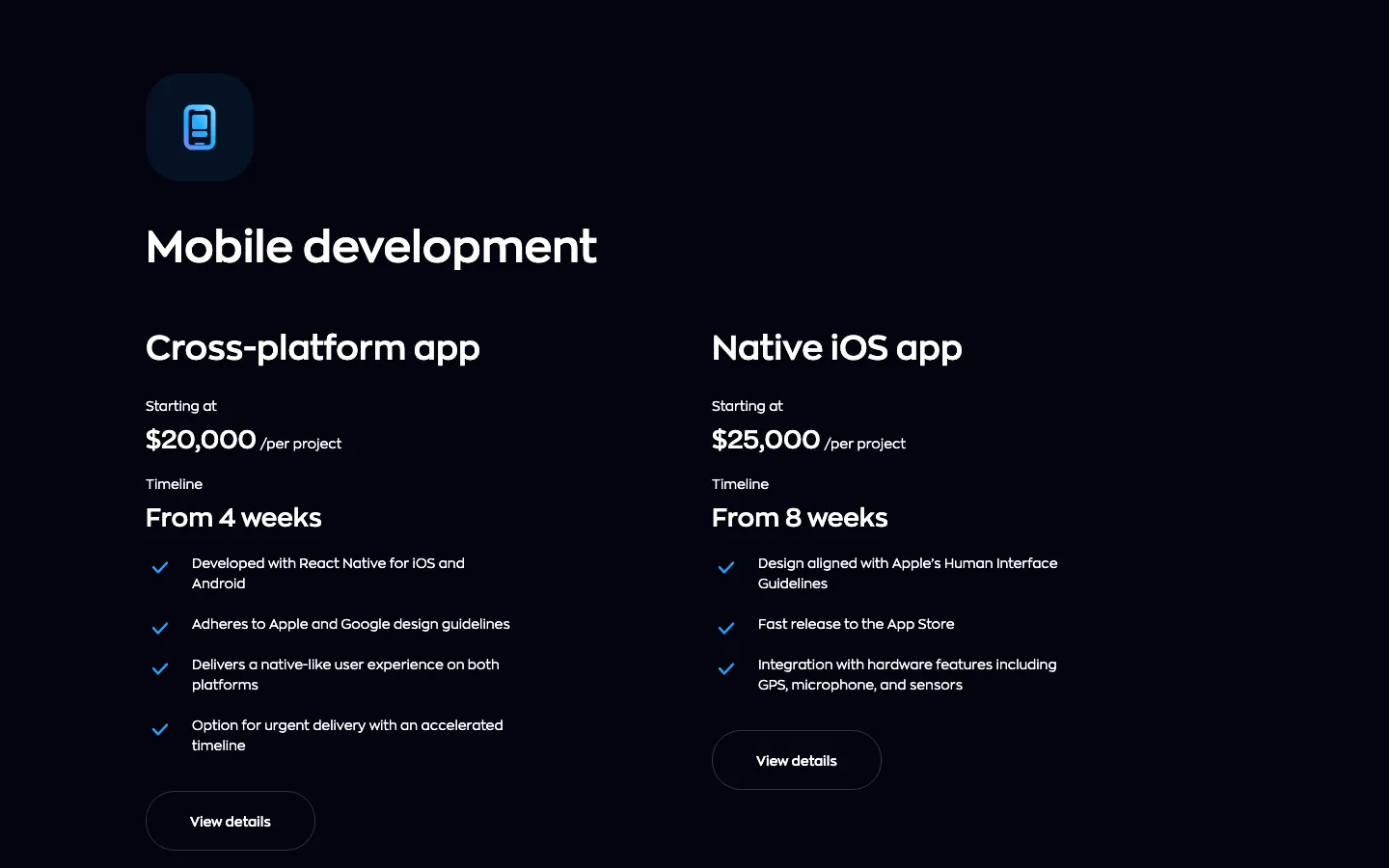
Fixed-price builds. Ronas IT publishes a full price list: a basic MVP "starting at $15,000" from four weeks, a full-featured MVP from $25,000 from six weeks, a cross-platform app from $20,000, a native iOS app from $25,000 from eight weeks, a landing page from $2,000, and app maintenance from $1,000 a month. Purrweb publishes an MVP range too, but four different ones on a single page: "$25,000 to $40,000" in the headline and calculator, "about $45,000" in the package block, and "$30,000 to $80,000, fixed after a paid discovery sprint" in the FAQ, for a team of about four over two to four months, with a prototype at $5,000 to $15,000. Uptech, which publishes no price list, says in its FAQ that a custom product runs "$20,000 to over $500,000" and a simple app "$20,000 to $50,000." Halo Lab states only a floor, "starting from $5,000," and its contact form's budget bands run from $10,000 to $200,000.
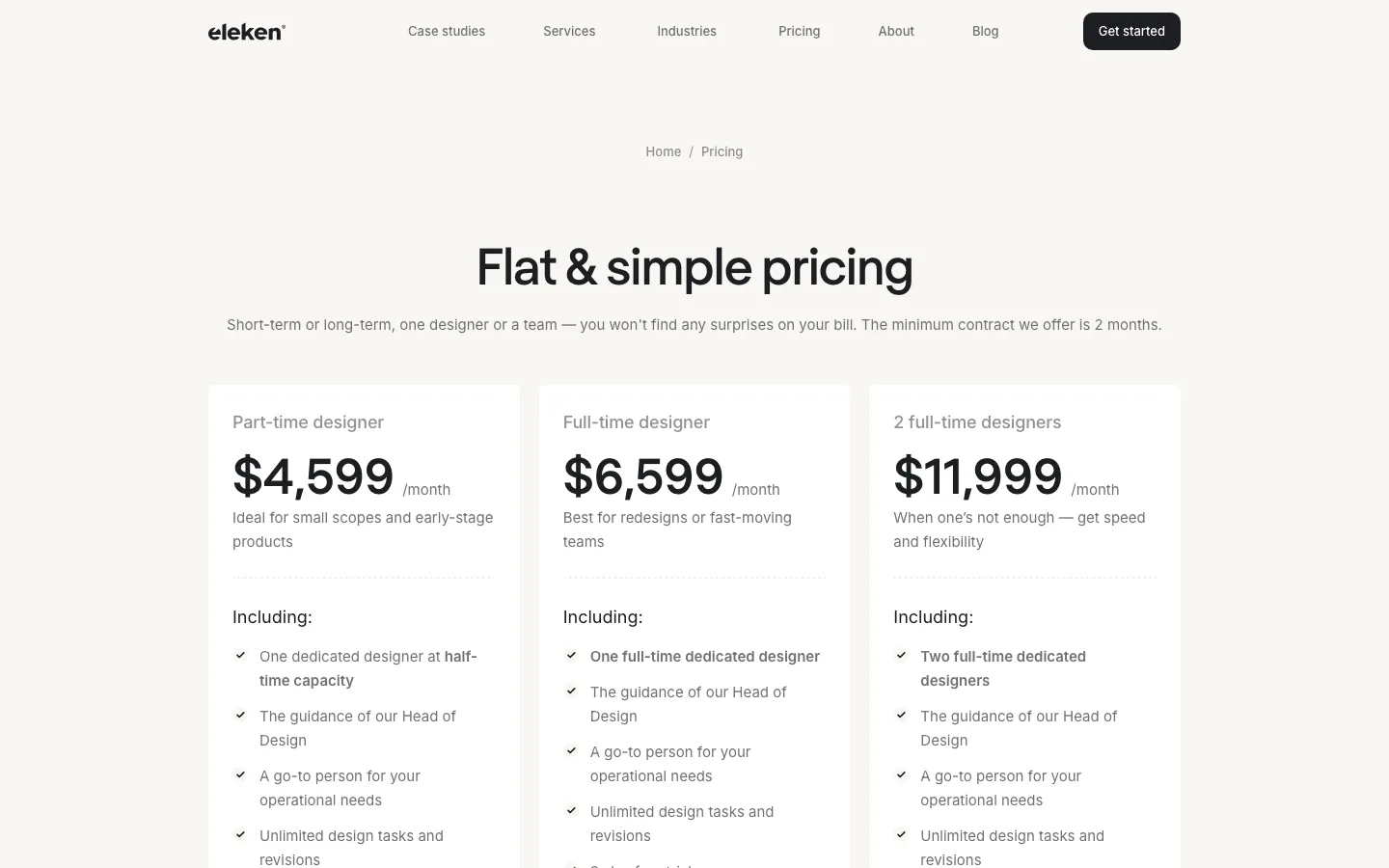
Monthly teams. Only one engineering agency in the set publishes a team price: Ronas IT, "dedicated development team starting at $12,000 per month." The others that publish do it per seat. Bacancy, in India, lists "$22 hourly" and "$2,880 monthly" for a senior developer at 160 hours, with a 15-day free trial; four of those is about $11,500 a month. On the design side, Eleken's ladder is $4,599 a month for a part-time designer, $6,599 full-time, $11,999 for two, on a two-month minimum with a three-day trial. Intellectsoft's guidance, published as advice rather than a price, is that "the budget for a dedicated team should be from $8,000 to $45,000+ per month."
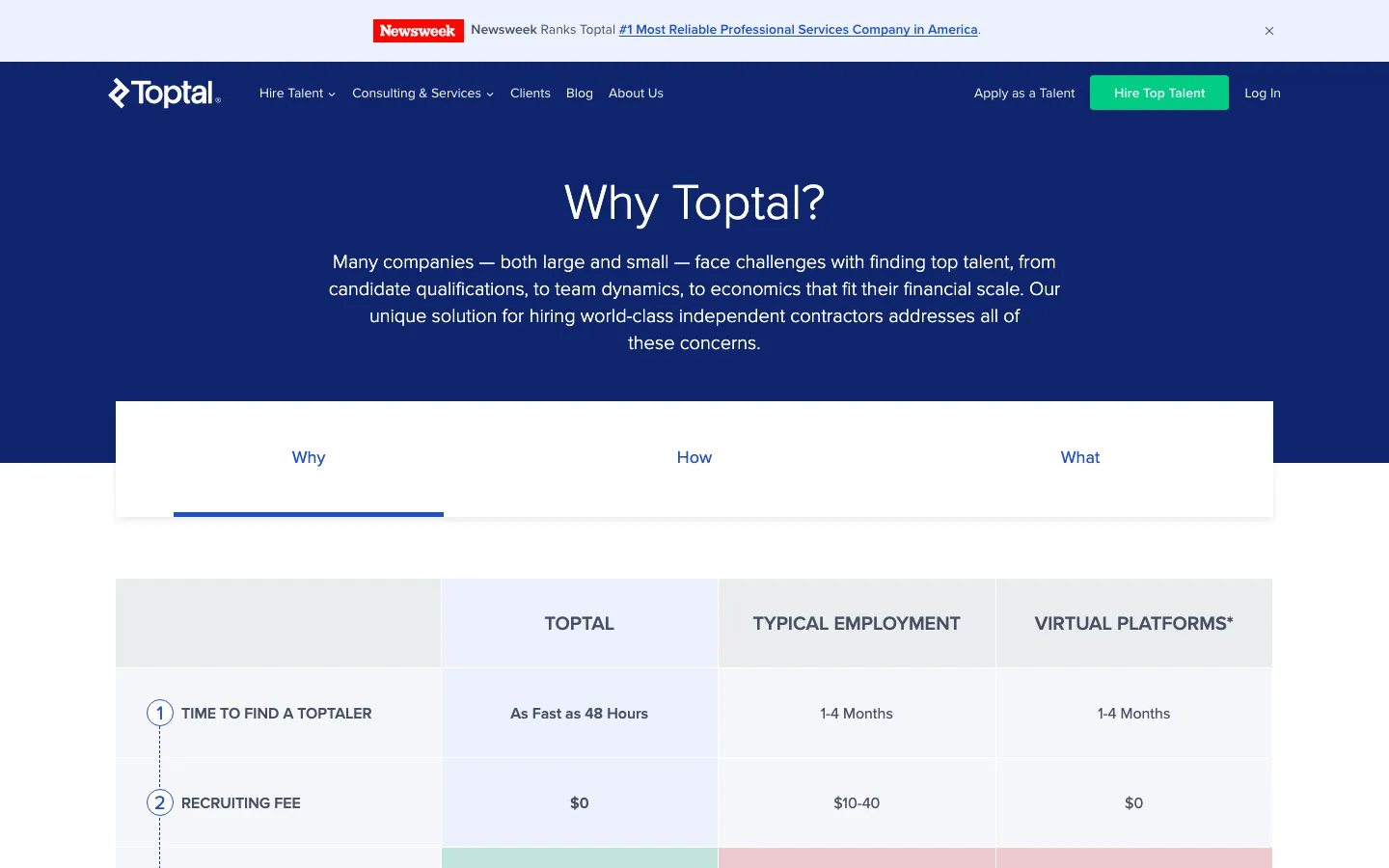
Hourly rates. No US or UK agency in the set publishes one. The published agency band is $22 to $60 an hour: Bacancy $22, Ronas IT $50 for design and $60 for augmentation, and Netguru's own listicles put its rate at "$50 to $120 per hour." The talent marketplaces are more open: Arc.dev "$15 to $110+" an hour for freelancers and 20 percent of first-year salary for hires; Lemon.io "$35 to $90 an hour" with a two-week trial; Upstack "averaging between $65 to $75 per hour." Toptal's pricing page publishes no rate at all, only that you work with talent "for a fixed price on a weekly basis," a $79 a month matching fee, and a trial of up to two weeks.
What the numbers say together. A fixed-price MVP from an agency that publishes prices sits between $15,000 and $80,000 and takes one to four months. A dedicated team starts around $12,000 a month from the one agency that says so, and per-seat pricing from India lands in the same place for four people. A senior engineer through a marketplace costs $35 to $110 an hour, which is $6,000 to $19,000 a month at full time before anyone manages them. Every firm that does not publish sits above those figures, because that is what not publishing is for. Two things to weigh against the cheapest rows: the $22 an hour developer comes with no product owner, and every fixed price above was set after a paid discovery, so the number you are quoted on a first call is not the one you will sign.
Six questions before you sign
- Who decides? If the agency owns the outcome, it needs authority to make product calls between your check-ins. If every decision waits for you, you have bought hours, whatever the contract says.
- What happens when scope moves? Get the answer in writing: change order, next month's budget, or absorbed. All three are fine. Not knowing is not.
- Who exactly is on the team, and do they stay? Work & Co's "the same core team that begins an engagement will finish it" is the standard to hold everyone to. Ask what happens to the senior people after kickoff.
- What does discovery cost, and what do I keep if we stop there? A discovery whose output only makes sense to the agency that ran it is a sales step, not a deliverable.
- What is the exit? Code in your repo, infrastructure in your accounts, documentation a stranger could use. STX Next's "no mandatory contracts" is the right answer; a 12-month minimum is a different business model, not necessarily a worse one, but you should know which you are buying.
- What is the smallest thing they will sell you? A firm that will not start below six figures is telling you who its customer is. So is one that will.
Where we fit
We are a small studio, so the honest version of this is small, and priced in public.
For the fixed-scope column: the Product Sprint is $9,000 flat, an idea on Monday and a working product on Friday, up to ten screens in real code, and the iOS App is $22,000 flat from concept to a first version submitted to the App Store. For the product-partner column: the Product Partner is $12,000 a month for design and engineering shipping features continuously, with the Design Partner at $6,500 a month for the design-only version, both with a first-week 75 percent money-back and the rule that anything wrong is fixed inside the fee. For the leadership gap most startups actually have, the Fractional CPO is from $15,000 a month. What we do not sell is a fifty-person pod or staff augmentation; if you need a dedicated team of twelve for three years, Vention and Netguru are built for that and we are not.
The work behind those numbers, each with its case study: TripLeads.AI, an AI lead-capture product with 788 tests across the platform; ILTY, an AI companion app shipped to the App Store in eight weeks with a 226-page marketing site; InFlight, a stretching app for air travel, live in 57 storefronts since 21 September; and HRV Breathe, a breathing app that reads your heart-rate variability to prove a session worked. For thirteen MVP builders compared by name and published price, see top MVP development companies. For what the fixed-scope end costs across the whole market, freelancers and no-code included, how much an MVP costs has the bands, and what MVP means in software has the definition most agencies skip.
The short version: a product development agency is worth its premium when it removes decisions from your plate, not when it adds developers to your headcount. Buy the outcome, get the scope-change rule in writing, and make sure you can leave.
Have a product idea?
Designed, built, and shipped in about 5 days.