Hire a Designer or Subscribe to One? A Decision Tree
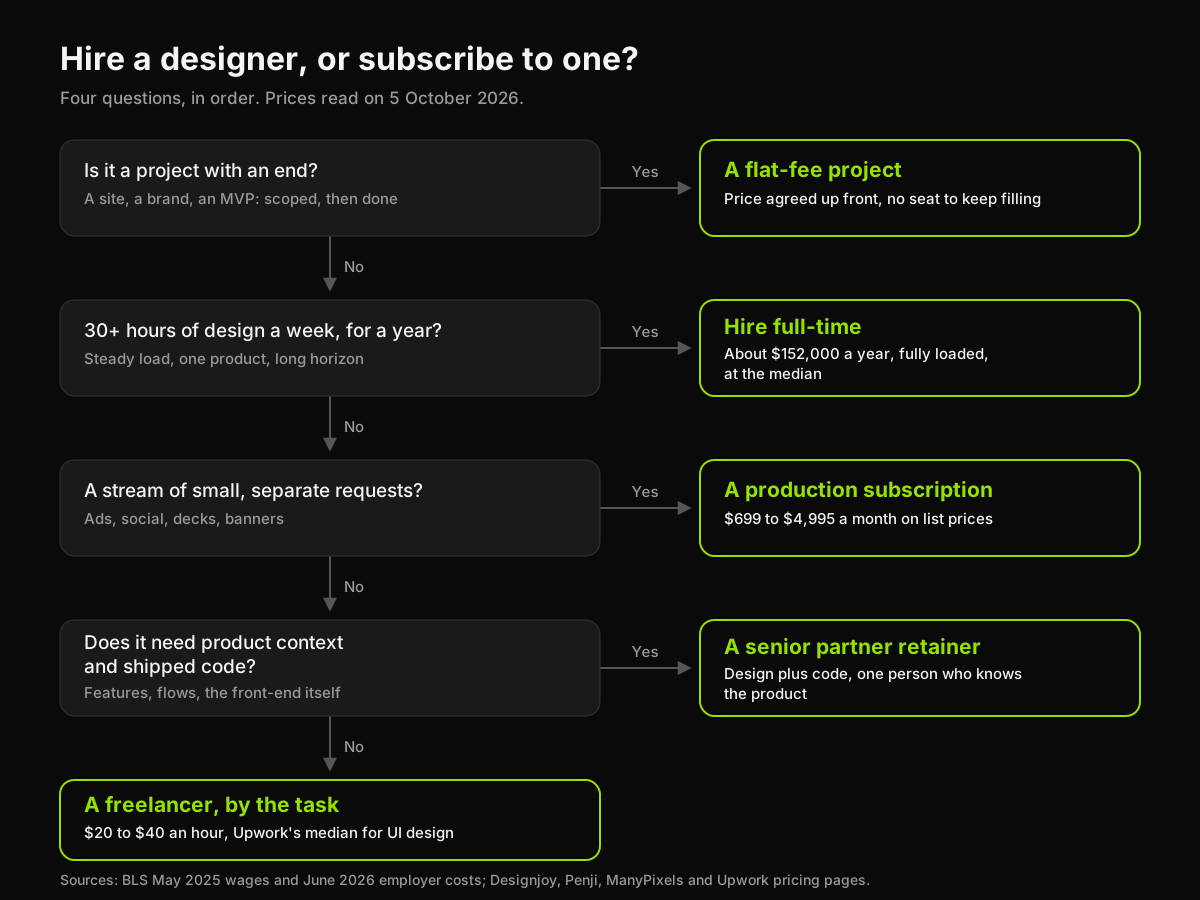
Hire a full-time designer only if you will have 30 or more hours of design work every week for at least a year; otherwise buy the work by its shape: a flat-fee project for anything with an end, a subscription for a stream of small requests, a senior retainer for product work that ships as code, and a freelancer for one-off tasks. The money explains why. The Bureau of Labor Statistics puts the median web and digital interface designer at $104,000 a year (May 2025), and in June 2026 wages were 68.5 percent of what US private employers spent on full-time workers. Fully loaded, that median designer costs about $152,000 a year, or $12,650 a month, before recruiting, software or the months the seat sits half used. Design subscriptions listed $699 to $4,995 a month on 5 October 2026, and Upwork's median UI designer charges $20 to $40 an hour. Below: four questions, in order.
What each option costs in October 2026
Every number here was read on 5 October 2026 from the source named.
| Option | Price | Source |
|---|---|---|
| Full-time web and digital interface designer | $104,000 median salary; about $152,000 fully loaded | BLS, May 2025 wages; June 2026 employer costs |
| Full-time graphic designer | $62,960 median salary; about $92,000 fully loaded | BLS, May 2025 |
| ManyPixels | $699, $1,199, $1,399 (assigned designer), $2,599 (design team) a month | manypixels.co/pricing |
| Penji | $995 (Essentials), $1,995 (Agency Partner), $4,500 (Dedicated Team) a month | penji.co/pricing |
| Designjoy | $4,995 a month, one request at a time | designjoy.co |
| Freelance UI designer | $20 to $40 an hour median; $30 to $125 for US intermediate interface work | Upwork rate pages |
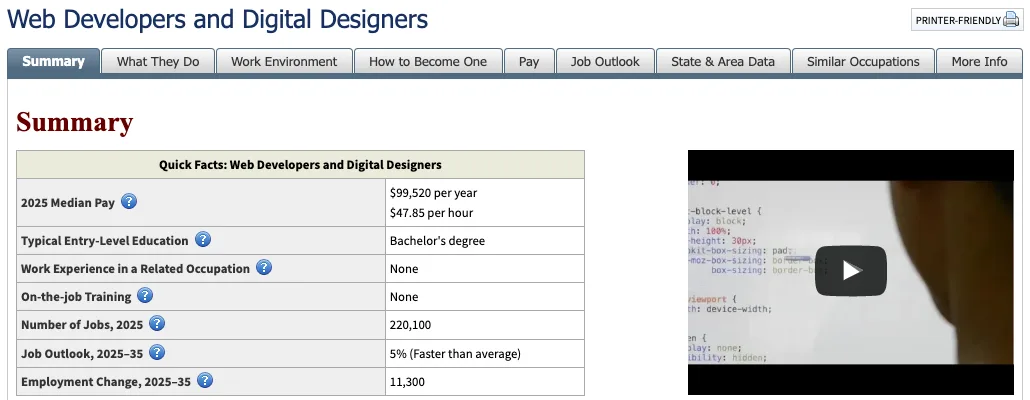
The fully loaded figure is simple arithmetic on BLS data. Its June 2026 employer cost release says wages and salaries were 68.5 percent of total compensation for full-time private industry workers; benefits were the other 31.5 percent. Divide a $104,000 salary by 0.685 and you get $151,825. That is still conservative: it leaves out recruiting, equipment, software seats and management time.
A 2024 version of this comparison, with the line-by-line overhead, is in design subscription vs in-house designer. This post is about the decision, not the spreadsheet.
Question 1: is it a project with an end?
A website, a brand, a first version of the product. If you can describe what "done" looks like, you do not need a seat or a subscription; you need a fixed scope and a fixed price.
This is the mistake we see most. A founder hires, or subscribes, to get a website made, and then keeps paying for months after the website is finished because nobody planned what comes next. A project has an invoice and an end date, and that is the point. Ours are listed with their prices on the flat-fee index: a Landing Page Sprint, a Design Sprint, the MVP in 5 Days.
Question 2: is there 30 hours of design a week, for a year?
Full-time hiring wins when the work is steady, deep and long. A product with a weekly release cycle, a design system to maintain, research to run: that keeps one person busy, and a person inside the company builds context no outside team can match.
The test is honest volume. If you cannot list 30 hours of design work for most weeks of the next year, you are buying $152,000 of capacity to use part of it. Most early-stage companies are in that position, which is why the other three answers exist.
Two costs do not show up in the salary. Time: hiring a senior designer often takes months, and the first quarter after they start is spent learning the product. Range: one designer is usually strong at either brand and marketing or product and interface, rarely both.
Question 3: is it a stream of small, separate requests?
Ad variations, social posts, slide decks, banners, a landing page refresh. Work that is many small tickets, each understandable on its own, is what design subscriptions were built for. The model is a queue: you add requests, a designer works through them one or a few at a time, and you pay a flat monthly fee.
The list prices above span seven times from bottom to top, and the difference is mostly who works the queue: a shared pool at the low end, an assigned designer or team at the high end. Designjoy, at $4,995, is one senior designer working one request at a time. We compared 10 services on what each price buys in the best design subscription services.
Where subscriptions struggle is work that is not separable. A queue model is fast at "make this banner" and slow at "work out why onboarding loses half our users," because the second needs context that does not fit in a ticket.
Question 4: does it need product context and shipped code?
Features, flows, the interface itself. This is product design, and the deliverable that matters is not a file; it is what ships. The options here are a full-time hire (back to question 2), or a senior retainer where the same person designs and builds.
That is the gap our two retainers fill. Design Partner is $6,500 a month for design plus the front-end code, with 75 percent of the month refunded if you leave in the first seven days. Cadence is $4,900 a month for one focused feature a month, scoped, designed, built and deployed, and you can pause any month. PaceCalc grew to 19 calculators and 15 race-course profiles that way, one cycle at a time. Neither is a bucket of hours.
Otherwise: a freelancer, by the task
If none of the four fits, the work is probably occasional and specific: a logo refresh, an icon, an illustration for one page. A freelancer priced by the task is the cheapest correct answer. Upwork's published median for UI designers is $20 to $40 an hour; its own estimate for intermediate US-based interface work is $30 to $125. Write the scope down before you post it, because a vague brief is how a $500 job becomes a $2,000 one.
The short answer
Hire when the work is steady enough to fill a seat for a year. Below that line, match the buying model to the shape of the work: a project for something with an end, a subscription for a queue of small requests, a senior retainer for product work that has to ship, a freelancer for the occasional task. If you are not sure which shape your work is, the consultation form is free, and we will tell you, including when the answer is not us.
Sources, read on 5 October 2026: BLS Occupational Outlook Handbook (web developers and digital designers; graphic designers), BLS Employer Costs for Employee Compensation, June 2026; pricing pages of ManyPixels, Penji and Designjoy; Upwork's UI designer rate page.
Have a product idea?
Designed, built, and shipped in about 5 days.