Squarespace Alternatives
Squarespace Alternatives in 2026, and the Code Exit
Wix, Webflow, Framer, WordPress.com, Shopify, Carrd, and a Next.js site on your own account, compared against Squarespace on price, commerce, design control, and ownership, with every price read live on 10 September 2026, the day Squarespace was running a 50 percent promo code on its own pricing page.
| Vendor | Pricing | Turnaround | Best for |
|---|---|---|---|
| Squarespace (what you are leaving) | Basic $19, Core $29, Plus $49, Advanced $99/mo on annual billing; 14-day trial, no free plan; card rates from 2.9% + 30 cents on Basic and Core; a 50% promo code on select plans on 10 September 2026 | n/a | Independents and small businesses who want the best-looking templates with nothing to maintain, and can live inside them |
| Wix | Free plan; $17, $29, $39, or $159/mo on yearly billing | A weekend, DIY | Owners who want the widest feature menu, bookings, ordering, apps, at a lower entry price than Squarespace |
| Webflow | Basic $15/mo, Premium $25/mo billed yearly; Team $2,500/mo; Optimize from $299/mo | A week with a designer | Marketing sites where a designer wants full layout control and a real CMS, and the template ceiling is the reason for leaving |
| Framer | Free; Basic $10/mo; Pro $30/mo with staging and branching; $20 per extra editor, $10 per content editor; $40 per extra 100 GB | A weekend to rebuild a small site | Design-led startup sites with motion, a small team, and a designer who owns the site |
| WordPress.com | $4, $8, $25, or $45/mo introductory on yearly billing, renewing higher; the renewal shown to us varied between loads on the same day | Days, with a theme | Blog-first sites that want the largest theme and plugin ecosystem for less than Squarespace |
| Shopify | Basic $29, Grow $79, Advanced $299/mo on yearly billing ($39, $105, $399 monthly); Plus from $2,300/mo; 3 days free then $1/mo for 3 months | A week to migrate a catalog | Stores that have outgrown Squarespace commerce: inventory, multichannel, POS, apps |
| Carrd | Free; Pro $9, $19, or $49 per year | An hour | A one-page site, a launch page, or a link-in-bio that does not need a $19-a-month builder |
| Next.js or Astro on Vercel, Cloudflare, or Netlify | Vercel Hobby $0 or Pro $20 per seat; Cloudflare Workers free or from $5/mo; Netlify free, $9, or $20/mo | Days with a developer or an agent; hours per new page after | Teams who want the site owned outright, branching and previews, unlimited collaborators, and pages shipped by people and agents from one repo |
| SUURThat’s us | Website Migration from $6,000 flat for up to 20 pages; Landing Page Sprint $3,500; Website Care Plan $1,500/mo after | About 2 weeks for a migration of up to 20 pages, then 4 weeks of Search Console watch | Companies leaving Squarespace for code who want the move run as an SEO project by one senior, with the site delivered on their own account |
- Pricing
- Basic $19, Core $29, Plus $49, Advanced $99/mo on annual billing; 14-day trial, no free plan; card rates from 2.9% + 30 cents on Basic and Core; a 50% promo code on select plans on 10 September 2026
- Turnaround
- n/a
- Best for
- Independents and small businesses who want the best-looking templates with nothing to maintain, and can live inside them
- Pricing
- Free plan; $17, $29, $39, or $159/mo on yearly billing
- Turnaround
- A weekend, DIY
- Best for
- Owners who want the widest feature menu, bookings, ordering, apps, at a lower entry price than Squarespace
- Pricing
- Basic $15/mo, Premium $25/mo billed yearly; Team $2,500/mo; Optimize from $299/mo
- Turnaround
- A week with a designer
- Best for
- Marketing sites where a designer wants full layout control and a real CMS, and the template ceiling is the reason for leaving
- Pricing
- Free; Basic $10/mo; Pro $30/mo with staging and branching; $20 per extra editor, $10 per content editor; $40 per extra 100 GB
- Turnaround
- A weekend to rebuild a small site
- Best for
- Design-led startup sites with motion, a small team, and a designer who owns the site
- Pricing
- $4, $8, $25, or $45/mo introductory on yearly billing, renewing higher; the renewal shown to us varied between loads on the same day
- Turnaround
- Days, with a theme
- Best for
- Blog-first sites that want the largest theme and plugin ecosystem for less than Squarespace
- Pricing
- Basic $29, Grow $79, Advanced $299/mo on yearly billing ($39, $105, $399 monthly); Plus from $2,300/mo; 3 days free then $1/mo for 3 months
- Turnaround
- A week to migrate a catalog
- Best for
- Stores that have outgrown Squarespace commerce: inventory, multichannel, POS, apps
- Pricing
- Free; Pro $9, $19, or $49 per year
- Turnaround
- An hour
- Best for
- A one-page site, a launch page, or a link-in-bio that does not need a $19-a-month builder
- Pricing
- Vercel Hobby $0 or Pro $20 per seat; Cloudflare Workers free or from $5/mo; Netlify free, $9, or $20/mo
- Turnaround
- Days with a developer or an agent; hours per new page after
- Best for
- Teams who want the site owned outright, branching and previews, unlimited collaborators, and pages shipped by people and agents from one repo
- Pricing
- Website Migration from $6,000 flat for up to 20 pages; Landing Page Sprint $3,500; Website Care Plan $1,500/mo after
- Turnaround
- About 2 weeks for a migration of up to 20 pages, then 4 weeks of Search Console watch
- Best for
- Companies leaving Squarespace for code who want the move run as an SEO project by one senior, with the site delivered on their own account
Squarespace is the builder people choose because it looks right out of the box, and the builder people leave when the box starts to matter. The reasons are consistent: the template ceiling, the store, the fact that you edit the live site with no staging and export almost nothing, and the ownership question that arrives the moment more than one person, or one agent, needs to work on the site.
This page compares the alternatives people actually shortlist, with every price read from the vendor's own pricing page on 10 September 2026. It ends with the option we build and the one this site runs on, and with a migration we ran that lost zero rankings, so the recommendation comes with a receipt.
The four reasons people leave Squarespace
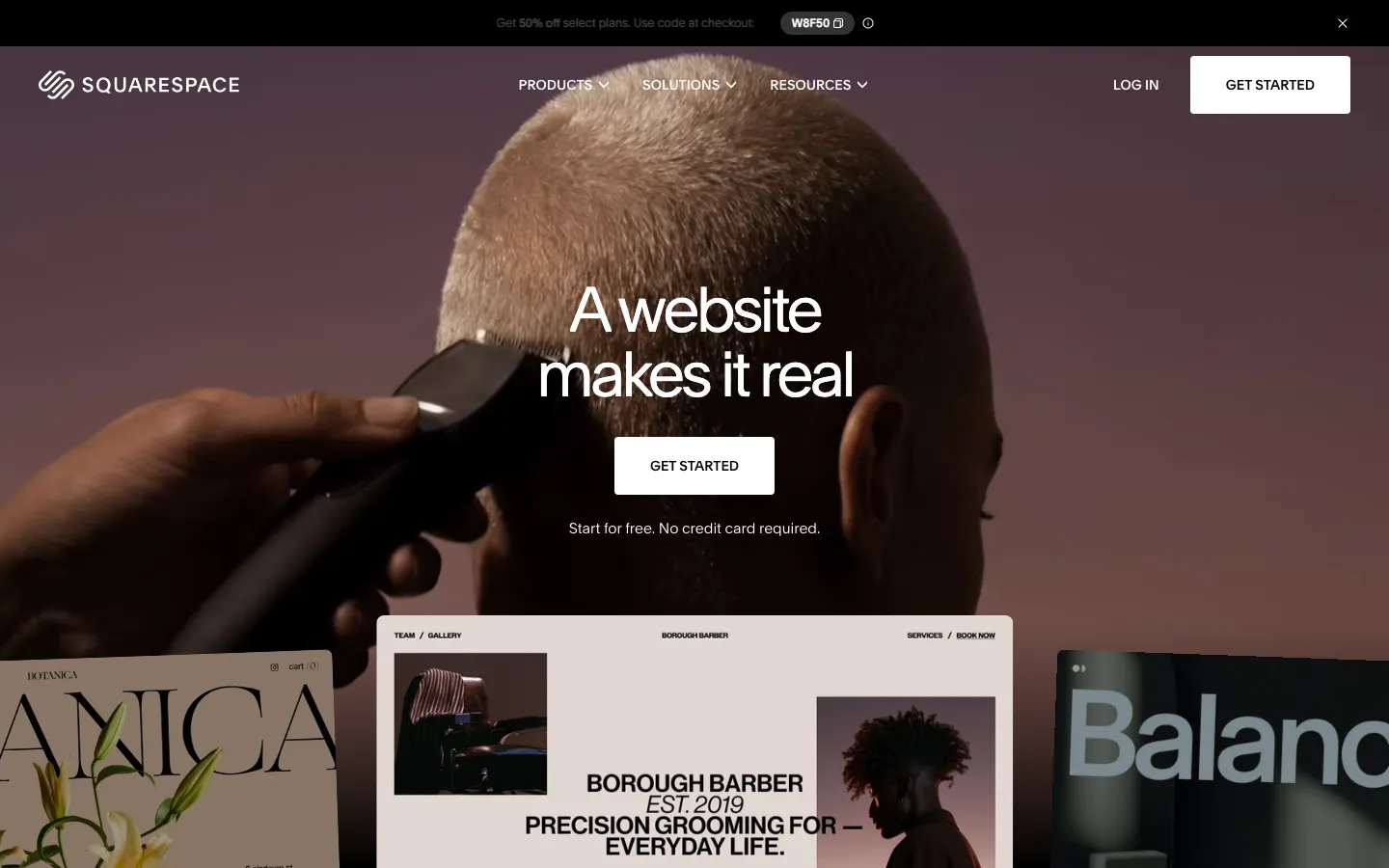
The template ceiling. Squarespace's templates are the best-looking of any builder, and they are the limit. A custom interaction, a calculator, a page structure the template does not anticipate, a component that has to match a product: each is code injection, a workaround, or a no. Most sites hit the ceiling around the time marketing starts asking for things.
The store. Commerce is included, and it is enough for a few products. Card rates start at 2.9 percent plus 30 cents on Basic and Core and only drop on the $49 and $99 plans, the catalog gets unwieldy past a few hundred items, and the apps are thin. Stores that grow tend to move to Shopify rather than up a Squarespace plan.
No staging, no real export. You edit the live site. There is no branch, no preview of a half-finished redesign, and no way to ship one page while another is in progress. The export is a WordPress-format XML that, by Squarespace's own list, leaves behind store, index, cover, and portfolio pages, product, audio, and video blocks, custom CSS, and style settings, so leaving means rebuilding, which is the fact that keeps people on the platform longer than they intended.
Ownership and team. One site per subscription, collaborators inside Squarespace's permission model, and nothing a developer or a coding agent can check out, change, and preview. For a company whose site is a growth channel worked on weekly, that is the reason that finally moves the decision.
Read the alternatives against those four. Wix and WordPress.com answer the price; Webflow and Framer answer the ceiling; Shopify answers the store; only the code stack answers all four, and it asks the most of you.
Wix: the widest menu, cheaper
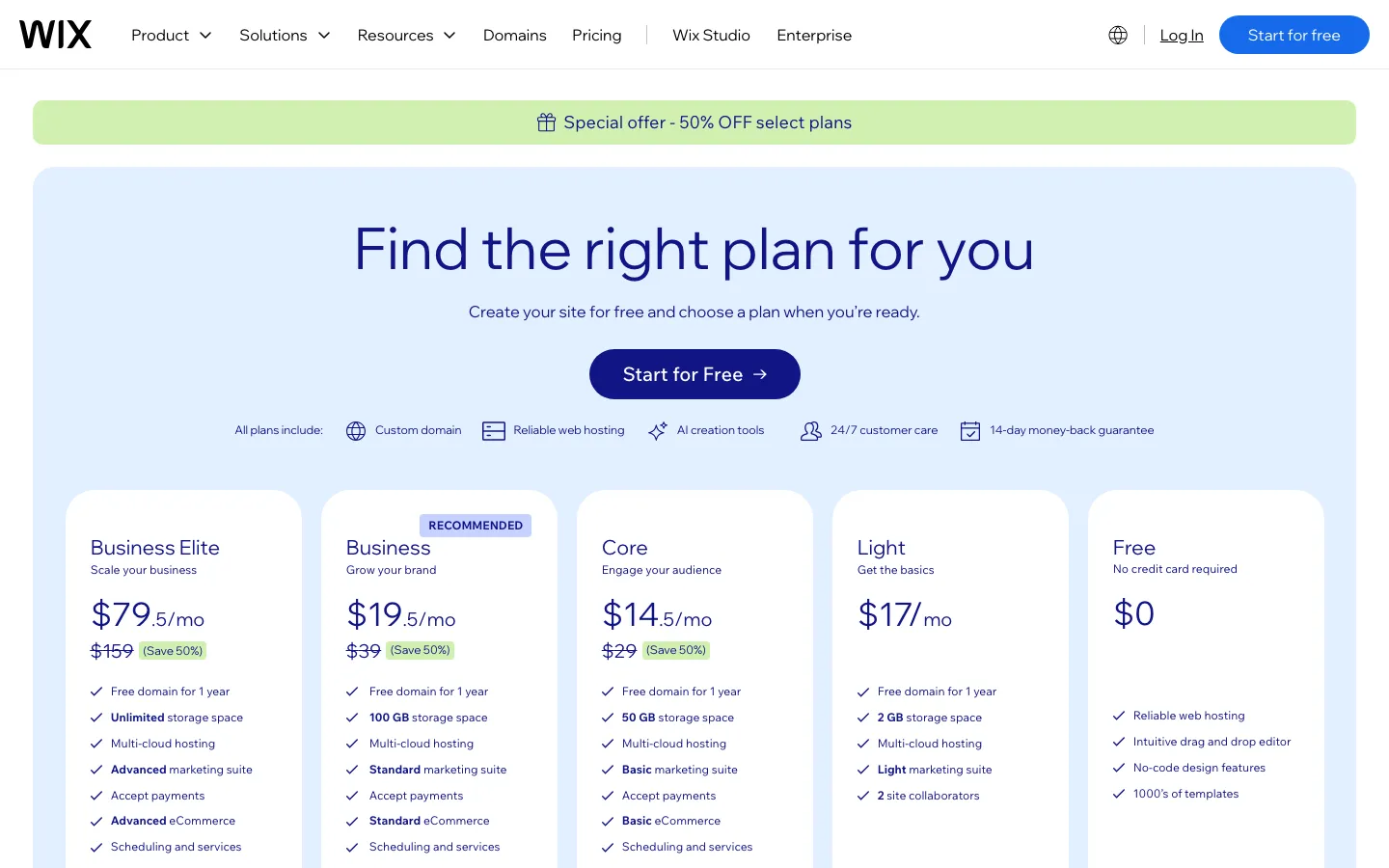
Wix was free and then $17, $29, $39, or $159 a month on yearly billing on 10 September 2026, with a free domain for a year on the paid plans. It has more built in than Squarespace, bookings, restaurant ordering, an app market, and its own AI site builder, and its templates are a step down. The ceiling is the same shape: what the builder does, the site does. For an owner who wants a lower bill and more features and does not mind the aesthetic trade, it is the straight swap; our restaurant website builders comparison covers the case where the ordering matters more than the design.
Best for: owners who want more features for less and will trade some polish.
If Wix is the platform being outgrown, the Wix alternatives page covers the lock-in, the renewal terms, and the code exit from that side.
Webflow: the ceiling, removed, with a real CMS
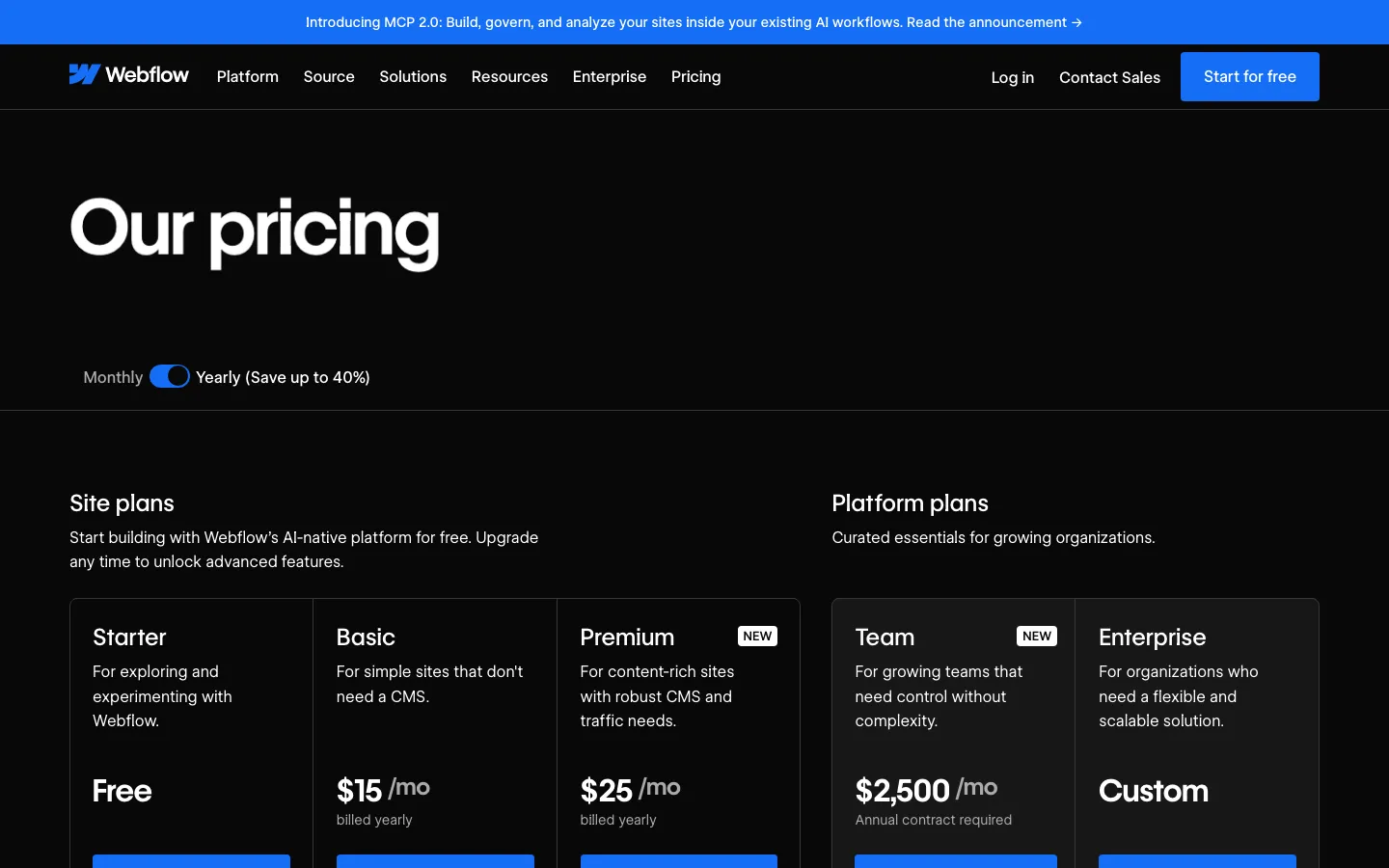
Webflow is where designers go when the Squarespace template stops being enough. The Basic site plan was $15 a month and Premium $25, billed yearly, on 10 September 2026, with Team at $2,500 a month and Optimize for A/B testing from $299. The layout engine is real CSS with a visual editor on top, the CMS has collections and references, and the result is a site that can look like anything. It brings its own limits: no branching, paid seats for every collaborator, and metered bandwidth. Our Webflow alternatives page lists the teams who left it for those reasons, and the Webflow pricing guide explains which plan a site needs.
Best for: marketing sites where a designer wants full control and a structured CMS.
Framer: fast, design-led, staging on Pro
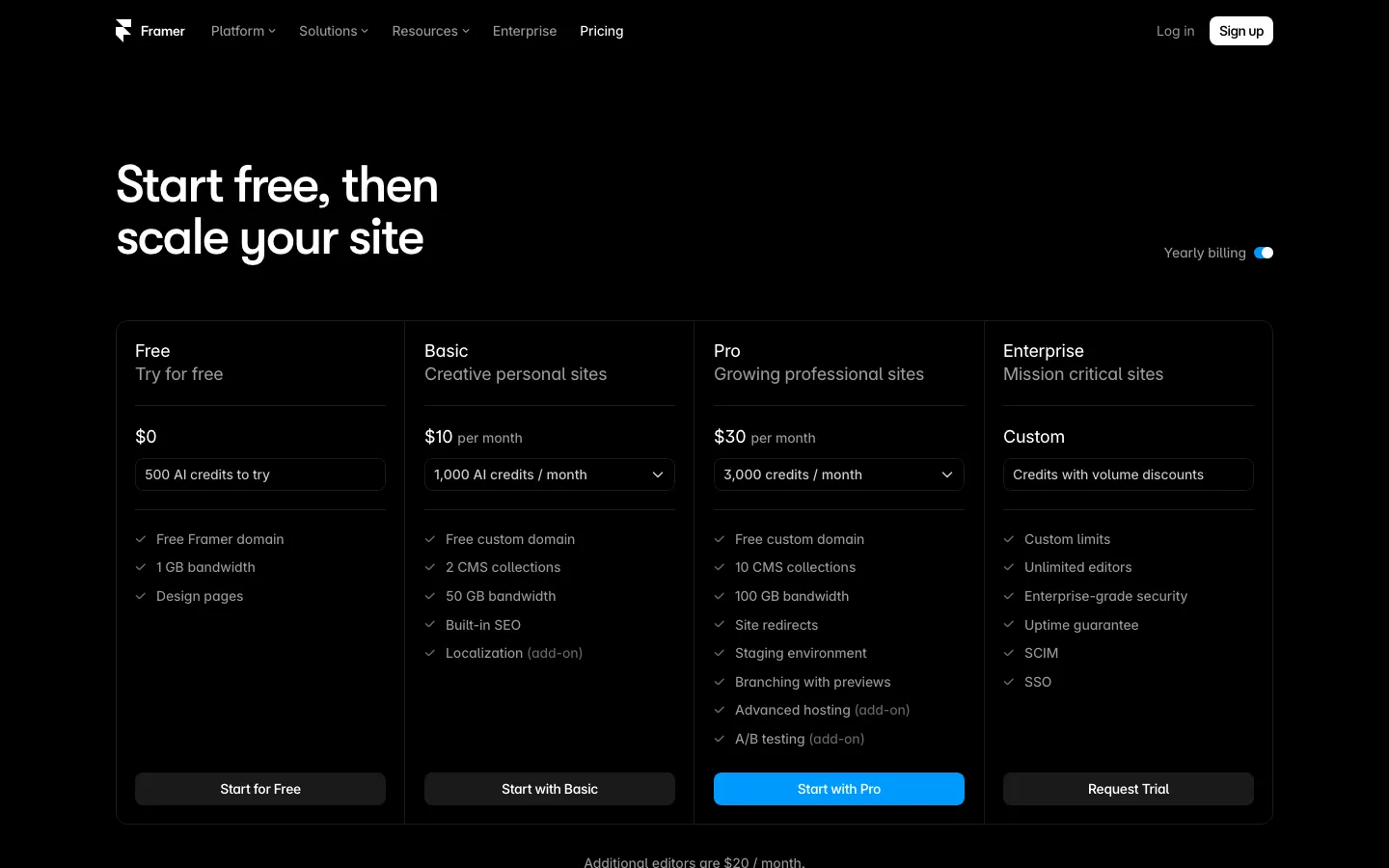
Framer was free, $10 a month on Basic, or $30 a month on Pro on 10 September 2026, with the Pro plan including a staging environment and branching with previews, which is the one publishing feature Squarespace and Webflow both lack. Editors are $20 a seat and content editors $10, extra bandwidth is $40 per 100 GB, and an advanced hosting add-on for rewrites and custom headers is $20. It is the fastest builder to rebuild a small design-led site in, motion included, and its CMS is the thinnest of the three.
Best for: startup sites with a designer in charge, motion, and a small team.
Leaving Framer rather than arriving? The Framer alternatives page runs the comparison from that side.
WordPress.com: the content engine, for less
WordPress.com listed Personal at $4, Premium at $8, Business at $25, and Commerce at $45 a month on 10 September 2026, all introductory prices on yearly billing that renew higher; the renewal number under each plan changed between loads on the same day, which is worth reading twice before buying. It has the largest theme and plugin ecosystem of anything on this page, the best blogging editor, and, on Business, the full maintenance burden of WordPress. Our WordPress alternatives page runs this comparison from the other side.
Best for: blog-first sites that want the ecosystem for less than Squarespace charges.
Shopify: where the store goes

If the reason for leaving is the store, this is the answer, and it is the platform Squarespace's higher plans are imitating. On 10 September 2026 Shopify was $29 a month on Basic, $79 on Grow, and $299 on Advanced on yearly billing, or $39, $105, and $399 monthly, with Plus from $2,300 a month and a trial of three days free and then $1 a month for three months. Inventory, multichannel selling, POS at $89 a month per location, and an app ecosystem no builder matches. The trade: it is a commerce platform first, and the marketing site around the store is the weakest part of it, which is why a lot of Shopify stores run their content pages elsewhere.
Best for: a store that is the business, past a hundred products or a second channel.
Carrd: the one-pager for a few dollars a year
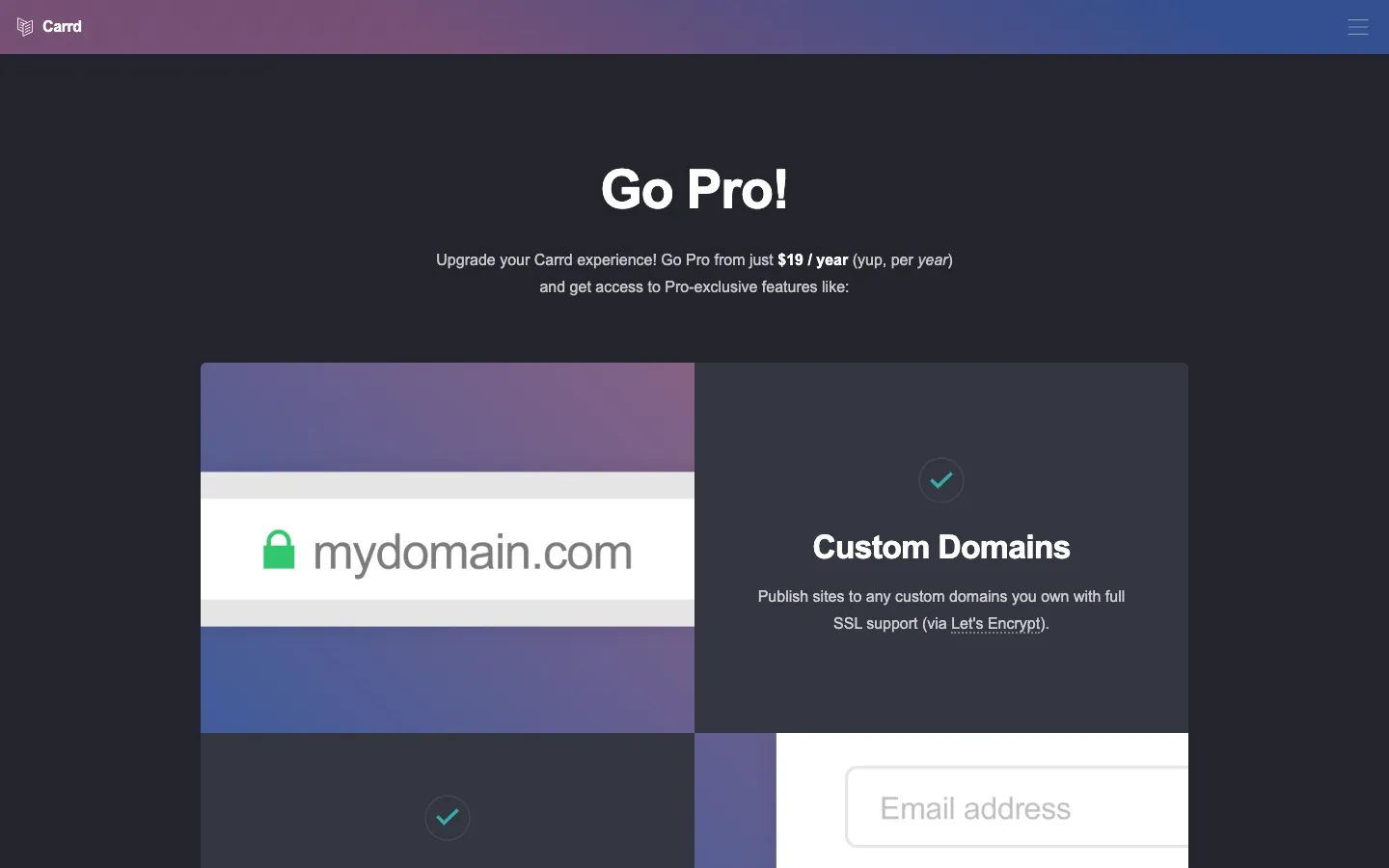
A surprising share of Squarespace sites are one page: a launch page, a profile, a link-in-bio, a coming-soon. Carrd does that for free or for $9, $19, or $49 a year on 10 September 2026, with custom domains and forms on the paid tiers. It is not an alternative for a company site; it is the honest answer for the sites that never needed a $19-a-month builder.
Best for: one-page sites and launch pages.
Next.js or Astro on Vercel, Cloudflare, or Netlify: the code exit
This is the only option that answers all four reasons, and it asks the most of you, so here is what it costs and what it changes.
What it costs. Vercel's Hobby plan was $0 and Pro $20 a month per seat on 10 September 2026. Cloudflare's Workers paid plan carries a $5 minimum a month, with a free tier below it. Netlify is free, $9, or $20 a month. A static marketing site on any of them costs between nothing and a coffee, and none of them charge for collaborators who only view.
What it changes. The site is a repository. Every change is a branch with a preview URL, so a campaign page ships while the redesign continues. Collaborators are unlimited. There is no template ceiling, because there is no template: the calculator, the interactive piece, the component that matches the product get built. And the site becomes something an agent can work on: describe the page in Cursor, Claude, or Codex, point it at the existing components, preview, ship. Maintenance becomes checks an agent runs on a schedule.
The receipt. This site is Next.js on Cloudflare. In the first ten days of September 2026 it shipped a post a day, rebuilt fifteen commercial pages on a new template in one of those days, and smoke-tested every intake form from a script with the delivery confirmed in the inbox. It is the stack, not a demo of it.
What it asks. Someone has to set it up, and someone, or something, has to make the changes. The honest comparison is not "Squarespace versus code" but "a template and a subscription versus a developer or an agent with a repo."
SUUR: the code stack, built flat-fee, rankings kept
This is us, so weigh it accordingly. We move companies off builders and onto the code stack above as a flat-fee Website Migration: from $6,000 for a site of up to twenty pages, about two weeks, in Next.js on your own Vercel or Cloudflare account, with the source in your repository. Squarespace's export gaps are why it is run as a rebuild from the live site with an SEO project wrapped around it: every URL inventoried and mapped in writing before anything moves, 301s for anything that changes, titles, descriptions, canonical tags, and structured data carried over, and Search Console watched daily for four weeks after cutover. We ran that discipline for 2Wheel Epix, a full-platform migration with a redesign on competitive tour queries, with zero rankings lost.
If the site is one page, the Landing Page Sprint at $3,500 flat builds it in about three business days on the same stack. Afterwards, the Website Care Plan at $1,500 a month keeps the site hosted at cost on your account, edited within two business days, updated, and monitored.
Best for: a company that has read the four reasons above, recognized its own site, and wants the exit done by one senior in two weeks.
When Squarespace is still the right call
When one person owns the site, the templates fit, nothing custom is on the roadmap, and the value is that it never asks for anything. For an independent, a studio, a photographer, or a restaurant, it is a fine home, and the promo code on its homepage today makes the first year cheaper still. The trouble begins when the site becomes a growth channel and a team sport at the same time, or when the store outgrows the plan. That is when the options above stop being the expensive choice and become the cheap one.
Frequently asked questions
It depends on what outgrew it. For a store: Shopify, which is the commerce platform Squarespace's higher plans imitate. For design control beyond the templates: Webflow if you want a real CMS, Framer if you want motion and speed. For a lower bill: Wix, WordPress.com, or, for a one-pager, Carrd at a few dollars a month. For a company site that several people and coding agents work on every week, with staging, previews, and ownership of the code: a Next.js or Astro site on Vercel, Cloudflare, or Netlify, which is what this site is.
Verified on 10 September 2026. Squarespace: Basic $19, Core $29, Plus $49, Advanced $99 a month on annual billing, with a 50 percent promo code on select plans running that day. Wix: free, then $17 to $159 a month yearly. Webflow: $15 or $25 a month billed yearly. Framer: free, $10, or $30 a month plus $20 per extra editor. WordPress.com: $4 to $45 a month introductory, renewing higher. Shopify: $29, $79, or $299 a month on yearly billing, $39, $105, or $399 monthly. Carrd: $9 to $49 a year. A code stack: Vercel Hobby free or Pro $20 a seat, Cloudflare Workers free or from $5 a month, Netlify free or from $9. Over three years, a $29-a-month Core plan is about $1,000 in fees; a code site costs between nothing and a coffee a month to host after the build.
Four reasons repeat. The template ceiling: layouts are what the template allows, and a custom interaction, a calculator, or an unusual page structure means code injection or nothing. Commerce: transaction fees, card rates that only drop on the $49 and $99 plans, and a catalog that gets unwieldy past a few hundred products. No staging and no export to speak of: you edit the live site, and the export is a WordPress-format XML of pages and posts with gaps, so a redesign is a rebuild. Ownership and team: one site per subscription, contributors inside Squarespace's permission model, and no way for a coding agent or a developer to work on the site the way they work on a repository.
Partly. Squarespace's export is a WordPress-format XML file that carries layout pages, one blog page with its posts, gallery pages, and text and image blocks. Its own documentation lists what stays behind: store, index, cover, portfolio, album, info, and calendar pages; product, audio, and video blocks; page-specific headers and footers; custom CSS and style settings; drafts. Images are referenced in the file but only copy across reliably when importing to WordPress.com. In practice, every migration off Squarespace is a rebuild from the live site plus the exports, which is why the discipline that matters is the URL map and the redirects, not the export file.
Not if the move is run as an SEO project. Inventory every URL with its traffic, map each to its new path, ship 301s for anything that changes, carry over titles, descriptions, canonical tags, and structured data, keep the sitemap and robots honest, and watch Search Console daily for the first weeks. We ran that discipline for 2Wheel Epix, a full-platform migration with a redesign on competitive multi-day tour queries, with zero rankings lost. The full recipe, step by step, is in [how to migrate a website without losing rankings](/website-migration-without-losing-rankings). Squarespace URL patterns, blog posts under a dated path and pages under their slugs, map cleanly; the risk is in what gets dropped, not in what moves.
For a store that is the business, yes. Shopify's Basic plan at $29 a month on yearly billing, verified 10 September 2026, comes with inventory, multichannel selling, and an app ecosystem Squarespace does not match, and its POS and checkout are the reason stores migrate to it rather than from it. For a service business with a few products, a course, or a booking, Squarespace's commerce is enough and its templates are better. The line is roughly a hundred products or a second sales channel.
When one person owns the site, the templates fit, nothing custom is needed, and the value is that it never asks for anything. Squarespace has the best-looking templates of any builder and a clean editor, and for an independent, a studio, or a restaurant it is a fine home; our restaurant website builders comparison says as much. The trouble begins when the site becomes a growth channel and a team sport at the same time, or when the store outgrows the plan, and that is when the alternatives on this page stop being more expensive and start being cheaper.
Want to talk to SUUR directly?
We work with founders shipping product, not just decks.