Framer Alternatives
Framer Alternatives in 2026: Webflow, Builders, and Code
Webflow, Squarespace, Wix, WordPress.com, Hostinger, Carrd, and a Next.js site on your own account, compared against Framer on seats, bandwidth, CMS limits, and the export question, with every price read live on 12 September 2026 and Framer's own help center quoted on what leaves and what does not.
| Vendor | Pricing | Turnaround | Best for |
|---|---|---|---|
| Framer (what you are leaving) | Free; Basic $10/mo; Pro $30/mo with staging and branching; $20 per extra editor, $10 per content editor; $40 per extra 100 GB; $20 per extra locale; no HTML export for self-hosting, per Framer's help center | n/a | Design-led startup sites with motion, a designer who owns the site, and a small team |
| Webflow | Basic $15/mo, Premium $25/mo billed yearly; Team $2,500/mo; Optimize from $299/mo | A week with a designer | Marketing sites that have outgrown Framer's CMS and want collections, references, and a structured content model |
| Squarespace | Basic $19, Core $29, Plus $49, Advanced $99/mo on annual billing; a 50% promo code on select plans running on 12 September 2026 | A weekend, DIY | Small businesses that want good templates, commerce, and no seat pricing |
| Wix | Free plan; $17, $29, $39, or $159/mo on yearly billing | A weekend, DIY | Owners who want bookings, ordering, and apps inside one builder |
| WordPress.com | $4, $8, $25, or $45/mo introductory on yearly billing; the renewal shown on this page has read differently on each of the last four days | Days, with a theme | Content-heavy sites that want the largest theme and plugin ecosystem |
| Hostinger Website Builder | $2.99, $3.99, or $7.99/mo on a 48-month term, renewing at $10.99, $16.99, or $25.99/mo | A weekend, DIY, with an AI builder | The cheapest builder for a small site that just needs to exist |
| Carrd | Free; Pro $9, $19, or $49 per year | An hour | One-page sites and launch pages that do not need a monthly builder |
| Next.js or Astro on Vercel, Cloudflare, or Netlify | Vercel Hobby $0 or Pro $20 per seat; Cloudflare Workers free or from $5/mo; Netlify free, $9, or $20/mo | Days with a developer or an agent; hours per new page after | Teams who want unlimited collaborators, no metered bandwidth, the code in their own repository, and pages shipped by people and agents |
| SUURThat’s us | Website Migration from $6,000 flat for up to 20 pages; Landing Page Sprint $3,500; Website Care Plan $1,500/mo after | About 2 weeks for a migration of up to 20 pages, then 4 weeks of Search Console watch | Companies leaving Framer for code who want the move run as an SEO project by one senior, delivered on their own account |
- Pricing
- Free; Basic $10/mo; Pro $30/mo with staging and branching; $20 per extra editor, $10 per content editor; $40 per extra 100 GB; $20 per extra locale; no HTML export for self-hosting, per Framer's help center
- Turnaround
- n/a
- Best for
- Design-led startup sites with motion, a designer who owns the site, and a small team
- Pricing
- Basic $15/mo, Premium $25/mo billed yearly; Team $2,500/mo; Optimize from $299/mo
- Turnaround
- A week with a designer
- Best for
- Marketing sites that have outgrown Framer's CMS and want collections, references, and a structured content model
- Pricing
- Basic $19, Core $29, Plus $49, Advanced $99/mo on annual billing; a 50% promo code on select plans running on 12 September 2026
- Turnaround
- A weekend, DIY
- Best for
- Small businesses that want good templates, commerce, and no seat pricing
- Pricing
- Free plan; $17, $29, $39, or $159/mo on yearly billing
- Turnaround
- A weekend, DIY
- Best for
- Owners who want bookings, ordering, and apps inside one builder
- Pricing
- $4, $8, $25, or $45/mo introductory on yearly billing; the renewal shown on this page has read differently on each of the last four days
- Turnaround
- Days, with a theme
- Best for
- Content-heavy sites that want the largest theme and plugin ecosystem
- Pricing
- $2.99, $3.99, or $7.99/mo on a 48-month term, renewing at $10.99, $16.99, or $25.99/mo
- Turnaround
- A weekend, DIY, with an AI builder
- Best for
- The cheapest builder for a small site that just needs to exist
- Pricing
- Free; Pro $9, $19, or $49 per year
- Turnaround
- An hour
- Best for
- One-page sites and launch pages that do not need a monthly builder
- Pricing
- Vercel Hobby $0 or Pro $20 per seat; Cloudflare Workers free or from $5/mo; Netlify free, $9, or $20/mo
- Turnaround
- Days with a developer or an agent; hours per new page after
- Best for
- Teams who want unlimited collaborators, no metered bandwidth, the code in their own repository, and pages shipped by people and agents
- Pricing
- Website Migration from $6,000 flat for up to 20 pages; Landing Page Sprint $3,500; Website Care Plan $1,500/mo after
- Turnaround
- About 2 weeks for a migration of up to 20 pages, then 4 weeks of Search Console watch
- Best for
- Companies leaving Framer for code who want the move run as an SEO project by one senior, delivered on their own account
Framer is the builder designers reach for when speed and motion matter, and on 12 September 2026 its homepage was selling something bigger: "the AI design agent for every step from idea to launch," with an agent that builds pages on the canvas from a prompt. That answers one of the complaints teams have about builders. It does not answer the other three, and the teams leaving Framer are leaving over those: seats, bandwidth, the CMS, and the fact that the site cannot be taken anywhere else as it is.
This page compares the alternatives people actually shortlist, with every price read from the vendor's own page on 12 September 2026, and quotes Framer's own help center on what leaves and what does not. It ends with the option we build and the one this site runs on, with a migration we ran that lost zero rankings as the receipt.
The four reasons teams leave Framer

Seats. Every editor is $20 a month and every content editor $10. A marketing team with an agency, two freelancers, and a new hire is paying for five seats and a conversation about who gets one. Viewers are free, which is not who needs to edit.
Bandwidth. Sold by the gigabyte, $40 per extra 100 GB on 12 September 2026, on what is a static marketing site. The number is small until a launch goes well.
The CMS. Framer's CMS is the thinnest of the visual builders: collection and item limits scale by plan with paid add-ons above them, and there is no reference model to speak of. A blog with a few hundred posts and a few content types is where it starts to hurt.
Export. Framer's help article on exporting says it does not offer HTML export for self-hosting, because the published site depends on platform-managed pre-rendering, image resizing, font subsetting, and delivery, and that if you need the source code, Framer may not be the right solution. A separate data-portability page says the published files are standard HTML, CSS, and JavaScript that can be downloaded, and that CMS content exports through plugins as CSV or JSON. Read together: the content leaves, the site as a site does not, and every exit is a rebuild.
Read the alternatives against those four. Webflow answers the CMS and inherits the seats and bandwidth. Squarespace, Wix, WordPress.com, Hostinger, and Carrd answer the bill and have no code to export either. Only the code stack answers all four.
Webflow: the CMS Framer does not have
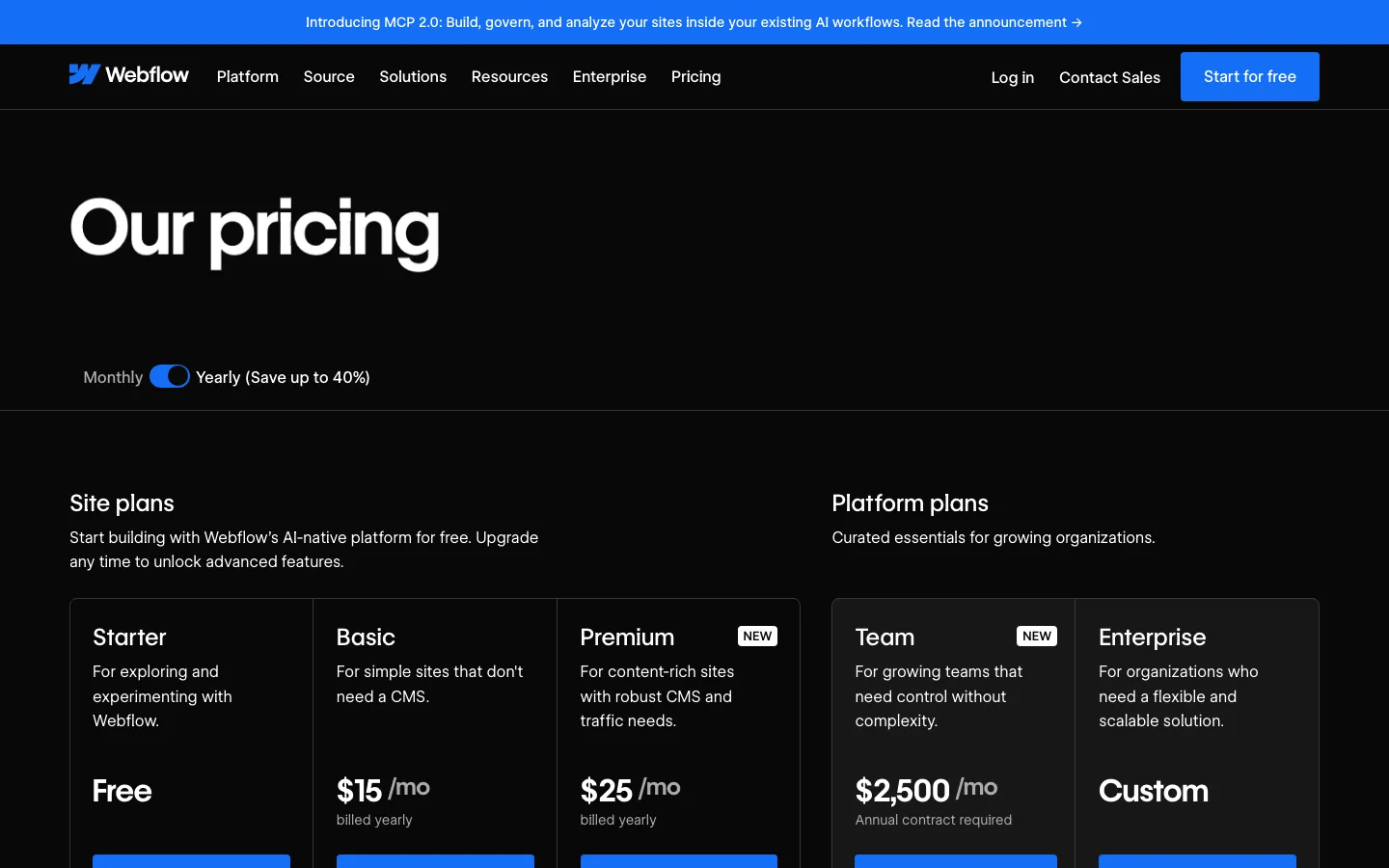
Webflow is where a Framer site goes when the blog outgrows the CMS. Collections, references, multi-reference fields, and a structured content model make it the deepest of the visual builders, and on 12 September 2026 the Basic plan was $15 a month and Premium $25, billed yearly, with Team at $2,500 and Optimize from $299. It is slower to build in than Framer, it has no staging or branching, and it charges per seat and meters bandwidth the same way, which is why our Webflow alternatives page exists. The Webflow pricing guide explains which plan a site needs.
Best for: a marketing site whose content model is the reason for leaving.
Squarespace and Wix: no seats, no export
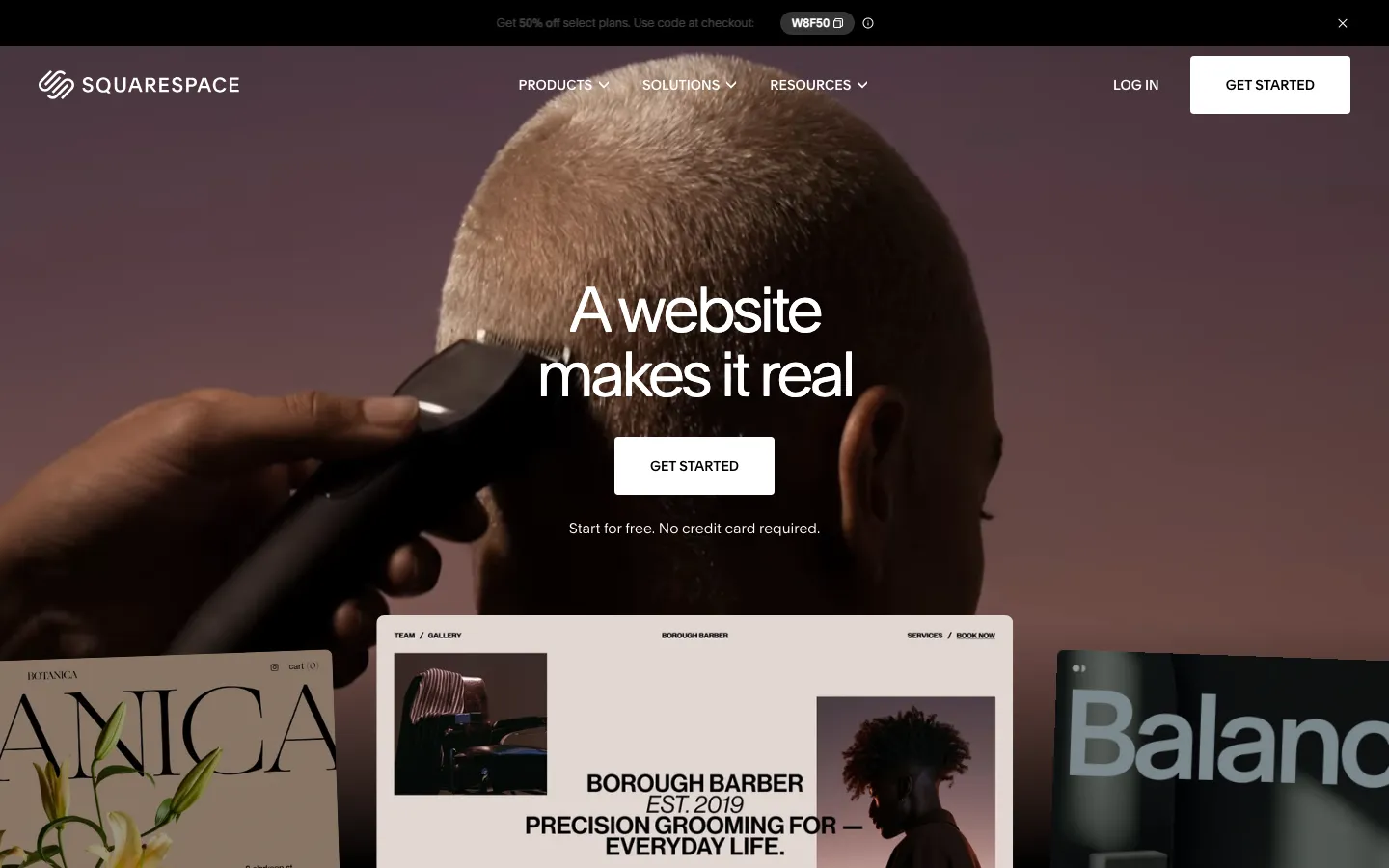
Squarespace was $19, $29, $49, or $99 a month on annual billing on 12 September 2026, with a 50 percent promo code on select plans in its banner for the third day running, and it charges nothing per collaborator. Templates are the best of any builder, commerce is built in, and the ceiling is a template. Wix, free and then $17, $29, $39, or $159 a month on yearly billing, has the widest feature menu and, by its own documentation, no way to export a site at all. Both are fine for a small business that will never need the code, and our Squarespace alternatives and Wix alternatives pages are the honest lists for each.

Best for: small businesses that want a lower bill and no seat pricing, and will live inside a template.
WordPress.com: the ecosystem, at a moving renewal price
WordPress.com listed Personal at $4, Premium at $8, Business at $25, and Commerce at $45 a month on 12 September 2026, introductory prices on yearly billing. The renewal numbers under those plans have read differently on each of the four days this week we loaded the page, so read that line before buying. It has the largest theme and plugin ecosystem of anything here, the best blogging editor, and on Business the whole maintenance burden of WordPress; the WordPress alternatives page is that comparison from the other side.
Best for: content-heavy sites that want the ecosystem and can carry the maintenance.
Hostinger and Carrd: the cheap exits

Hostinger's builder was $2.99, $3.99, or $7.99 a month on 12 September 2026, each on a 48-month term paid up front and renewing at $10.99, $16.99, or $25.99, with an AI builder and hosting bundled. For a small site that needs to exist for four years at the lowest cost, it is hard to beat; it is the same shape as Framer in every way that matters, a subscription and a site that lives on their platform.
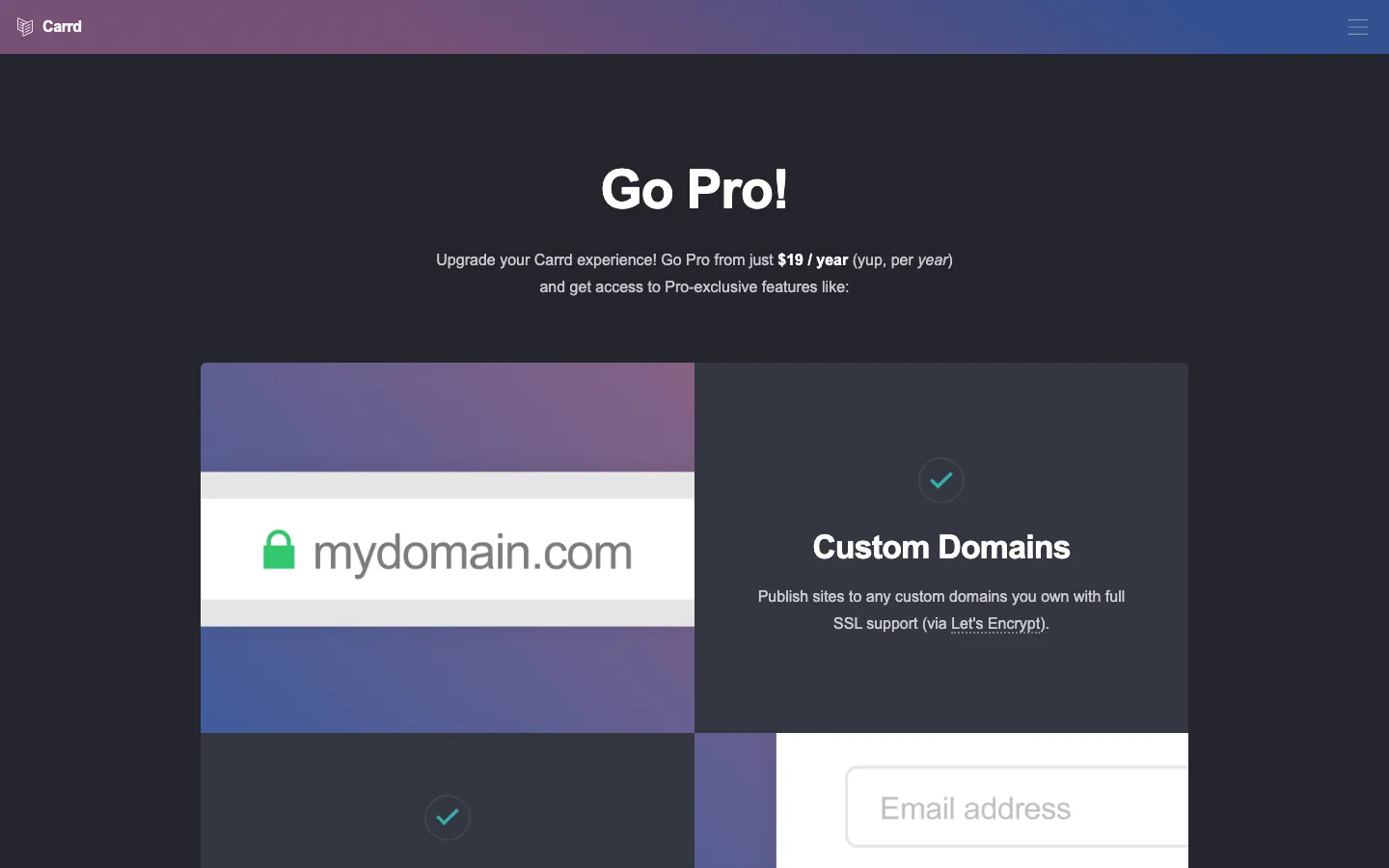
Carrd is free or $9, $19, or $49 a year, and a surprising share of Framer sites are one page: a launch page, a profile, a link-in-bio. Not a company site; the right answer for those.
Best for: the smallest sites on the tightest budgets, and one-pagers.
Next.js or Astro on Vercel, Cloudflare, or Netlify: the code exit
The only option that answers all four reasons, and it asks the most of you.
What it costs. Vercel's Hobby plan was $0 and Pro $20 a month per seat on 12 September 2026, with viewers free. Cloudflare's Workers paid plan carries a $5 minimum a month with a free tier below it. Netlify is free, $9, or $20 a month. A static marketing site on any of them costs between nothing and a coffee, collaborators who only view are free everywhere, and bandwidth is not a line item at marketing-site scale.
What it changes. The site is a repository on your GitHub. Every change is a branch with a preview URL, which Framer's Pro plan also gives you, and unlimited collaborators, which it does not. The CMS is whatever you want it to be: a folder of files, which is how this site's blog works, or a headless CMS if the team edits daily. And the site becomes something an agent can work on: describe the page in Cursor, Claude, or Codex, point it at the existing components, preview, ship. Framer's own agent does that inside Framer; the difference is where the result lives and who else can touch it.
The receipt. This site is Next.js on Cloudflare. In the first twelve days of September 2026 it shipped at least a post a day, rebuilt fifteen commercial pages on a new template in one of those days, and smoke-tested every intake form from a script with the delivery confirmed in the inbox.
What it asks. Someone has to set it up, and someone, or something, has to make the changes. The honest comparison is not "Framer versus code" but "Framer seats and metering versus a developer or an agent with a repo."
SUUR: the code stack, built flat-fee, rankings kept
This is us, so weigh it accordingly. We move companies off builders and onto the code stack above as a flat-fee Website Migration: from $6,000 for a site of up to twenty pages, about two weeks, in Next.js on your own Vercel or Cloudflare account, with the source in your repository. Because a Framer site does not export as a site, it is run as a rebuild from the live site and the CMS export with an SEO project wrapped around it: every URL inventoried and mapped in writing before anything moves, 301s for anything that changes, titles, descriptions, canonical tags, and structured data carried over, and Search Console watched daily for four weeks after cutover. We ran that discipline for 2Wheel Epix, a full-platform migration with a redesign on competitive tour queries, with zero rankings lost.
If the site is one page, the Landing Page Sprint at $3,500 flat builds it in about three business days on the same stack. Afterwards, the Website Care Plan at $1,500 a month keeps the site hosted at cost on your account, edited within two business days, updated, and monitored.
Best for: a company that has read the four reasons above, recognized its own site, and wants the exit done by one senior in two weeks.
When Framer is still the right call
When a designer owns the site, the team is small, the site is design-led, and building fast matters more than the content model. Framer is the fastest builder on this page, motion is native, the $30 Pro plan includes staging and branching that Webflow does not offer, and the agent on its homepage today builds a first draft from a sentence. The trouble starts when the site becomes a team sport with outside collaborators, when the blog outgrows the CMS, or when the company decides it wants to own what it built. That is the day the seats and the export policy stop being footnotes.
Frequently asked questions
For a site that outgrew Framer's CMS: Webflow, which has collections and references and the deepest content model of the visual builders. For a lower bill on a small site: Squarespace, Wix, WordPress.com, Hostinger's builder, or Carrd for a one-pager. For the things no builder fixes, per-editor seats, metered bandwidth, and the fact that Framer does not offer HTML export for self-hosting: a Next.js or Astro site in your own repository on Vercel, Cloudflare, or Netlify, which is what this site is.
Verified on 12 September 2026. Framer: free, $10 a month on Basic, $30 on Pro, plus $20 per extra editor, $10 per content editor, $40 per extra 100 GB, and $20 per extra locale. Webflow: $15 or $25 a month billed yearly. Squarespace: $19 to $99 a month on annual billing. Wix: free, then $17 to $159 a month yearly. WordPress.com: $4 to $45 a month introductory, renewing higher. Hostinger's builder: $2.99 to $7.99 a month on a 48-month term, renewing at $10.99 to $25.99. Carrd: $9 to $49 a year. A code stack: Vercel Hobby free or Pro $20 a seat, Cloudflare Workers free or from $5 a month, Netlify free or from $9, with no seats for viewers and no bandwidth line item at marketing-site scale.
Four reasons repeat. Seats: every editor is $20 a month and every content editor $10, so a marketing team with an agency and two freelancers pays for the meeting about the seat. Bandwidth: sold by the gigabyte, $40 per extra 100 GB, on what is a static marketing site. The CMS: thinner than Webflow's or WordPress's, with collection and item caps that scale by plan and paid add-ons above them. Export: Framer's help center says plainly that it does not offer HTML export for self-hosting, so the site cannot be taken to another host as it is, and every exit is a rebuild.
Not as a self-hostable site. Framer's help article on the subject says it does not offer HTML export for self-hosting, because the published site relies on platform-managed services for pre-rendering, image resizing, font subsetting, and delivery, and that if you need to export source code Framer may not be the right solution. A separate Framer page on data portability says every site is published as standard HTML, CSS, and JavaScript that can be downloaded, and that CMS content can be exported through plugins as CSV or JSON. In practice, a Framer site is rebuilt from the live site plus the CMS export, which is why the URL map and redirects matter more than the export.
For a content-heavy marketing site, usually: Webflow's CMS has collections, references, and a structured model Framer's does not match, and its $15 and $25 a month plans are in the same range. For a design-led startup site with motion and a small team, Framer is faster to build in and its $30 Pro plan includes staging and branching, which Webflow does not offer. Both charge per editor and meter bandwidth, so if those are the reasons you are leaving Framer, Webflow moves the problem rather than solving it; our Webflow alternatives page is the list of teams who found that out.
Not if the move is run as an SEO project. Inventory every URL with its traffic, map each to its new path, ship 301s for anything that changes, carry over titles, descriptions, canonical tags, and structured data, keep the sitemap honest, and watch Search Console daily for the first weeks. We ran that discipline for 2Wheel Epix, a full-platform migration with a redesign on competitive multi-day tour queries, with zero rankings lost. The full recipe, step by step, is in [how to migrate a website without losing rankings](/website-migration-without-losing-rankings). Framer sites are well indexed and their URL structure is clean, so the risk is in what gets dropped in the rebuild, not in what moves.
When a designer owns the site, the team is small, the site is design-led, and speed of building matters more than the content model. Framer is the fastest builder on this page to rebuild a startup site in, motion is native, its Pro plan includes staging and branching, and on 12 September 2026 its homepage sold it as an AI design agent that builds pages from a prompt on its own canvas. The trouble starts when the site becomes a team sport with outside collaborators, when the blog outgrows the CMS, or when the company wants to own the code, and that is when the alternatives above stop being the expensive option.
Want to talk to SUUR directly?
We work with founders shipping product, not just decks.